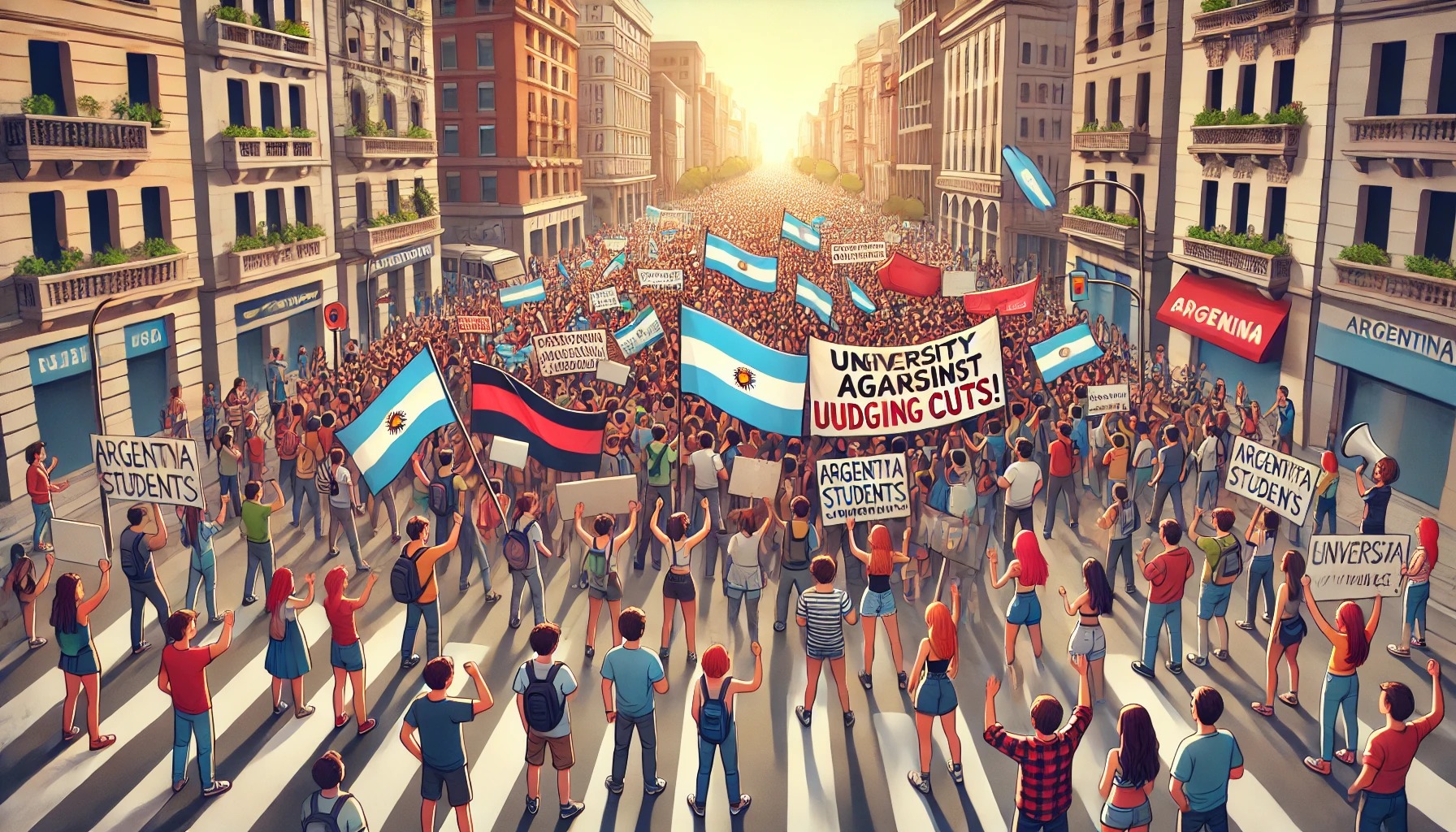
Hundreds of thousands of Argentine students took to the streets on Wednesday, protesting sharp public university funding cuts imposed by President Javier Milei’s libertarian government. The keyword "public university funding cuts" is at the heart of this nationwide outcry.
Public University Funding Cuts: A Threat to Education
The protests erupted in response to the government's threat to veto a newly passed law that guarantees university funding. As Argentina faces an economic crisis—with annual inflation nearing 240% and over half the population in poverty—these funding cuts could have devastating effects on public university education.
“The government has a systematic, methodical, and gradual plan to destroy public education,” stated Ricardo Gelpi, the head of the University of Buenos Aires (UBA). Milei’s administration argues that cuts are necessary, often criticizing public universities as hubs for “socialist” indoctrination. However, these institutions hold a strong reputation among Argentines for their academic excellence and community service.
Milei’sGovernment Doubles Down on Funding Cuts
In reaction to the protests, Milei's office reaffirmed its commitment to veto the "irresponsible" push to increase spending on national universities. The administration emphasized the need to protect the "fiscal balance," a stance that critics argue jeopardizes the future of education.
Gelpi highlighted that the budget reductions for public university education are a small fraction of Argentina's economic output, questioning the real motives behind Milei’s decision. Similarly, Piera Fernandez, leader of Argentina’s FUA university federation, emphasized that education and science funding should be seen as investments, not mere expenses.
Previous Protests Led to Revisions, but Concerns Remain
In April, similar mass protests involving students and teachers forced the government to reconsider proposed cuts to the higher education budget. However, university authorities later reported that the administration failed to make the promised improvements.
Impact on University Teachers and Students
According to the UBA, university staff, both teaching and non-teaching, have experienced a 40% reduction in purchasing power since December, and the situation continues to worsen. Florencia Rivero, a UBA graduate and teacher, warned that if the law is vetoed, it would severely affect wages, research, and other critical educational activities, urging that “it doesn’t happen.”
While Argentina's Ministry of Human Capital claims the government's commitment to public universities remains “firm,” the ongoing debate over public university funding cuts casts doubt over the future of education in the country. The outcome of this conflict will significantly influence the accessibility and quality of higher education for future generations in Argentina.