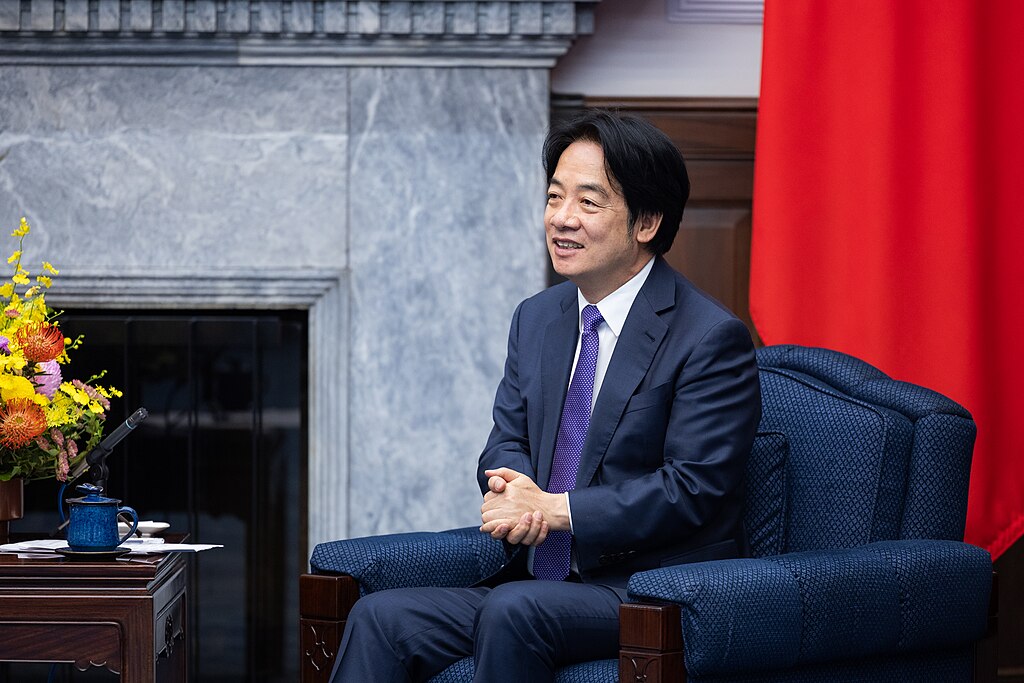
Taiwan President Lai Ching-te has urged Chinese President Xi Jinping to direct his focus toward revitalizing China’s weakening economy rather than pursuing territorial expansion, highlighting widening economic contrasts between the two sides. In an interview at the New York Times’ DealBook Summit, Lai pointed to Taiwan’s strong economic momentum, noting forecasts that its economy will grow by 7.37% this year—its fastest pace in 15 years thanks to booming demand for artificial intelligence–related technologies.
Lai contrasted this with China’s economic performance, citing estimates from international financial institutions suggesting China’s 2025 economic growth will sit only slightly above 4%. While China is expected to meet its 2024 growth target of around 5%, analysts say the world’s second-largest economy is increasingly weighed down by structural problems. Factory output continues to outpace domestic demand, deepening economic imbalances, while deflationary pressures are forecast to persist into next year. Beijing has taken steps to rein in industrial overcapacity and aggressive price competition, yet concerns remain about the overall trajectory of China’s economy.
Lai said that Taiwan “sincerely hopes” China will channel its efforts into improving quality of life for its citizens during this period of economic strain. He added that Taiwan is “willing to help and to cooperate” with China on addressing economic challenges, though he did not provide specifics. China’s Taiwan Affairs Office did not immediately respond to the remarks.
The comments come amid escalating Chinese military and political pressure on Taiwan, which Beijing claims as its own territory. Taiwan’s government firmly rejects this claim, asserting its democratic self-rule. Lai’s statement underscores both Taiwan’s economic strength and its desire for stability in cross-strait relations, even as geopolitical tensions remain high.
The growing divide between Taiwan’s tech-driven expansion and China’s slowing economic momentum continues to shape the regional landscape, raising global interest in how both sides navigate the interconnected issues of growth, security, and political relations.