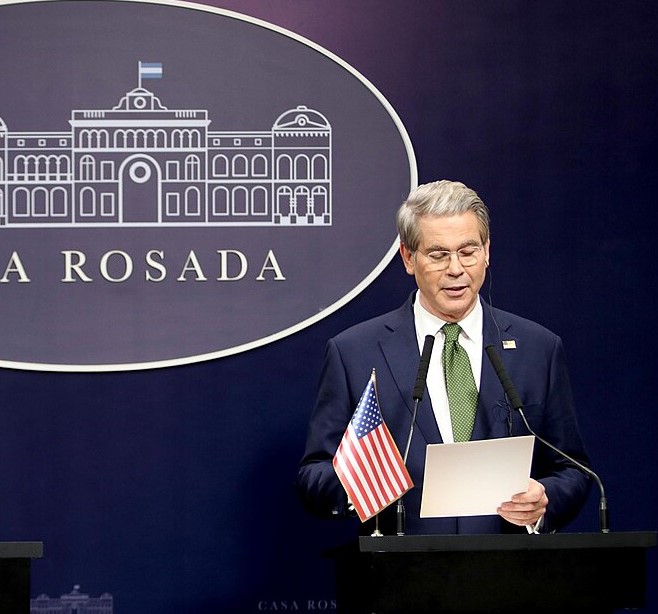
U.S. Treasury Secretary Scott Bessent warned that parts of the U.S. economy, particularly the housing sector, may already be in a recession due to persistently high interest rates. Speaking on CNN’s State of the Union, Bessent emphasized that while the broader economy remains resilient, sectors like real estate are struggling under the weight of elevated borrowing costs.
“I think that we are in good shape, but there are sectors of the economy that are in recession,” Bessent said. “The Fed has caused a lot of distributional problems with their policies.” He noted that high mortgage rates have stalled housing market activity, disproportionately impacting lower-income Americans who carry more debt and fewer assets.
Recent data from the National Association of Realtors showed that pending home sales were unchanged in September, further underscoring the slowdown. Bessent described the economy as being in a “transition period,” urging the Federal Reserve to accelerate rate cuts to prevent deeper economic damage.
His comments followed Fed Chair Jerome Powell’s signal that the central bank may pause rate cuts in December, drawing criticism from Trump administration officials. Federal Reserve Governor Stephen Miran also cautioned that tight monetary policy could trigger a broader recession if rates are not lowered quickly. Miran, who had pushed for a 50-basis-point cut instead of 25, told The New York Times that the current stance risked over-tightening at a time when inflation is not a major concern.
Bessent reiterated that the administration’s fiscal discipline—reducing the deficit-to-GDP ratio from 6.4% to 5.9%—is helping curb inflation. “If we are contracting spending, inflation should be dropping. If inflation is dropping, then the Fed should be cutting rates,” he said, underscoring his call for immediate monetary easing.