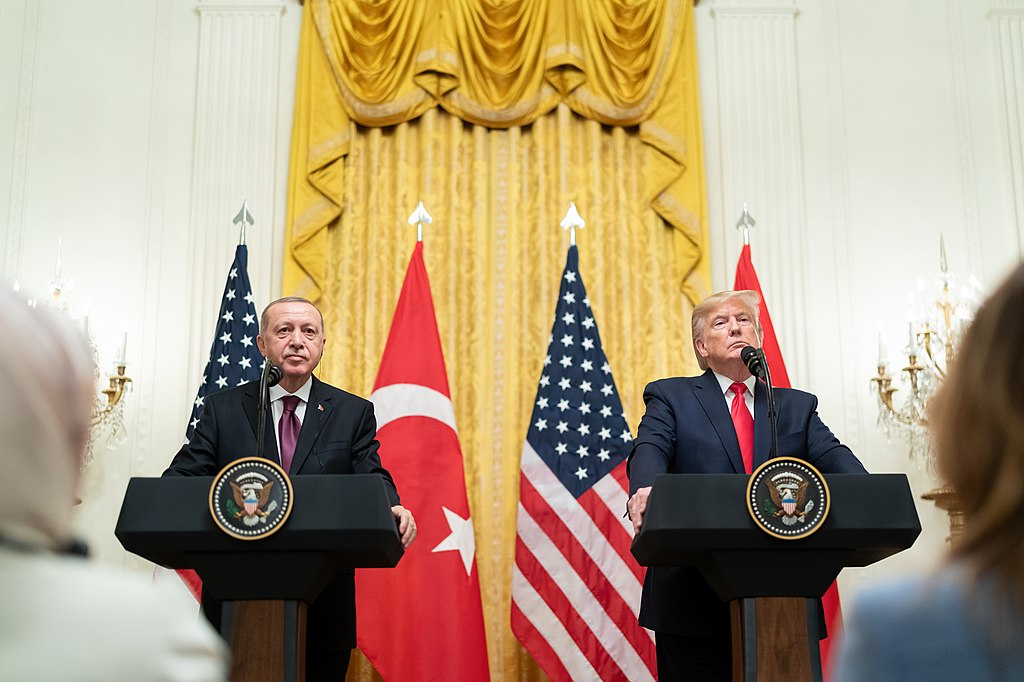
Turkey used the NATO summit in Ankara to showcase its growing ties with the United States, rolling out a high-profile welcome for President Donald Trump that underscored Ankara's ambitions to strengthen its role within the alliance. The visit featured an air show with red, white and blue contrails, while a newly opened airport building was named after Trump, symbolizing the warming relationship between the two NATO allies.
Turkish President Recep Tayyip Erdogan welcomed Trump personally at the airport, and the two leaders displayed a notably friendly rapport throughout the two-day summit. Trump described Erdogan as a close friend and later announced plans to remove U.S. sanctions imposed on Turkey during his first presidential term over Ankara's purchase of Russia's S-400 missile defense system.
Trump also signaled openness to selling F-35 fighter jets to Turkey, although he later clarified that no final decision had been made. The proposal would mark a significant shift in U.S.-Turkey defense relations after years of tensions surrounding the S-400 acquisition, which resulted in Turkey's removal from the F-35 program. Any reversal, however, is expected to face resistance in the U.S. Congress, where legal restrictions tied to the Russian missile system remain in place.
The U.S. president said he attended the NATO summit largely because Erdogan was hosting the event, a comment viewed as a diplomatic success for Ankara as it seeks greater influence within NATO and stronger relations with Washington.
Despite the positive atmosphere between the two leaders, Trump stirred controversy during the summit by criticizing Spain over trade and renewing claims regarding Greenland, drawing concern from several NATO allies. He nevertheless praised the alliance's unity while publicly defending Erdogan against criticism from Israeli Prime Minister Benjamin Netanyahu, who opposes potential F-35 sales to Turkey.
The improving relationship follows the conclusion of a long-running U.S. criminal case involving Turkish state lender Halkbank. At home, Erdogan continues to face scrutiny over a widening crackdown on political opponents, journalists and critics. While NATO Secretary General Mark Rutte reiterated the importance of democratic freedoms, Western governments have become less vocal on Turkey's domestic politics as Ankara has emerged as a key defense partner and strategic ally on NATO's southeastern flank.