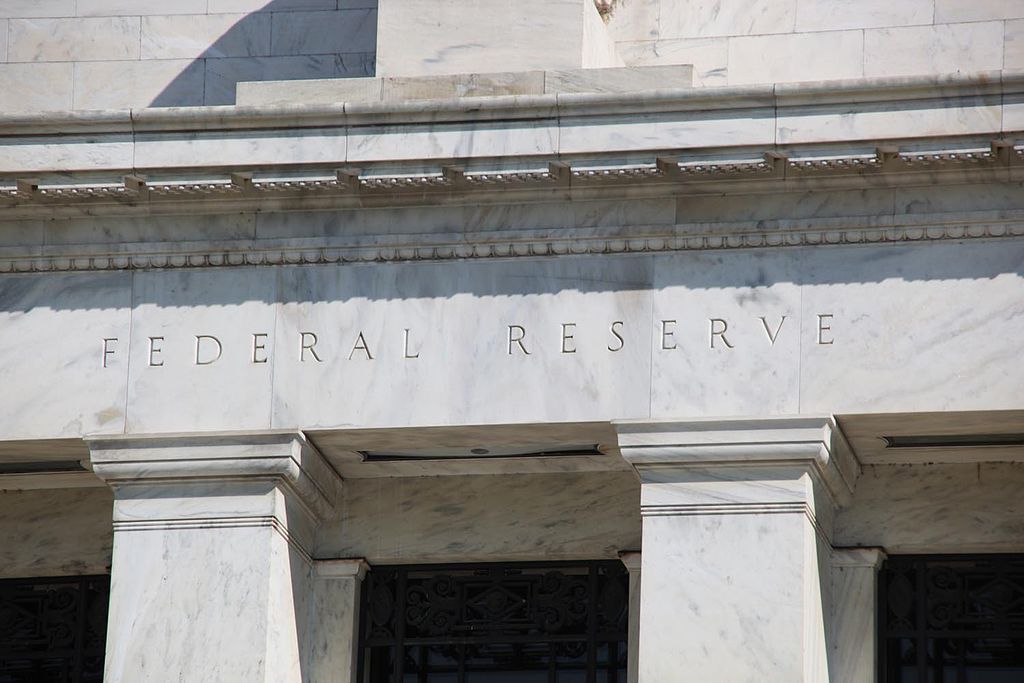
The Federal Reserve reaffirmed its commitment to restoring price stability, saying it is prepared to "act forcefully" if necessary to keep longer-term inflation expectations anchored around its 2% target.
The pledge came in the U.S. central bank’s semiannual Monetary Policy Report, released Friday ahead of Federal Reserve Chair Kevin Warsh’s testimony before the Senate Committee on Banking, Housing, and Urban Affairs and the House Committee on Financial Services next week.
The report arrives as inflation remains the primary focus of U.S. monetary policy. Rising oil prices triggered by the Middle East conflict fueled inflation during March, April, and May. While crude prices retreated to pre-conflict levels after a temporary U.S.-Iran peace agreement in late June, easing inflation concerns, renewed tensions this week have once again raised worries about higher energy costs.
According to the Fed, inflation has been influenced by several factors, including earlier tariff increases that lifted the prices of imported goods, higher energy prices caused by supply constraints following the Middle East conflict, and strong demand for artificial intelligence (AI)-related technologies.
The central bank noted that some short-term inflation expectations increased after the energy price surge earlier this year. However, most measures of longer-term inflation expectations remain within the range seen before the pandemic and continue to align with the Federal Open Market Committee’s long-run inflation objective of 2%.
The Fed emphasized that maintaining price stability is essential for a healthy economy and reiterated that its preferred inflation gauge remains the annual change in the Personal Consumption Expenditures (PCE) Price Index.
"The Committee is prepared to act forcefully to ensure that longer-term inflation expectations remain well anchored," the report stated.
The report also highlighted that alternative inflation measures, including the Dallas Fed’s trimmed mean PCE index, declined on a year-over-year basis in May. Warsh has previously argued that policymakers should broaden the range of inflation indicators used to assess underlying price pressures and has launched several task forces, including one focused on reviewing the Fed’s inflation framework.
Meanwhile, minutes from the Fed’s June 16-17 policy meeting, released earlier this week, showed policymakers remained evenly split over the future path of U.S. interest rates, underscoring ongoing uncertainty over inflation and monetary policy.