U.S. President Donald Trump said on Tuesday that he maintains good personal relationships with the leaders of France and the United Kingdom, but confirmed he would not attend an upcoming Group of Seven (G7) nations meeting scheduled to take place in Paris. His remarks came during a White House press briefing and against the backdrop of growing diplomatic tensions between Washington and several European powers, sparked by Trump’s controversial comments and threats regarding Greenland.
Speaking to reporters, Trump emphasized that his decision not to attend the G7 meeting was not rooted in personal animosity toward European leaders. Instead, he reiterated that he “got along very well” with French President Emmanuel Macron and British leaders, highlighting past cooperation on various international issues. However, the announcement immediately drew attention due to its timing, as relations between the United States and Europe have recently been strained.
The tensions stem largely from Trump’s repeated statements expressing interest in taking over Greenland, an autonomous territory of Denmark. While the idea was widely dismissed by European officials as unrealistic, it triggered strong reactions from Denmark and raised concerns among U.S. allies about Washington’s diplomatic approach. European leaders have viewed the comments as emblematic of broader policy disagreements, particularly on issues related to sovereignty, international cooperation, and respect for allies.
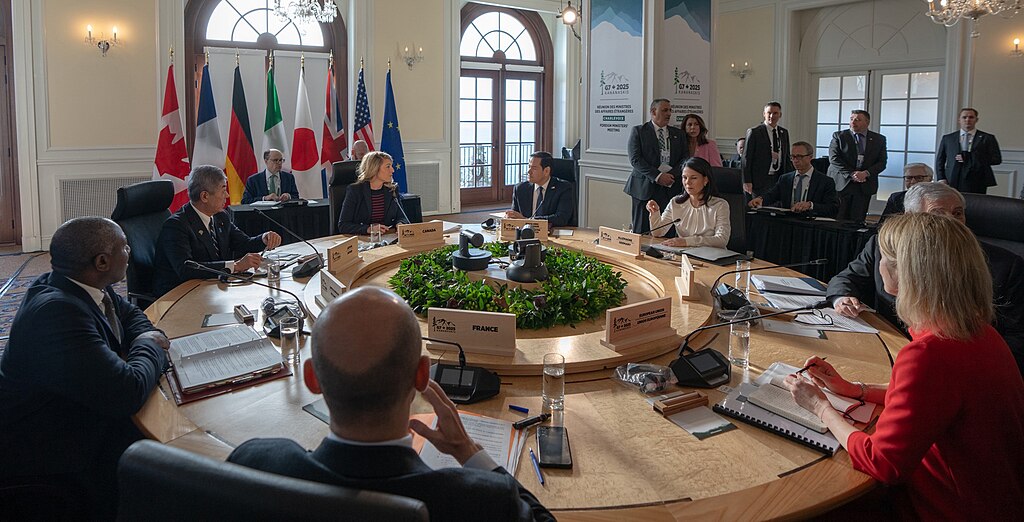
Trump’s absence from the G7 Paris meeting could have implications for ongoing discussions among major global economies. The G7 traditionally serves as a platform for coordination on global economic stability, security challenges, climate policy, and geopolitical crises. U.S. participation is often seen as critical to shaping consensus, making Trump’s decision notable for both diplomatic and strategic reasons.
Despite the controversy, Trump maintained that the United States continues to prioritize its national interests and bilateral relationships. He suggested that disagreements with European powers do not negate long-standing alliances, though critics argue that repeated disputes risk weakening transatlantic unity.
As global attention remains focused on U.S.-Europe relations, Trump’s remarks and his decision to skip the G7 meeting in Paris underscore the ongoing challenges facing international diplomacy during his presidency, particularly at a time when cooperation among major powers is increasingly tested.