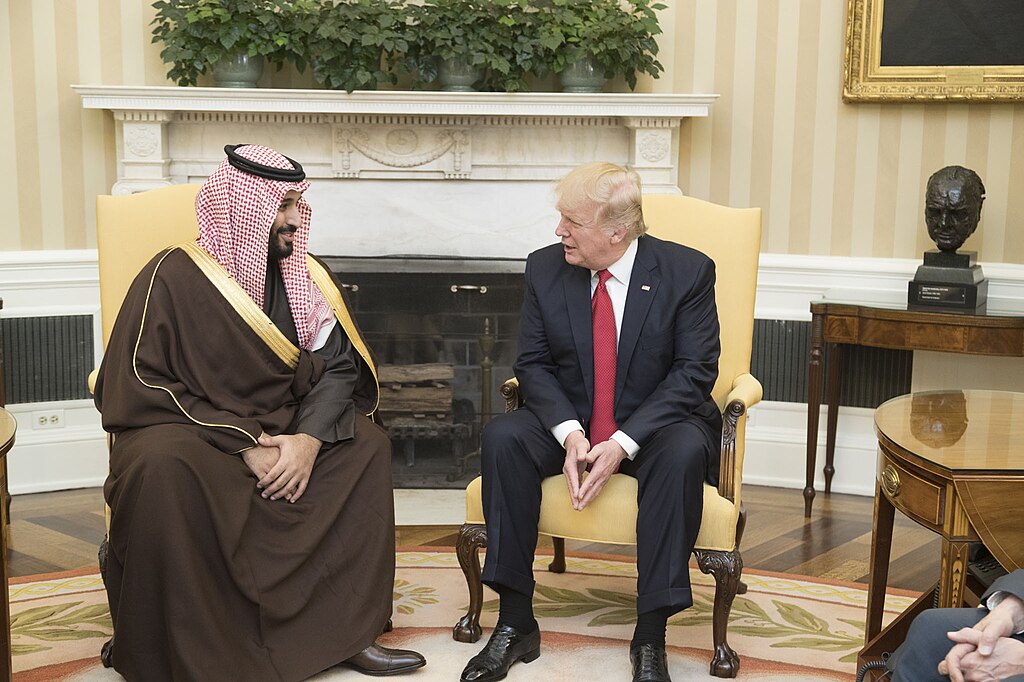
U.S. President Donald Trump is reportedly preparing to finalize a major defense agreement with Saudi Crown Prince Mohammed bin Salman that could allow Riyadh to purchase advanced F-35 stealth fighter jets. According to a Bloomberg News report citing a White House official, the anticipated deal is expected to be discussed during the crown prince’s scheduled visit to Washington on Tuesday, where both leaders plan to sign a series of economic and defense agreements.
The potential sale of F-35 fighter jets to Saudi Arabia marks a significant development in U.S.–Saudi relations, reflecting the Trump administration’s continued emphasis on strengthening strategic military alliances in the Middle East. The F-35, known for its stealth capabilities and cutting-edge technology, is one of the most sought-after aircraft in modern defense.
The visit comes at a time when both nations are looking to bolster economic cooperation and expand defense ties. Trump and Prince Mohammed bin Salman have consistently aligned on geopolitical priorities, particularly in countering regional threats and promoting stability in areas of mutual interest. The expected agreements aim to reinforce long-term cooperation across multiple sectors, further deepening the partnership between Washington and Riyadh.
While Bloomberg cited an unnamed White House official regarding the F-35 discussions, Reuters noted that it could not independently verify the report. Nonetheless, the potential deal is drawing global attention due to its implications for regional security dynamics and U.S. foreign policy.
If confirmed, the agreement would represent one of the most high-profile defense deals between the two countries in recent years. It would also underscore the Trump administration’s willingness to support the kingdom’s military modernization efforts while maintaining a strong diplomatic relationship with one of America’s key allies in the Middle East.
This developing story highlights the evolving landscape of international defense cooperation and the strategic significance of U.S.–Saudi ties as both nations navigate shifting geopolitical challenges.