


 Treasury Yields Set to Stay High as Debt Supply Pressures Bond Market
  Australia Current Account Deficit Widens to A$27.2 Billion
  FCC Steps Up China Tech Crackdown as Beijing Pushes Back
  India Services PMI Rises to 54.1 as Hiring Accelerates
  Australia GDP Beats Forecast, Boosting RBA Rate Hike Bets
  China Services PMI Beats Forecasts as Domestic Demand Improves
  Trump Orders Major Overhaul of US Navy Shipbuilding
  UN Security Council Faces Iran Sanctions Vote
  Oil Prices Rise as US-Iran Conflict Threatens Middle East Supply
  Oil Prices Rise as U.S.-Iran Fighting Fuels Supply Fears
  Bessent Urges Japan on Fiscal Discipline, BOJ Rate Hikes
  Trump Orders Reduction in U.S.-South Korea Military Drills, Citing Kim Jong Un Ties
  U.S., New Zealand Fund $60M Cook Islands Port Upgrade
  Gold Prices Slide as Iran Conflict Fuels Fed Rate Hike Bets
  Nicaragua Congress Backs Reform Banning Opposition Parties
  SEC Sues Former Tricolor Executives Over $1.9 Billion Investor Fraud Scheme
  US Tech Giants’ AI Bond Boom Raises Euro Zone Borrowing Risks


 Add as a preferred source on Google
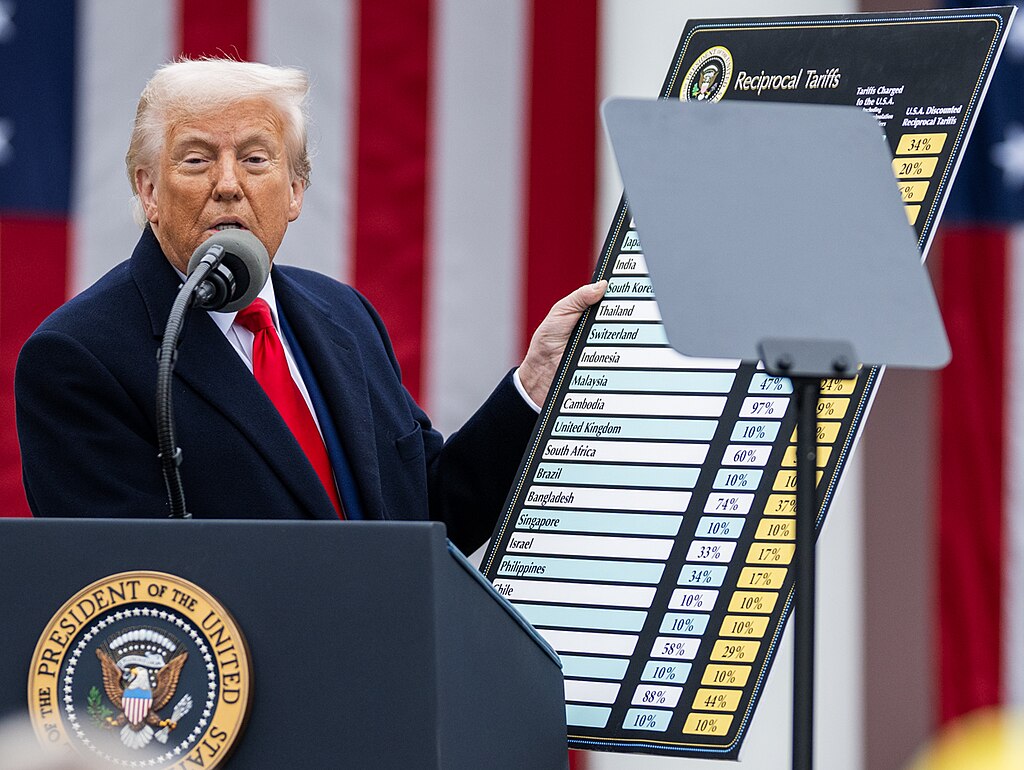
U.S. President Donald Trump announced new tariffs on imported drones and drone components on Thursday, citing national security concerns and the country’s heavy reliance on foreign suppliers.
Under a proclamation signed by Trump, the United States will impose a 100% ad valorem tariff on certain drones based on their size or capabilities when they are considered particularly sensitive to national security. Smaller drones will face a 25% tariff, according to the White House.
The administration also introduced country-specific tariff rates for some major U.S. allies and trading partners. Drone imports and components from the European Union, Japan, Liechtenstein, South Korea, Switzerland and Taiwanwill be subject to a 15% tariff, while imports from the United Kingdom will face a 10% tariff.
The move expands Trump’s use of tariffs as a key part of his trade and foreign policy agenda, despite legal challenges and criticism over the potential economic impact of higher import duties.
Trump said Commerce Secretary Howard Lutnick investigated the national security implications of imports of unmanned aircraft systems (UAS), commonly known as drones, and related components.
According to the proclamation, the Commerce Department determined that foreign manufacturers account for a substantial share of the U.S. drone market, leaving the country overly dependent on overseas sources. The investigation also concluded that drones and components supplied by certain foreign entities could create security and safety risks.
Trump said the domestic U.S. drone industry currently lacks sufficient production capacity to meet the country’s security requirements, strengthening the administration’s case for tariffs aimed at supporting domestic manufacturing and reducing dependence on foreign suppliers.
Most of the new U.S. drone tariffs will take effect 21 days after the proclamation was signed.
However, tariffs covering drone components that are not considered particularly sensitive will take effect 180 days after signing. The same 180-day timeline will apply to certain products that receive Pentagon approval for an exemption from the Federal Communications Commission’s “Covered List” within 20 days of the proclamation.







