
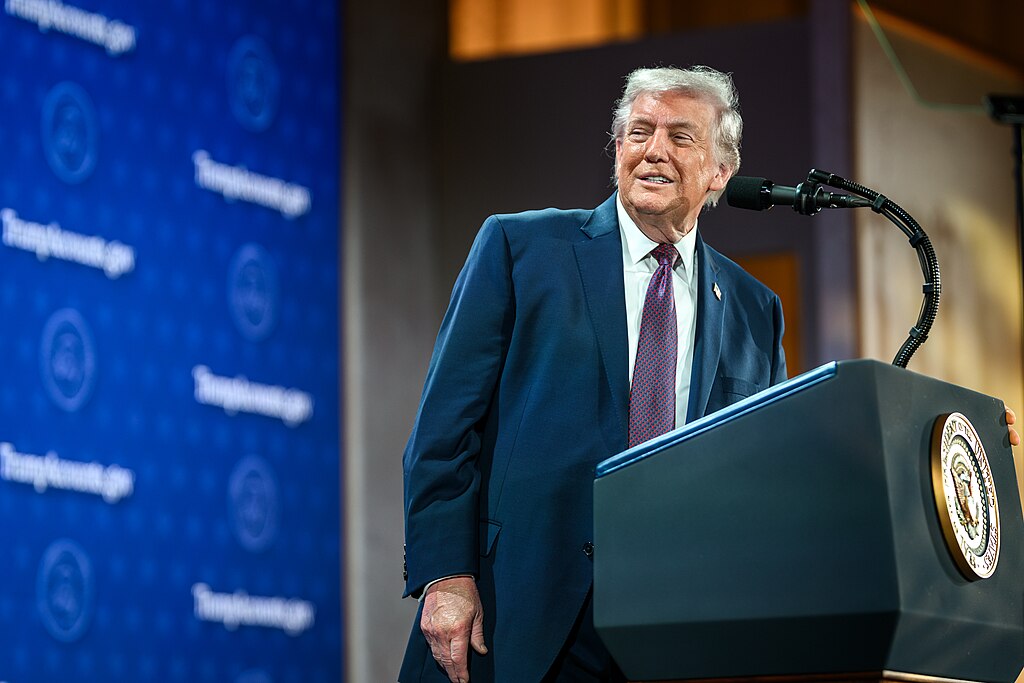
U.S. President Donald Trump announced that the naval blockade against Iran will remain in force until a formal agreement is reached with Tehran, adding uncertainty ahead of a looming ceasefire deadline later this week. In a recent social media post, Trump asserted that the United States is “winning the war by a lot,” while dismissing media coverage suggesting otherwise. He also claimed that Iran’s military strength and missile capabilities had been significantly weakened.
Trump emphasized that the ongoing blockade is putting intense pressure on Iran’s economy, stating that it will not be lifted until a deal is finalized. He reiterated earlier warnings that the U.S. could target Iran’s critical infrastructure if diplomatic efforts fail. These remarks follow renewed tensions over the weekend, when U.S. forces reportedly intercepted and fired upon an Iranian vessel attempting to breach the blockade.
Meanwhile, Iran responded by closing the Strait of Hormuz, a crucial global shipping route, after briefly reopening it. Iranian officials declared that the waterway will stay shut until the U.S. lifts its blockade, raising concerns about global oil supply disruptions and economic impact.
Attention is now focused on whether the United States and Iran can resume peace talks before the ceasefire expires on Wednesday. Iran’s Parliament Speaker and chief negotiator, Mohammad Bagher Ghalibaf, stated that Tehran would not engage in negotiations under pressure, signaling a tougher stance. However, reports indicate that Iran may still participate in a second round of discussions in Pakistan, suggesting that diplomatic channels remain open.
Trump confirmed that a U.S. delegation, led by Vice President JD Vance, is expected to travel to Islamabad for potential talks. Despite this, he indicated that extending the current ceasefire is unlikely. As geopolitical tensions rise, global markets and policymakers continue to closely monitor developments in the U.S.-Iran conflict and its broader economic implications.


