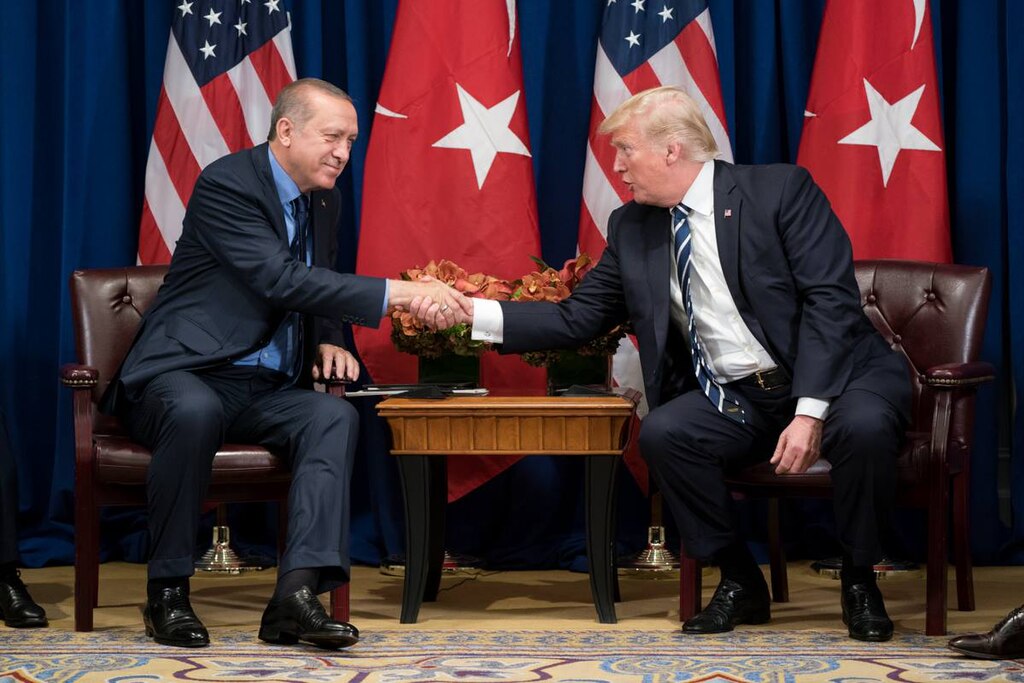
U.S. President Donald Trump is expected to tell Turkish President Recep Tayyip Erdogan that his administration is prepared to allow Turkey to rejoin the F-35 stealth fighter program, according to a New York Times report citing four senior U.S. administration officials.
The reported move comes as Trump travels to Ankara for the NATO summit, where he is scheduled to meet Erdogan before alliance leaders gather on Tuesday evening. While officials reportedly disagreed on how the administration would navigate existing legal and congressional restrictions, they indicated that the two leaders could exchange formal letters outlining a possible path forward.
The White House has not commented on the report.
Turkey was removed from the U.S.-led F-35 program in 2019 after purchasing Russia's S-400 air defense system. Washington argued that operating the Russian-made missile system alongside the F-35 posed a security risk by potentially exposing sensitive technology. The U.S. subsequently imposed sanctions on Ankara, while Congress passed legislation blocking F-35 sales to Turkey as long as it retained the S-400 system.
The dispute has remained one of the biggest obstacles in U.S.-Turkey defense relations despite improving diplomatic ties under the Trump administration.
The latest report suggests Washington could be exploring ways to rebuild defense cooperation with Ankara. Any effort to restore Turkey's participation in the F-35 program would likely require addressing congressional concerns and existing legal barriers tied to the S-400 issue.
The development follows another sign of strengthening bilateral relations. Last month, the Trump administration formally notified Congress of its intention to approve the sale of dozens of jet engines to Turkey in a deal valued at more than $700 million, according to documents reviewed by Reuters.
If discussions advance, a potential F-35 agreement would mark a significant shift in U.S.-Turkey defense policy and could reshape security cooperation between the two NATO allies after years of strained relations over Ankara's purchase of Russian military equipment.