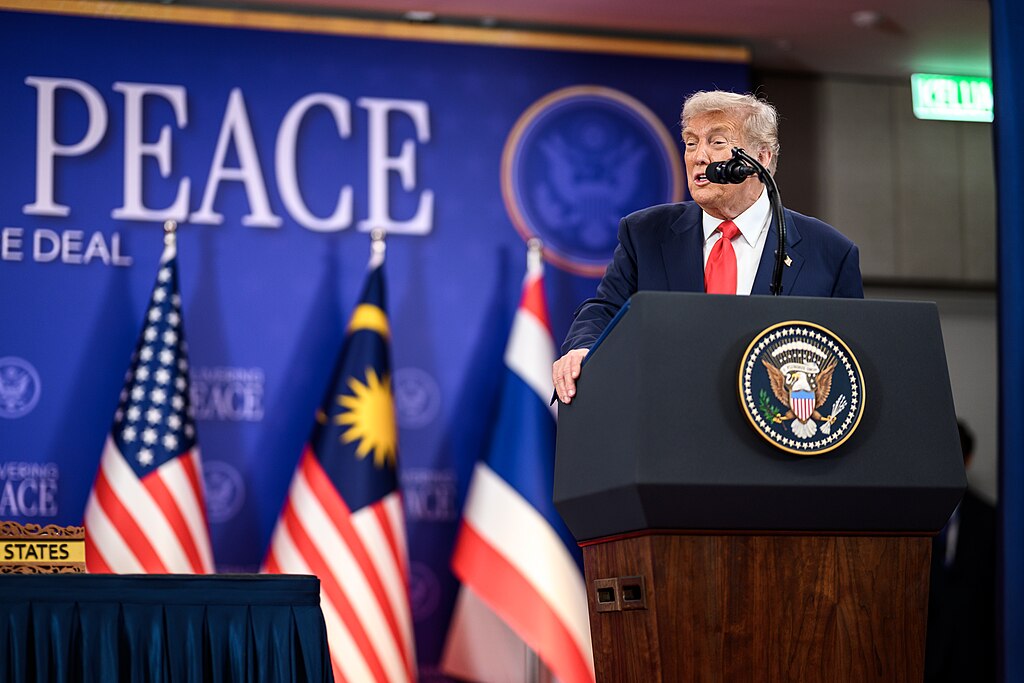
U.S. President Donald Trump said Tuesday that no negotiations with Iran were taking place and insisted the Strait of Hormuz remained open, contradicting Tehran’s claim that the strategic waterway was still closed to shipping.
The diplomatic stalemate has renewed concerns over the nearly six-month U.S.-Iran conflict, pushing oil prices higher while weighing on global stock markets. Borrowing costs in major economies, including the United States, have also climbed to multi-decade highs amid fears over inflation and the conflict’s long-term economic impact.
A temporary ceasefire expired Monday. Trump said on Truth Social that no talks with Iran were underway or scheduled, adding that the U.S. naval blockade remained in effect and that mines in the Strait of Hormuz had been removed or destroyed.
His comments contrasted with remarks from special envoy Jared Kushner, who said Monday that negotiations with Tehran remained active and were more robust than before.
Shipping disruptions also continued despite Trump’s assertion that the Strait of Hormuz was operating. The United Arab Emirates said it detected two Iranian ballistic missiles allegedly targeting maritime traffic, although both fell into the sea. Iran rejected the accusation as baseless.
The UAE subsequently suspended trade and financial transactions with Iran. Meanwhile, the United Kingdom Maritime Trade Operations reported that a vessel leaving the Strait of Hormuz was hit by an unidentified projectile, damaging its engine room and causing a crew casualty.
Iranian officials maintain that the strait will remain closed until Washington meets conditions outlined in a June interim agreement, including lifting oil sanctions, releasing frozen Iranian assets and ending military operations.
Iran has nevertheless signaled that it remains open to negotiations, while stressing it will not accept surrender under military or economic pressure.
The prolonged Iran conflict and uncertainty surrounding the Strait of Hormuz continue to pressure global energy markets. Brent crude, which reached $126 per barrel during the war, settled Tuesday at slightly above $91.
Washington has also warned that additional U.S. sanctions on Iran could follow if diplomatic efforts fail.