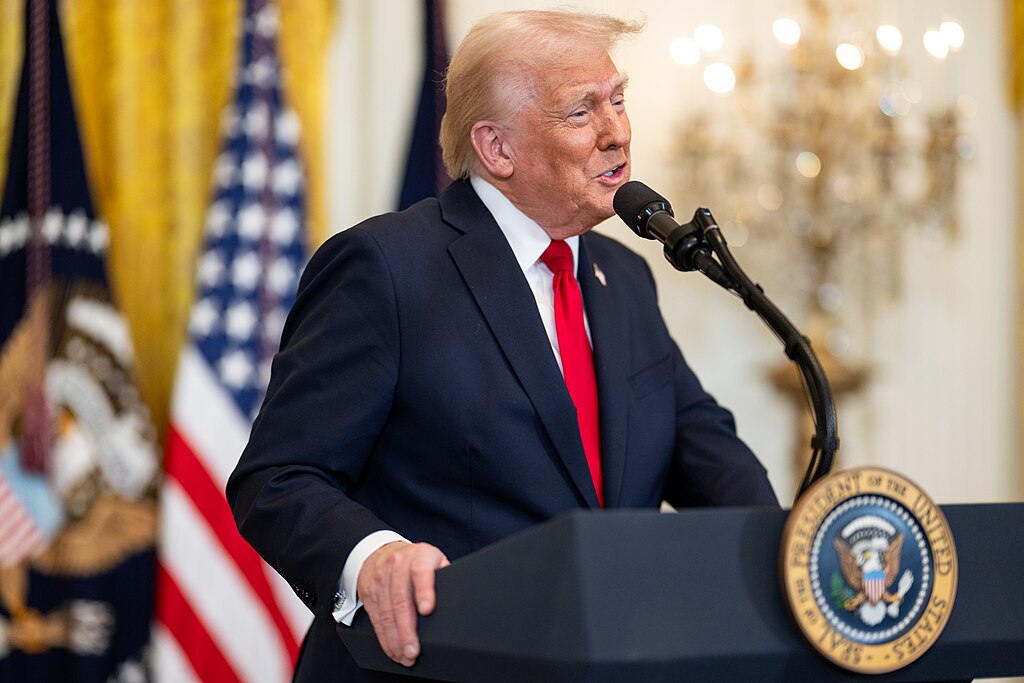
President Donald Trump has announced the launch of the Golden Dome missile defense program, a $175 billion space-based shield aimed at countering threats from China and Russia. The initiative, modeled after Israel’s Iron Dome, will utilize a vast network of surveillance and interceptor satellites to detect and neutralize missile threats.
Trump confirmed that U.S. Space Force General Michael Guetlein will lead the program, which he expects to be operational by January 2029. Canada has expressed interest in joining the effort, according to Prime Minister Mark Carney’s office, citing broader talks on NORAD and joint defense strategies.
Industry insiders remain skeptical of the timeline and cost. While Trump compared the initiative to Ronald Reagan’s "Star Wars" plan, today’s advanced satellite and software technologies make such a system more feasible. Analysts like Tom Karako of CSIS believe the $175 billion estimate could span a decade, though the Congressional Budget Office warns the cost may reach $831 billion over 20 years.
Key private-sector players expected to contribute include SpaceX, Palantir (NASDAQ:PLTR), and Anduril, with legacy defense firms like Lockheed Martin (NYSE:LMT), RTX Corp, and L3Harris Technologies (NYSE:LHX) also in the mix. L3 has already invested $150 million in a satellite facility in Fort Wayne, Indiana.
The project’s funding is uncertain, as its initial $25 billion allocation is part of a broader $150 billion defense bill tied to a contentious reconciliation effort in Congress. Without legislative approval, Golden Dome’s future remains unclear.
Trump emphasized the role of states like Alaska, Florida, Georgia, and Indiana in building the system, pitching the program as a transformative defense upgrade with nationwide economic and security implications.