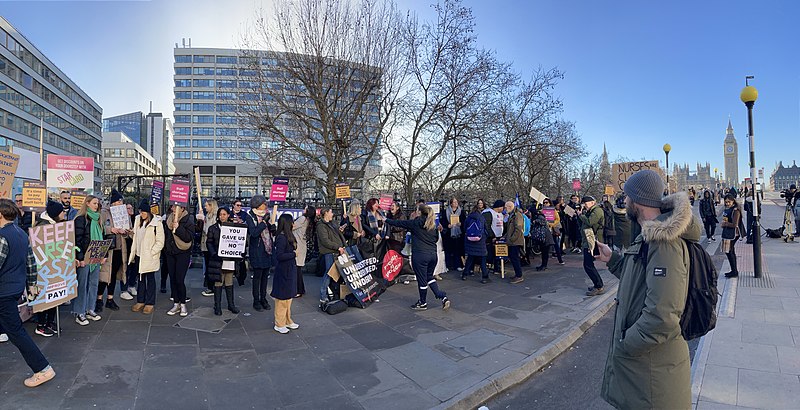
A trade union that represents senior doctors in the United Kingdom announced that its members started voting this week on whether to take industrial action following the government’s failure to lay out a pay proposal. This comes as several workers under key sectors have taken strike action in recent months in a dispute over pay.
The British Medical Association said on Monday that its members started voting on whether to take strike action. The trade union is urging its members to vote in favor of strike action on the ballot, which would close on June 27. The BMA has argued that consultants’ take-home pay has fallen 35 percent between 2008-2009 and 2021-2022 and worsened due to the double-digit inflation rates over the past year.
“We have tried to remedy this through weeks of talks with the government,” said the BMA. “We were hopeful…these talks would have a positive outcome. Sadly, no satisfactory offer on pay has been forthcoming. This left us with no option but to open this ballot for industrial action.”
A vote to take strike action follows the one taken by junior doctors back in March and April, including the long-running strikes by other staff of the National Health Service, including nurses and paramedics. The strike action has since placed added pressure on the NHS, which was already struggling with staffing and trying to recover from the COVID-19 pandemic with millions of patients waiting to receive treatment.
The government has said that increases in pay would only worsen inflation in the country. Earlier this month, the government also said it would be implementing the pay rise for over one million NHS staff in the UK after trade unions that represented a majority of workers involved in the dispute accepted a pay proposal.
On Tuesday, a leading think tank in the UK said that residents of the UK are set to face what would be the biggest tax increase since the beginning of former British prime minister Margaret Thatcher’s term as more people are brought to pay the top rate of income tax. The Independent Institute of Fiscal Studies said 7.8 million people, or 14 percent of adults, would end up paying 40 percent or more in income tax on some of their income from the 2027-2028 fiscal year, up from 11 percent in 2022-2023 and just 3.5 percent in 1191-1992
Photo by Matt Brown/Wikimedia Commons(CC by 2.0)