


 Oil Prices Trim Gains After Trump Rules Out Iran Strikes Before Midterms
  France to Release 10 Million Barrels of Diesel to Ease Fuel Prices
  Bangladesh GDP Growth Accelerates to 4.6% on Industrial Rebound
  Trump Secures Russian Diesel Deal as US Fuel Prices Surge
  Oil Prices Rise as Hormuz Risks Offset IEA Stock Release
  Gold Prices Rise as Dollar Weakens, Treasury Yields Fall
  Crypto Market Selloff Wipes Out $100B as Bitcoin Falls Below $83K
  US Treasury Yields Ease After Strong 10-Year Auction as Global Bonds Struggle
  US Dollar Rises for Fourth Week as Fed Rate Hike Bets Grow
  Mike Rogers Calls for End to US-Canada Tariff War
  Wall Street Falls as Fed Minutes Signal Another Rate Hike


 Add as a preferred source on Google
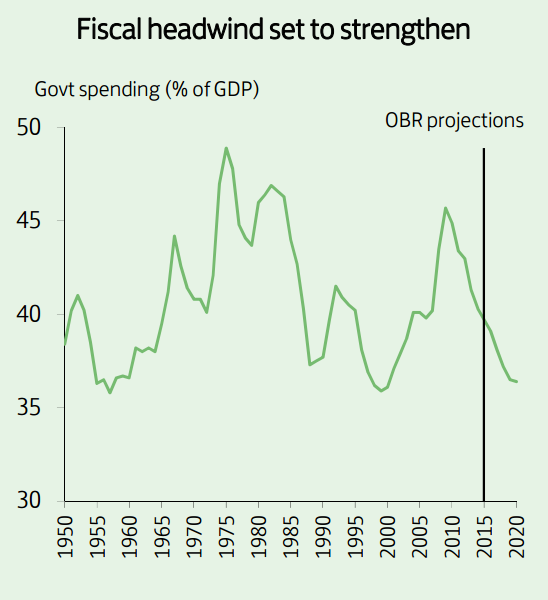
Ongoing fiscal austerity will continue to constrain overall economic growth. While the Chancellor's recent Autumn Statement modestly softened the near-term impact of the cut backs - increasing spending and cutting borrowing relative to the projections in the July Budget - the big picture remains that the bulk of the structural consolidation still lies ahead.
Indeed, the fiscal headwind over the next few years through to 2020-21 is set to be larger than that seen to date since 2010. Latest forecasts also project public spending as a share of GDP dropping to just 36.4% by 2020-21, a low previously only seen briefly in recent history in the late 1950s and late 1990s. The scale of the coming cuts continues to raise doubts about whether they will be achieved. Risks thus remain either of slippage, or of an outsized adverse impact on the economy.

- News

- Economy

- Central Banks
- Investing
- Research
- Roundups
- Digital Currency
- Insights
- Technical Analysis
- Technology
- Business
- Law
- Health
- Nature
- Fintech
- Science
- Topic
- Opinions
- ©Econometrics LLC . All Rights Reserved.
UK fiscal headwind still strong
Thursday, December 10, 2015 10:01 PM UTC
Editor's Picks



- Market Data
Most Popular




