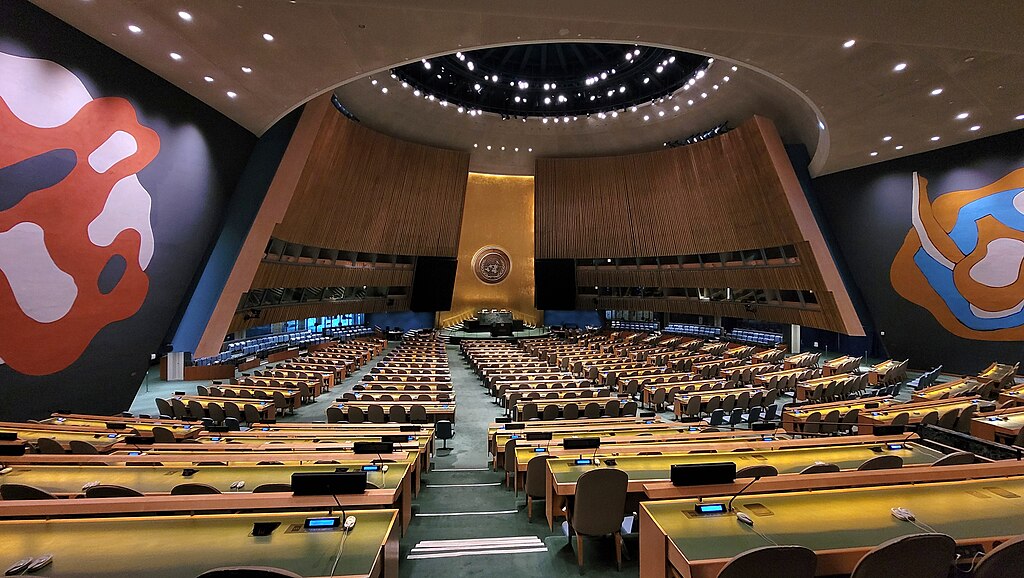
The United Nations General Assembly voted overwhelmingly on Friday to reappoint U.N. High Commissioner for Human Rights Volker Turk for a second four-year term, overcoming opposition from the United States, Russia, and Israel.
The 193-member assembly approved U.N. Secretary-General Antonio Guterres’ nomination by a vote of 144 in favor, with 10 against and 13 abstentions. Turk’s current term expires in October, and his reappointment makes him the first U.N. human rights chief to serve two full four-year terms since the position was created in 1993.
Turk has been a vocal critic of Russia’s war in Ukraine and Israel’s military campaign in Gaza. He has also called for investigations into deaths in U.S. immigration detention facilities, drawing criticism from Washington, Moscow, and Jerusalem.
Before the vote, Russia proposed extending Turk’s mandate only until the end of 2026, but the General Assembly overwhelmingly rejected the amendment.
The decision comes amid growing tensions between the Trump administration and the United Nations. Washington has reduced funding for several U.N. agencies and withdrawn from multiple U.N. bodies, while criticizing the organization’s governance and decision-making.
Jeff Bartos, the U.S. Representative for U.N. Management and Reform, urged member states to delay the vote for further consultations. He argued that reappointing Turk without additional debate reflected a flawed process and warned the United States would immediately reassess its engagement, participation, and financial support for the U.N. if the appointment proceeded.
A State Department spokesperson also described the reappointment process as a “process foul,” accusing the U.N. of rushing the vote and limiting oversight by member states.
Despite the objections, the European Union, African nations, many Latin American countries, and China backed Turk’s second term. Human Rights Watch welcomed the outcome, saying strong leadership is essential as authoritarian governments increasingly challenge international human rights institutions.
Following the vote, Russia’s deputy U.N. ambassador Dmitry Chumakov accused Turk of political bias against Moscow, while Israel’s Foreign Ministry called Guterres’ decision a “moral failure,” arguing that Turk’s successor should have been allowed to make the appointment.