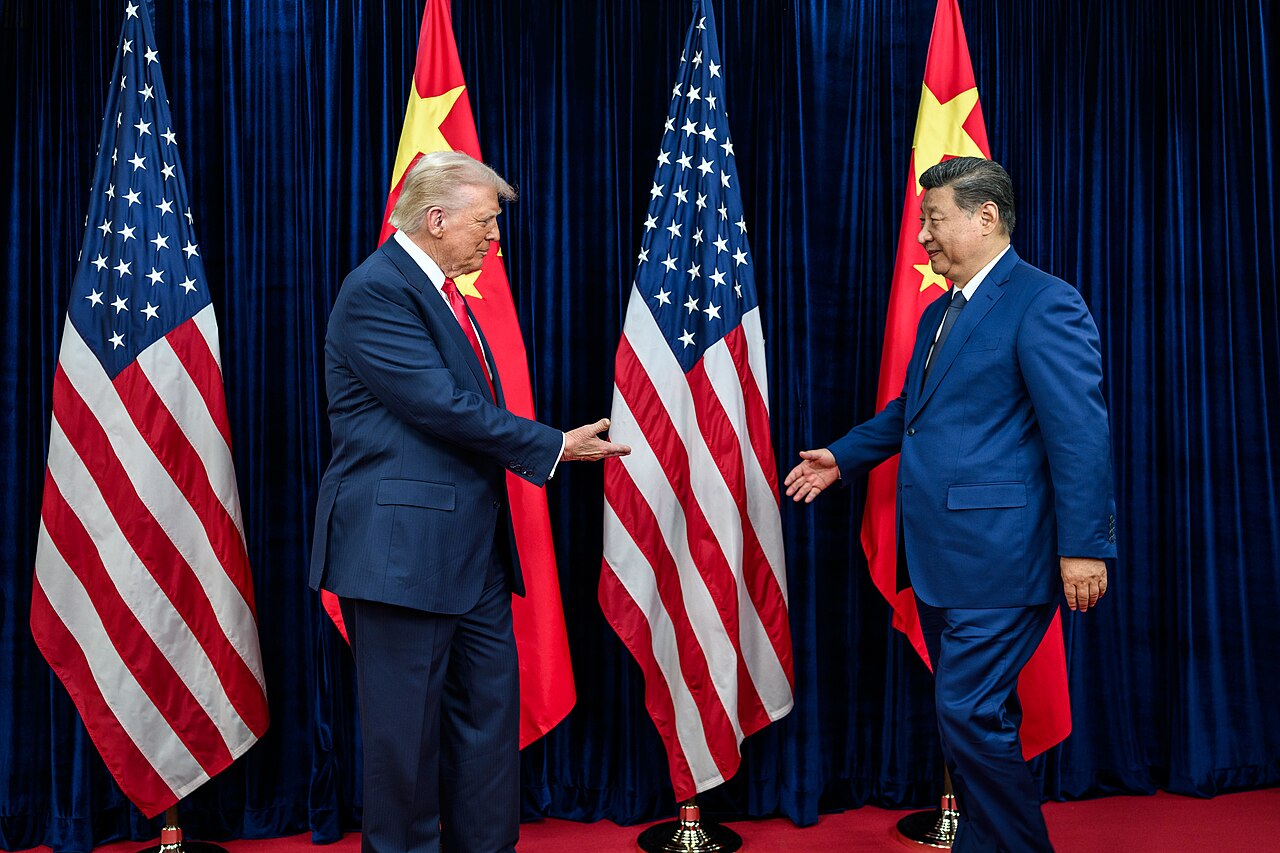
U.S. allies in Asia are increasingly concerned that President Donald Trump could soften Washington’s stance on Taiwan as he prepares to host Chinese President Xi Jinping on September 24, with trade and economic issues expected to feature prominently in the talks.
Officials, lawmakers and analysts in Taipei, Tokyo and Washington worry that even a subtle shift in U.S. language on Taiwan could alter regional calculations. Those concerns have grown since Trump described a pending U.S. arms package for Taiwan as a “negotiating chip” following his May meeting with Xi.
Taiwan has sought to communicate its position clearly to Washington ahead of the Trump-Xi summit. Senior Taiwanese official Shen Yu-chung said Taipei hopes there will be no outcome that harms Taiwan. Foreign Minister Lin Chia-lung said he expects Xi to raise the issue but noted that Washington has repeatedly maintained that its Taiwan policy remains unchanged.
Japan is also closely watching the upcoming U.S.-China talks. Japanese officials want Washington to maintain established diplomatic language regarding Taiwan and avoid turning the issue into a bargaining point during negotiations with Beijing.
Trump has said Xi assured him that China would not attack Taiwan while he remains president. However, Trump has declined to state explicitly whether the United States would defend Taiwan in the event of a Chinese attack.
The United States maintains a “one China policy,” under which Washington acknowledges Beijing’s position that Taiwan is part of China without endorsing that claim and does not take an official position on Taiwan’s sovereignty.
Another key issue is a reported $14 billion U.S. arms package for Taiwan that has been awaiting Trump’s approval. Trump said after his May summit with Xi that the package was being held back and could provide leverage in negotiations.
China considers Taiwan a central issue in U.S.-China relations and has not ruled out using force to take control of the island. Any conflict would carry major global economic consequences because Taiwan is a crucial center for advanced semiconductor production.
With Trump and Xi preparing to meet, Taiwan policy, U.S. arms sales, trade relations and regional security are likely to remain closely watched across Asia.