


 FDA Names Permanent Drug and Biologics Center Chiefs
  Brazil Court Suspends Sigma Lithium Mine Operations
  U.S. Imposes New Visa Restrictions Over South Africa Policies
  Philippines Holds Historic Bangsamoro Election Amid Tight Security
  US Weighs New Sanctions Against Brazil Supreme Court Justice Alexandre de Moraes
  Rodrigo Duterte Makes First Public Appearance at ICC in 18 Months
  New Zealand Labour Backs Social Media Ban for Under-16s
  DOJ Will Investigate AI-Related Crimes, Attorney General Blanche Says
  Australia’s Corporate Leaders Face Parliament Over KPMG Client Data Scandal
  Prince Harry, Elton John Ordered to Pay £9.54 Million in Daily Mail Legal Costs
  China’s Global Times Slams Anthropic CEO’s AI Slowdown Plan as ‘Cold War’ Strategy
  US Court Approves airBaltic Chapter 11 Restructuring
  Trump Rejects Calls for Tougher AI Regulation
  Texas Republicans Turn Against AI Data Centers as Election Backlash Grows
  US Judge Dismisses Imran Ahmed Deportation Lawsuit
  US Immigration Arrests Surge as Deportations Lag Behind
  Countries Tighten Social Media Bans for Children


 Add as a preferred source on Google
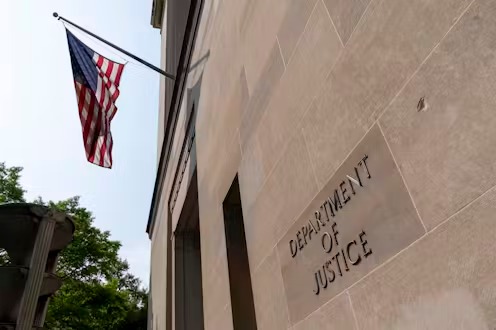
The U.S. Justice Department has filed a lawsuit seeking to block a California law that requires oil and gas drilling operations to maintain significant buffer zones from schools, homes, hospitals, and other community spaces. The lawsuit, announced on Wednesday, targets California Senate Bill 1137, a measure designed to protect public health by limiting where new oil and gas wells can be drilled and by imposing stricter safety rules on existing operations.
According to the Justice Department, the federal government is asking the court to issue an injunction to stop enforcement of the law and plans to seek a preliminary injunction in the coming days. The department argues that federal energy laws should preempt the California legislation, claiming that the buffer zone requirements interfere with federally authorized oil and gas leases. In its statement, the Justice Department said the law “would knock out about one-third of all federally authorized oil and gas leases in California,” potentially limiting domestic energy development.
Senate Bill 1137 went into full effect in 2024 and prohibits the approval of new oil and gas wells within 3,200 feet, or roughly half a mile, of sensitive locations such as residential neighborhoods, schools, and healthcare facilities. The law also introduces enhanced health and safety standards for existing wells that continue to operate near populated areas. California lawmakers and state officials have argued that these measures are necessary to reduce pollution exposure and safeguard vulnerable communities.
The lawsuit highlights ongoing political and policy tensions between the Trump administration, which strongly supports fossil fuel development, and California Governor Gavin Newsom. Newsom has consistently promoted California as a leader in climate change action and environmental regulation, often clashing with federal authorities over energy and environmental policies.
Environmental advocates have strongly defended the California law. Earthjustice, a prominent environmental group, estimates that more than three million Californians, representing about 8% of the state’s population, live within 3,200 feet of active oil wells. The organization warns that proximity to drilling sites is linked to serious health risks, including asthma, reduced lung function, and higher rates of preterm birth.
As the legal battle unfolds, the case is expected to have significant implications for environmental regulation, public health protections, and the balance of power between state and federal authority over energy policy in the United States.







