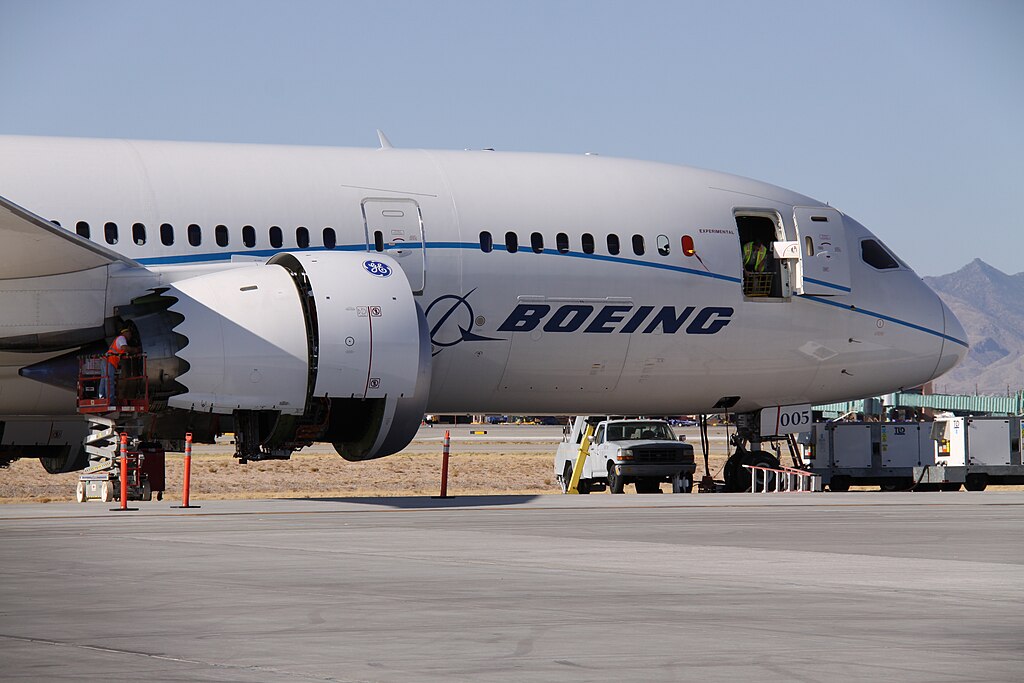
The United States is weighing new export controls on Boeing aircraft parts as a possible response to China’s recent restrictions on rare earth mineral exports, President Donald Trump announced Friday. The move could escalate trade tensions between Washington and Beijing, adding a new dimension to an already complex economic relationship.
Trump, who has long leveraged Boeing in trade negotiations since taking office, noted that China’s reliance on U.S.-made planes could be a significant bargaining tool. “They have a lot of Boeing planes, and they need parts, and lots of things like that,” he said. The statement follows Beijing’s earlier order in April for Chinese airlines to halt deliveries of new Boeing jets amid mounting trade disputes.
Boeing, meanwhile, is negotiating a potential sale of up to 500 jets to China, which would mark the company’s first major Chinese order since Trump’s first term. Yet analysts suggest the financial impact of potential export restrictions would be limited. “It’s sandpaper on Boeing’s hide,” said aerospace analyst Scott Hamilton of Leeham Co., noting China now represents less than 5% of Boeing’s order book—down from 25% historically.
According to aviation analytics firm Cirium, Chinese carriers have ordered 222 Boeing jets and currently operate about 1,855, mostly 737 models. A U.S. export ban would also affect CFM International—a joint venture between GE Aerospace and France’s Safran—that supplies engines for Boeing’s 737 MAX, as well as GE’s engines for the 777 and 787 models.
While Airbus has just 185 Chinese orders, its assembly line in Tianjin continues producing four A320 jets monthly. Meanwhile, China is ramping up production of its homegrown COMAC C919, a competitor to Boeing and Airbus. However, U.S. export restrictions on Western-made components have already slowed C919 deliveries, with only five of 32 jets delivered this year.