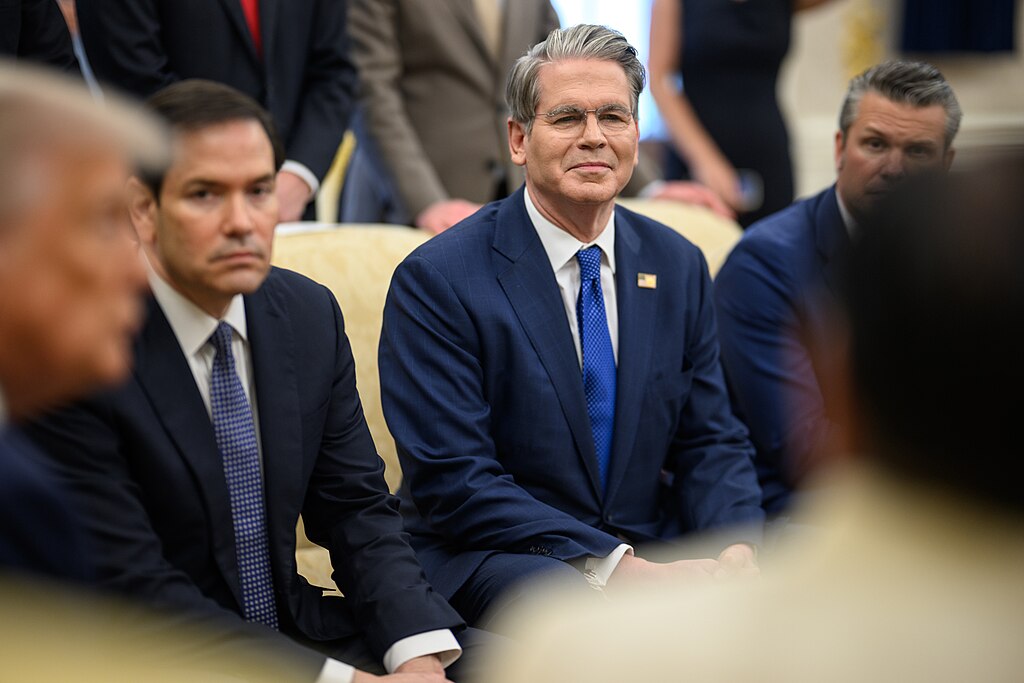
U.S. Treasury Secretary Scott Bessent said Washington is preparing to impose sweeping new sanctions on Iran, reinforcing President Donald Trump’s push to intensify economic pressure on Tehran amid ongoing tensions and disruptions in the Strait of Hormuz.
Speaking to CNBC on Thursday, Bessent described the U.S. strategy as a combination of economic sanctions and the existing blockade. He said the measures would be the toughest sanctions imposed on Iran and predicted they would place severe pressure on the Iranian government.
“It is a one-two punch. We have the blockade, and we are going to have the toughest sanctions in history,” Bessent said.
The Treasury secretary said he plans to hold a press conference on Monday to provide details of the new Iran sanctions. He also urged China to cooperate with Washington’s measures, given Beijing’s position as a major buyer of Iranian crude oil.
China, however, signaled opposition to additional economic restrictions. The Chinese Foreign Ministry said Thursday that sanctions and pressure would “not help resolve the issue,” highlighting potential challenges for Washington as it seeks broader international support.
Bessent’s comments followed Trump’s pledge on Wednesday to wage “economic warfare and isolation on an unprecedented scale” against Iran. The U.S. president argued that months of American military and economic pressure had left Tehran increasingly vulnerable.
Iran rejected Trump’s assessment. Foreign Minister Abbas Araghchi accused the U.S. president of using threats against Tehran to distract attention from domestic challenges, including rising U.S. government debt.
The prospect of tougher U.S. sanctions suggests tensions between Washington and Tehran are unlikely to ease soon. The Strait of Hormuz, a critical route for global energy shipments, remained effectively closed this week, according to shipping data.
Oil prices have climbed sharply as traders assess the risk of prolonged supply disruptions. With Washington preparing additional sanctions and China resisting greater pressure on Iran, uncertainty surrounding Iranian oil exports and the broader Middle East energy market remains elevated.