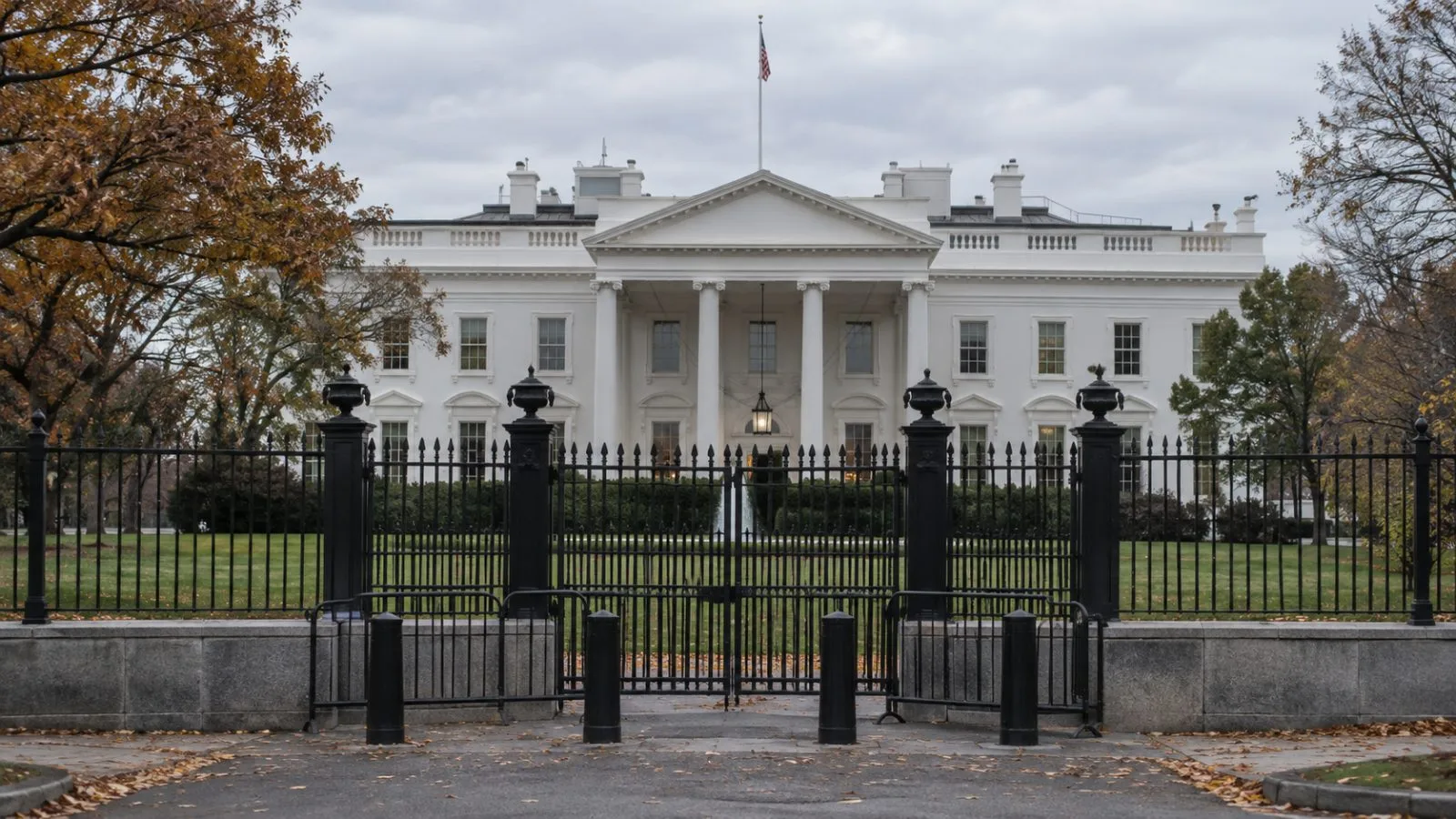
U.S. stock index futures declined sharply Monday evening as renewed trade tensions and upcoming corporate earnings kept investors on edge. Market sentiment weakened after President Donald Trump threatened to impose tariffs on several major European countries over Greenland, reigniting geopolitical uncertainty at a time when trading volumes were already subdued by the Martin Luther King Jr. Day holiday, during which Wall Street remained closed.
S&P 500 futures fell about 1% to around 6,908, while Nasdaq 100 futures dropped roughly 1.2% to near 25,382. Dow Jones futures also slid nearly 0.9% to approximately 49,127. The pullback followed broad losses across global markets earlier in the day, reflecting a risk-off mood driven by fears of escalating trade disputes.
Over the weekend, Trump said the U.S. could impose tariffs starting at 10% as early as February, rising to as much as 25% by July if European nations fail to reach an agreement involving Greenland. European leaders strongly criticized the proposal and signaled that retaliatory economic measures could be considered, adding to market anxiety. Trump also declined to rule out the use of military force, further unsettling investors already wary after recent U.S. actions in Venezuela.
As risk appetite faded, safe-haven assets benefited, with gold prices rallying to record highs. Investors are now watching closely to see whether the administration follows through on its tariff threats or retreats, a pattern seen several times with U.S. trade policy in recent years.
Beyond geopolitics, attention is shifting to a busy earnings calendar that could shape near-term market direction. Netflix and Johnson & Johnson are among the most anticipated reporters this week, alongside companies such as 3M, U.S. Bancorp, Charles Schwab, Prologis, Halliburton, GE Aerospace, Intel, Procter & Gamble, and Abbott Laboratories. These results will provide fresh insight into corporate health and consumer demand in the world’s largest economy.
Despite the latest pullback, U.S. stock futures remain close to record highs, supported by a strong, tech-led rally that carried markets through late 2025 and into early 2026, underscoring the delicate balance between growth optimism and rising global risks.