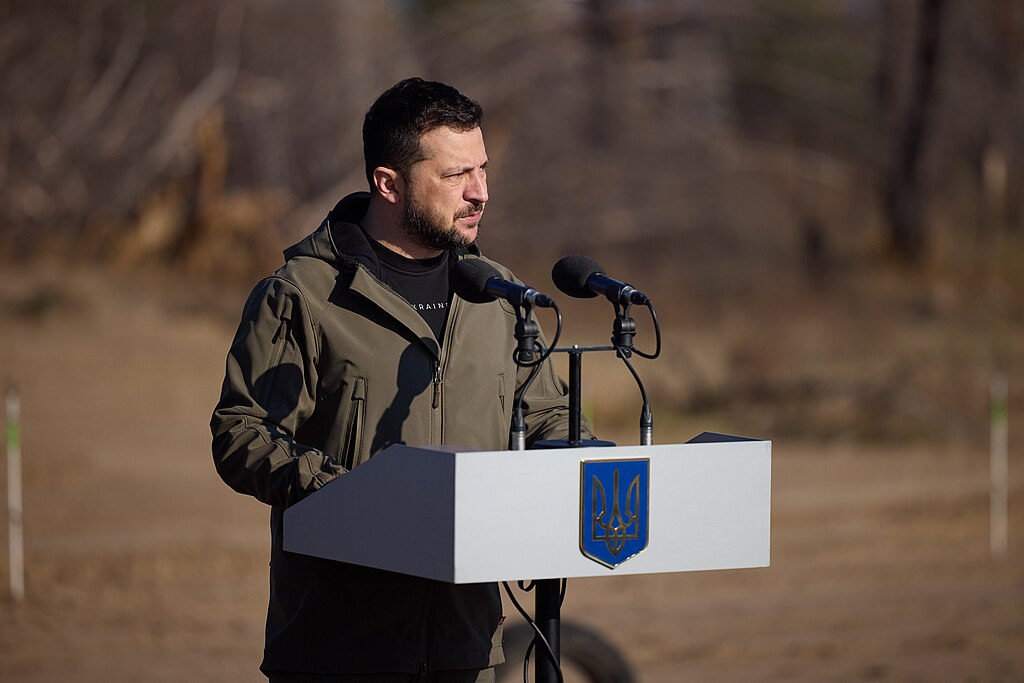
U.S. and Ukrainian officials have discussed “some ideas” to address territorial issues during ongoing peace talks aimed at ending Russia’s war on Ukraine, Ukrainian President Volodymyr Zelenskiy said on Tuesday, describing the matter as the biggest remaining obstacle to reaching an agreement.
Speaking in Paris after meeting with European allies, Zelenskiy said the discussions focused on how to resolve disputes over territory while also working on long-term security guarantees for Ukraine. The meetings come amid increasing pressure from the United States for Kyiv to move quickly toward a peace deal, even as Ukraine firmly rejects Russian demands that it give up land it still controls in the eastern Donbas region.
“The biggest issue that needs to be worked on is the territorial issue. We discussed some ideas that might help,” Zelenskiy told reporters, adding that if negotiators fail to resolve key disagreements, the matter could be escalated to discussions at the leaders’ level. He also confirmed that the Ukrainian delegation would remain in Paris for further consultations with partners.
Separately, White House special envoy Steve Witkoff said that land-related options were discussed during the Paris talks and confirmed that negotiations would continue in the coming days. While details of the proposals were not disclosed, the comments suggest a renewed diplomatic push to bridge gaps that have stalled progress toward a ceasefire.
Ukraine has previously stated that the United States floated the idea of establishing a free economic zone if Kyiv were to withdraw from parts of the Donetsk region that Ukrainian forces currently control. Ukrainian officials, however, have emphasized that any solution must respect the country’s sovereignty and territorial integrity.
The territorial question remains central to the peace process, with Kyiv seeking security guarantees from Western allies while resisting concessions it views as unacceptable. As talks continue in Paris, both sides appear to be testing creative diplomatic options, though significant hurdles remain before a comprehensive peace deal can be reached.