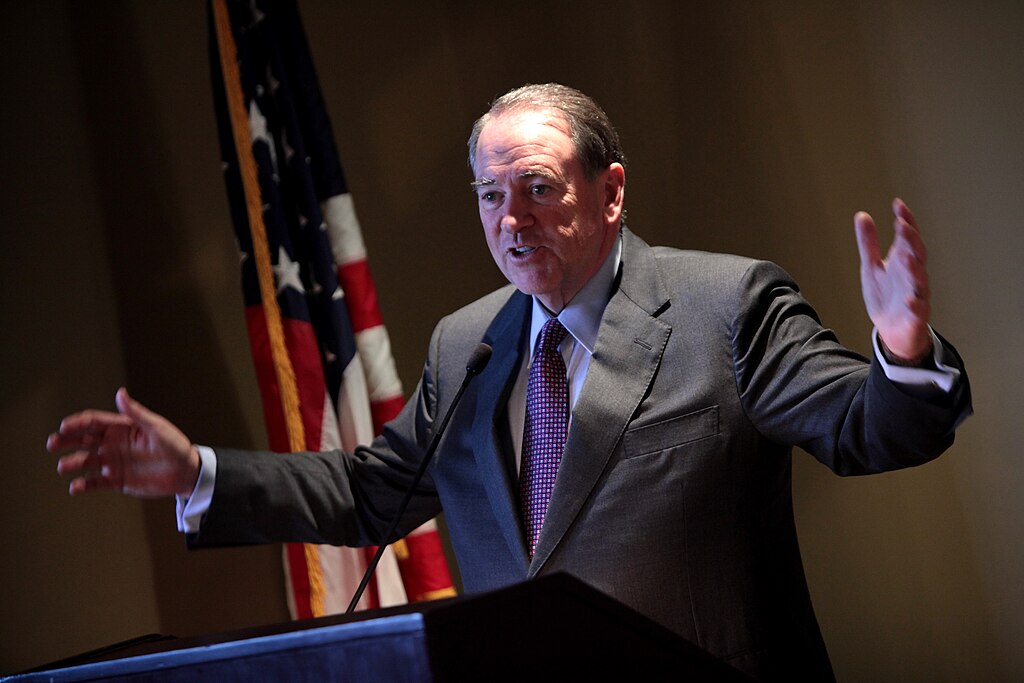
The White House says it had no prior knowledge of U.S. Ambassador to Israel Mike Huckabee’s private meeting with Jonathan Pollard, the former U.S. Navy intelligence analyst convicted of spying for Israel. According to a New York Times report, Huckabee met Pollard in July at the U.S. Embassy in Jerusalem, a meeting that was left off official schedules and caught U.S. officials “off guard,” raising concerns within the intelligence community.
White House spokeswoman Karoline Leavitt confirmed that the administration was not informed in advance but emphasized that “the president stands by our ambassador, Mike Huckabee, and all that he is doing for the United States and Israel.” The incident has drawn attention due to Pollard’s controversial history and the long-standing U.S. policy of minimizing contact with individuals convicted of espionage.
Pollard, who spent 30 years in prison before his 2015 parole and eventual move to Israel in 2020, said in an interview with Israel’s i24 News that he initiated the meeting with Huckabee for personal reasons. He stated that he wanted to thank Huckabee for advocating his release during the former Arkansas governor’s 2011 presidential campaign. Huckabee has long been known as a strong supporter of Israel and has built relationships with Israeli political leaders, particularly those on the right.
Pollard’s case remains one of the most divisive espionage incidents in U.S. history. While many in Israel consider him a patriot, U.S. intelligence officials continue to view his actions as among the most damaging breaches of classified information ever committed by an ally. The CIA reportedly expressed concern that Huckabee’s meeting could be interpreted as a softening U.S. stance toward allied espionage.
As the Trump administration works to maintain strong diplomatic ties with Israel, the unpublicized meeting raises questions about protocol, transparency, and the messaging surrounding U.S. policy toward intelligence breaches by friendly nations.