


 Strategy’s STRC Nears $100, Raising Prospects for Major Bitcoin Buys
  Fed’s Williams Signals One More Rate Hike Before Year-End
  U.S. Government Moves Over $100M in Bitcoin and BNB
  Jay Clayton Named Trump’s AI Czar as XRP Past Resurfaces
  Cardano Price Eyes $0.30 as ADA Whale Activity Surges
  Ethereum Price Drops Below $2,600 as Long Liquidations Hit 4-Month High
  BofA Raises Coinbase Stock Target to $203 on Stablecoin Growth
  China Shuts 670 Banks as Bitcoin Eyes Financial Risks
  Trump Demands Powell Resign Over Fed Renovation Cost Overruns
  RBA Says ASX Still Falls Short on Governance and Risk Controls
  RBI Raises Repo Rate to 5.50% in Hawkish Shift on Inflation Risks
  BlackRock’s Rick Rieder Favors Bonds Over Stocks as Treasury Yields Surge
  Yen Sinks as BOJ Rate Hike Fails to Impress Markets
  Zcash Privacy Demand Rises as AI Exposes Bitcoin Transactions


 Add as a preferred source on Google
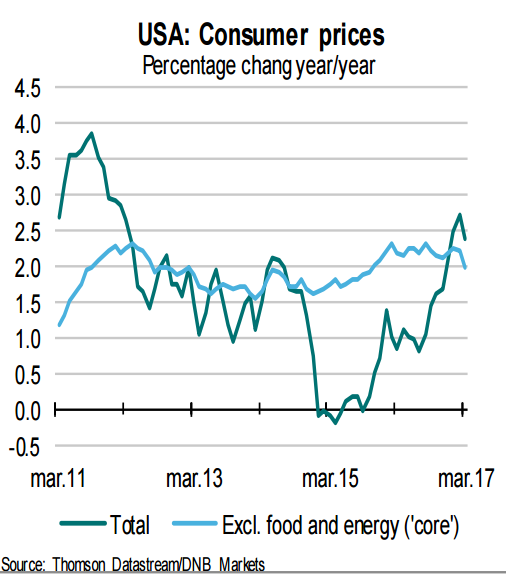
A report by the Labor Department on Friday last week showed U.S. Consumer Price Index dropped 0.3 percent in March, the first decline since February 2016. March US CPI inflation was much weaker than expectations for an unchanged reading. Declining costs for gasoline and mobile phone services offset rising rents and food prices. However, analysts feel several of the declines in March appear outsized and are likely to be reversed.
The core CPI, which strips out food and energy costs, declined 0.1 percent, the first and largest decrease since January 2010, after rising 0.2 percent in February. A 6.2 percent drop in gasoline prices was the biggest factor in the monthly decline in the CPI. Monthly consumer inflation was also weighed down by a record 7.0 percent drop in the cost of wireless telephone services.
Market expectations of a rise in interest rates at the Fed’s June meeting have fallen to about 50 percent, from more than 60 percent a week ago. Analysts feel the inflation miss was mainly due to temporary factors, and with the annual trend in the Consumer Price Index being still upward, should not worry the Fed too much. The monthly decline could likely reinforce the Federal Reserve’s plan for a gradual rise in interest rates.
"Some Fed officials will be disturbed by the unexpected drop back in core inflation, but this won't prevent a June rate hike," said Paul Ashworth, chief U.S. economist at Capital Economics in Toronto.
Consumer confidence remains elevated, indicating a pick-up in consumption growth. In particular, the current conditions rose to a 16-year high and is traditionally well correlated with labour market developments. Initial claims dropped by 1k to 234k last week. The trend has stabilized in the past few weeks and is consistent with high employment growth. GDP numbers which are scheduled to be released on April 28 will be in focus for impact on investor sentiment.
Dampened expectations of a faster Fed rate-tightening cycle coupled with the ongoing downslide in the US treasury yields further undermined the US Dollar demand. DXY was down 0.28 percent trading at 100.02 at 1130 GMT. At the same time, FxWirePro's Hourly USD Spot Index was at -69.4983 (Slightly bearish). For more details on FxWirePro's Currency Strength Index, visit http://www.fxwirepro.com/currencyindex.







