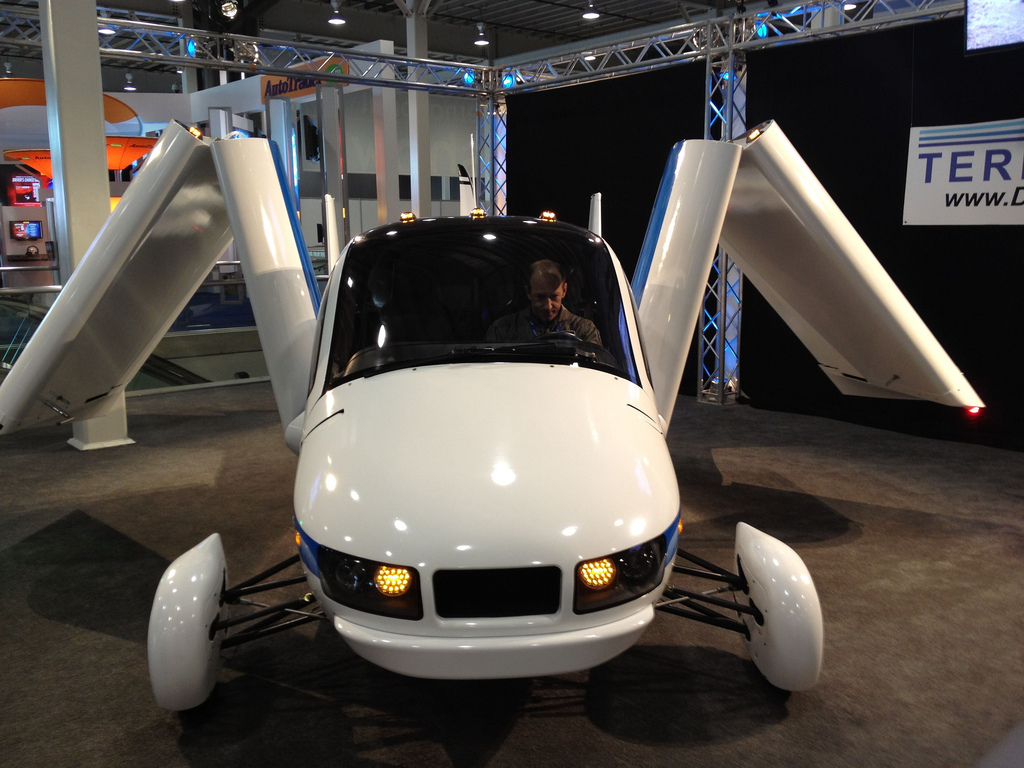
The online education platform Udacity has been gaining steam over the past few years for promoting what it calls “nanodegrees.” These are basically degrees in very specific niches, which allow modern students or workers to gain skills without needing to take on minor subjects. In keeping with its habit of technological savvy, the platform is now offering a “nanodegree” in Flying Cars to help fill the need of skilled workers in the budding industry.
While the flying car market is relatively young, there are already examples of flight-capable vehicles for sale. According to the online school’s co-founder Sebastian Thrun, one of the reasons why progress in this industry is slow to advance is not having enough skilled engineers working on it. Speaking to Reuters, Thrun confirmed that he intends to help meet this demand.
“There is a huge shortage of engineers. There are plenty of smart people – the missing link is education,” Thrun said.
Udacity already opened its virtual doors to students who wanted to learn how to develop self-driving car technology several years ago and in 2016, the program had already attracted 50,000 applicants. Thrun believes that the Flying Car program offer will see a similar level of enthusiasm, with at least 10,000 applicants. Acceptance of applications is expected to start in February.
In terms of what the program will involve, it will apparently go for two terms at 12 weeks each. Each term will cost $1,200 and will cover topics such as Aerial Robotics and Intelligent Air Systems.
As Futurism notes, those two subjects are crucial to developing flying cars that will also include self-piloting features. They are also highly specialized courses that were not offered in traditional schools until only a few years ago.
Even then, the focus was too broad, which results in engineers not exactly being specialized in this particular field. The courses that Udacity is offering is intended to fill that gap in knowledge and skills.