


 XRP Ledger Activates New Security Feature for Banks and Stablecoins
  Jameson Lopp Downplays AI Threat to Bitcoin Cryptography
  Ledger Investigates Alleged $86 Million Crypto Wallet Theft
  Bitcoin Rebounds to $82K as Crypto Market Faces Weekly Losses
  Solana Price Drops 3% Despite Samsung USDC Partnership
  Cardano Price Drops 14% as ADA Funding Rate Hits Four-Month Low
  Crypto Liquidation Flush: BTC & ETH at a Glance
  Chainlink Price Drops 3% Despite New CCIP Vault Launch
  Cardano Hits Record 436 TPS as Network Scaling Advances
  Bitcoin Rebounds to $82K as Trump Eases Iran War Fears
  US Government Moves $1 Billion in Bitcoin Amid Sale Speculation


 Add as a preferred source on Google
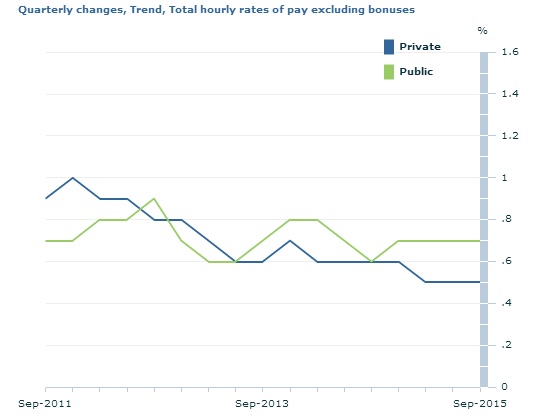
To add to the concern of Reserve Bank of Australia (RBA) is the latest wage report, which showed wage growth is at lowest level since 1998. In October, unemployment rate dropped by 0.3% to 5.9% and employment rose by 58,600, but that doesn't seem to have helped wages much.
- For three months to September quarter, wages grew by 0.6% on quarterly basis and 2.3% annual pace. Annual pace of growth stands at lowest since 1998. Major contributor has been public sector, where wages grew by 2.7%. Public sector growth has been 2.1%.
- Lowest level of growth was registered at 1.5% annually for Professional, scientific and technical services and administrative and support services, while best was seen for education and training at 3% annually.
- On quarterly basis, accommodation and food services recorded best wage growth of 1.6%, while financial and insurance services recorded lowest at 0.2%.
Lower wage growth indicates that Australian Labour market is not tight enough. Without wage growth, it would be difficult for RBA to achieve demand driven inflation.
Aussie is currently trading at 0.71 against Dollar.







