


 Gold Prices Fall Amid Rate Jitters; Copper Steady as China Stimulus Eyed
  BOJ Signals Faster Rate Hikes as Inflation Risks Grow
  RBA Says ASX Still Falls Short on Governance and Risk Controls
  ECB May Stop Rate Hikes After December, Capital Economics Says
  RBI Uses $10 Billion Currency Swaps to Drain Excess Rupee Liquidity
  Fed’s Hammack Says Bond Yield Surge Is Not Driven by Inflation Fears
  Trump Demands Powell Resign Over Fed Renovation Cost Overruns
  Yen in Focus as BOJ, Fed Rate Hikes Reshape Currency Markets


 Add as a preferred source on Google
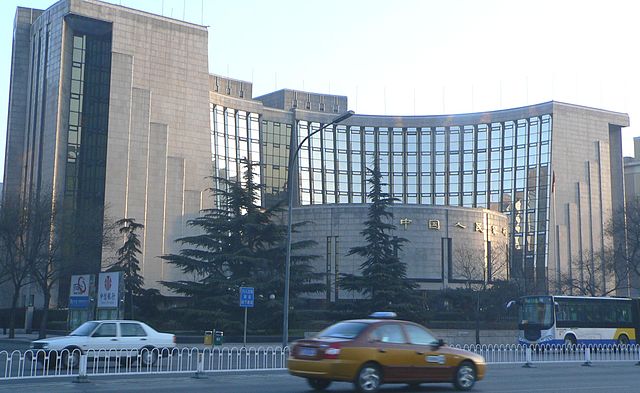
What is People's Bank of China (PBoC) trying to do and what is its fixing strategy?
These question are puzzling analysts and global market participants the most. PBoC on Tuesday devalued Yuan by just 0.21%, when spot rate was down by 0.61% on Monday, while rates firmed on Tuesday, PBoC again devalued Yuan by 0.22% and today it devalued its fix by 0.51%, highest since force devaluation in August.
While, PBoC's action suggests it is trying to guide Yuan weaker, offshore Renminbi valuation suggests that market is driving Yuan weaker rather than PBoC. In all of three days, Offshore Renminbi, which is traded largely in Hong Kong dropped at faster pace than its onshore counterpart. Aggressive monetary outflow could be responsible behind latest drop in Yuan. Yesterday at one point, offshore Yuan was down around 1.1%, largest on record.
Moreover, if PBoC had wanted to weaken Yuan, it would have approached much gradual path of weakening.

However, today's fix devaluation by 0.51% contradict our above statement.
So, what is PBoC exactly doing?
If PBoC had fixed Yuan stronger, relative to today's devaluation, it would have risked greater spread to offshore-onshore Yuan. Instead it is wiser strategy to reign on the gap with larger devaluation. It was higher than 2% already and after today's move spread has reduced significantly.
Yuan is currently trading 6.69 per Dollar in offshore and 6.6 in onshore market.
So, PBoC's strategy might be not to discourage Yuan depreciation by large, trying to reign on pace and indirectly reign on the spread.







