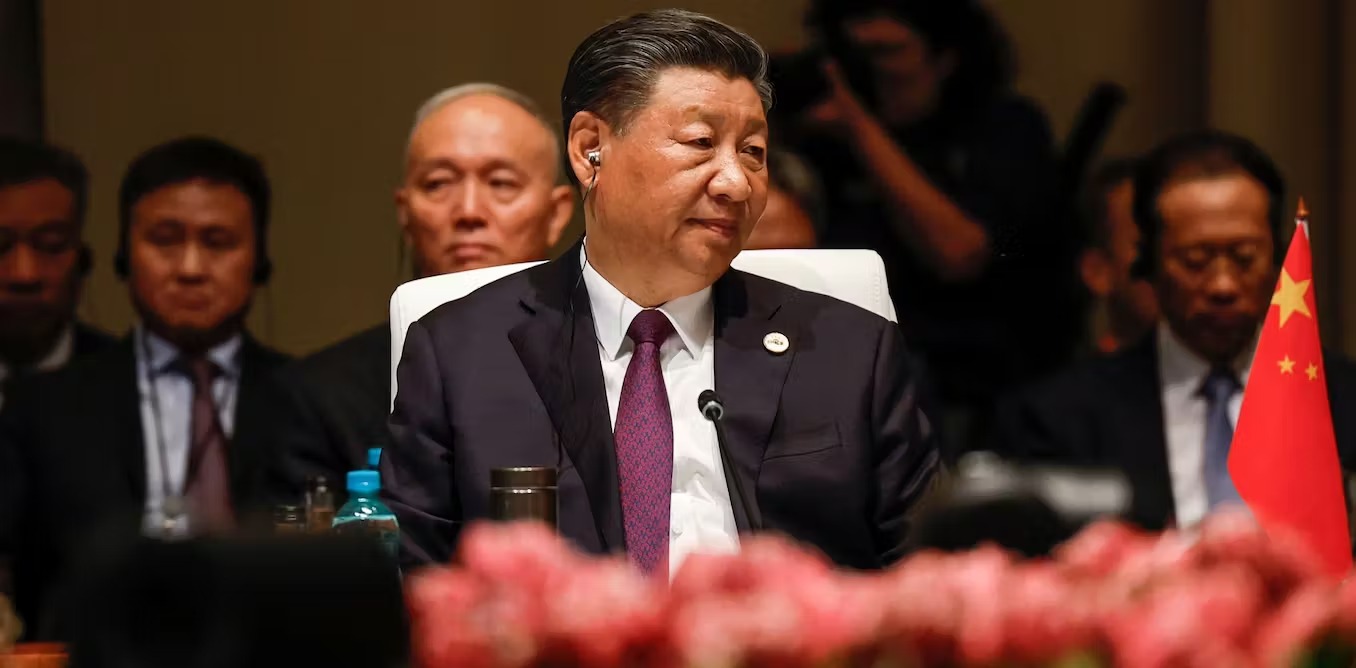
Chinese President Xi Jinping has arrived in Hanoi for a two-day state visit from April 14 to 15, marking the start of a Southeast Asia tour that includes Malaysia and Cambodia. The trip comes as China faces intensifying trade friction with the U.S., including new tariffs of up to 145%. Meanwhile, Vietnam is negotiating with Washington to avoid a 46% duty on its exports, set to begin in July when a global tariff moratorium expires.
Xi's visit to Vietnam—his second in 18 months—highlights China’s efforts to strengthen regional alliances and economic ties. Beijing has invested billions in Vietnam in recent years, largely due to manufacturers relocating from China to escape earlier U.S. tariffs. The two countries are expected to sign approximately 40 agreements spanning railways, agriculture, and green technology, though the financial details remain undisclosed.
A key development is Vietnam’s decision to consider Chinese loans for cross-border railway projects aimed at boosting trade and infrastructure connectivity. China is also seeking Vietnamese approval for its COMAC aircraft, which have struggled to gain international traction.
Despite close economic ties, the relationship remains delicate. Maritime disputes in the South China Sea and Vietnam’s recent trade actions—such as anti-dumping duties on Chinese steel and ending tax waivers on low-value imports—have raised tensions. Additionally, Hanoi’s concessions to the U.S., including efforts to curb indirect Chinese exports and the deployment of Elon Musk’s Starlink service, may further irritate Beijing.
Xi’s visits to Malaysia and Cambodia will follow from April 15 to 18. Both nations, like Vietnam, are also grappling with looming U.S. tariffs and are in talks with Washington for relief. The tour underscores China's strategic push to solidify influence in Southeast Asia amid global economic uncertainty.