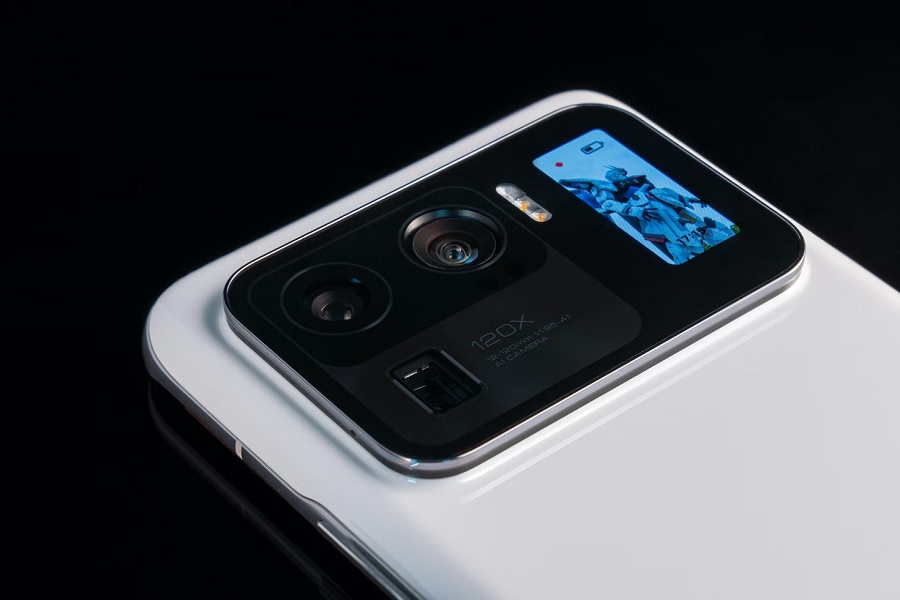
The reported Xiaomi 12 Ultra renders have recently leaked, possibly revealing its design. While the upcoming device is still expected to sport a massive camera bump, it appears that it will no longer feature a secondary display.
Several images shared by prominent leaker OnLeaks (via Zouton) suggest a significant change in Xiaomi 12 Ultra’s camera bump design. In comparison with the Mi 11 Ultra, its successor appears to have a bigger camera bump which seems to occupy about two-thirds of the back of the device.
Hey #FutureSquad! Come take a look at the #Xiaomi12Ultra and its impressive rear camera system (360° video + gorgeous 5K renders + dimensions)!
— Steve H.McFly (@OnLeaks) June 6, 2022
On behalf of @ZoutonUS ??https://t.co/3zQDJfSV4x pic.twitter.com/1b5S9SnNnT
Xiaomi fans will also quickly notice that the Xiaomi 12 Ultra no longer has a smaller display on the back that was introduced in Mi 11 Ultra. While the camera bump is still rectangular, the rear-facing sensors and other components are in a circular arrangement.
The same report says that there will be a total of seven cutouts for the camera bump, including three sensors composed of the 50MP main camera, 48MP wide-angle sensor, and 48MP periscope lens. OnLeaks, however, noted that the actual placements of sensors and other components on the camera bump could be different than what is currently shown in the leaked renders.
“FYI, I was not able to clearly identify each camera lenses and sensors within each of the eight rear camera holes,” the leaker explained about the Xiaomi 12 Ultra renders. “Thus, keep in mind the depicted rear camera components (not the layout which is accurate) is partially based on guesses.”
FYI, I was not able to clearly identify each camera lenses and sensors within each of the eight rear camera holes. Thus, keep in mind the depicted rear camera components (not the layout which is accurate) is partially based on guesses...
— Steve H.McFly (@OnLeaks) June 6, 2022
The Xiaomi 12 Ultra is also rumored to feature a 20MP selfie camera and about 6.6-inch curved AMOLED display. The screen is expected to have 1440 x 3200 pixels and 120Hz refresh rate. The device will likely retain an under-display fingerprint reader, while the report says it will also feature a ceramic back and an aluminum frame that were both also available in the Mi 11 Ultra.
Xiaomi followed its familiar schedule by launching the standard Xiaomi 12 phone last December without the high-end models of the series. Tech fans saw a similar strategy last year, however, the Xiaomi 12 Ultra is already running a few months late since its predecessor was announced in March 2021. But the leak suggests the wait for the premium flagship would be over soon as it is expected to be unveiled sometime in July.
Photo by Xingye Jiang on Unsplash