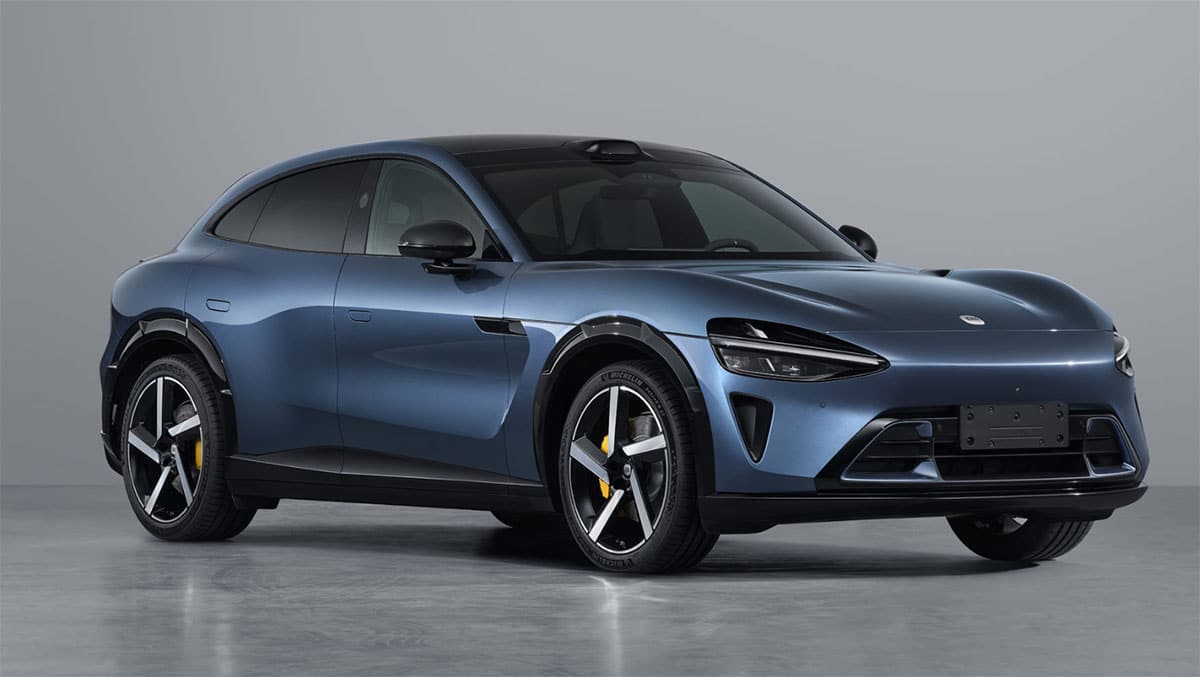
The Xiaomi YU7 electric crossover will debut in China by mid-2025, as Xiaomi focuses on critical testing and ramping up production capacity at its new factory.
Xiaomi YU7 to Enter Chinese Market in Mid-2025
The YU7 electric crossover will begin selling in China in June or July of 2025, according to Xiaomi executives. In order to test the vehicle without significant concealment, the company's executives said that they applied for the sales license early. It will be at least six more months before sales begin, even though the vehicle is legally prepared to enter the market.
It wasn't until December 9 that the Xiaomi YU7—also known as the Xiaomi MX11—was included in the MIIT catalog. This is a necessary step in obtaining a sales license for any mass-produced vehicle. Therefore, a car's entry into the MIIT catalog usually indicates a debut within the next month or two. For this reason, many Chinese car fans were under the impression that the Xiaomi YU7 will make its debut in China's marketplace at the beginning of the new year.
MIIT Approval Sparks Launch Speculation
But Xiaomi has announced that in June or July of 2025, they would release their second model to the local market. Afterwards, the YU7 crossover would not debut until mid-2025, even if it is legally prepared to do so, according to the official letter that the company's officials later provided.
In June or July of 2025, the YU7 electric crossover is expected to be on sale in China, according to Xiaomi executives. Thus, the vehicle will not be available for purchase for another six months. The company's reps claimed that with the MIIT listing, they could evaluate the vehicle's NVH, energy consumption, and overall durability without the heavy concealment.
Xiaomi F2 Factory Expansion to Drive YU7 Production
Also, the existing plant doesn't have any idle production capacity, so Xiaomi needs to finish building the second-phase vehicle manufacturing before they can start making the YU7. So, we should expect the Xiaomi F2 factory to wrap up in the summer of 2025. Considering that work on this manufacturing plant began in early August of this year, Xiaomi plans to complete the project in around ten to eleven months. The Xiaomi F1 facility was completed in about fifteen months, which is quite fast.
Just in case you forgot, the Xiaomi F2 factory is 531,000 square meters in size. Adjacent to the first-phase facility is where it sits. The steel construction of Xiaomi's second-phase vehicle assembly plant was finished in October 2024.
YU7 Name Sparks Curiosity Among Fans
The official Chinese pronunciation of Xiaomi's second model, according to the company, is Y-U-7, just like the English alphabet. The original SU7 from Xiaomi is known as "Su Qi" in China. We'll remind you of this. No one at the automaker knows what the YU7 name means. Just so we're clear, the initials of the SU7 sedan stand for "Speed Ultra." Therefore, "Ultra" is likely the meaning of the "U" in YU7's name. But there are a handful of words that begin with the letter "Y." Also, the rules for naming cars don't apply to any of them.
A 3000 mm wheelbase and dimensions of 4999/1996/1600 mm characterize the electric crossover that is the Xiaomi YU7. There are five seats within. As a whole, the vehicle weighs 2,405 kilograms. A total of 681 horsepower are available in the top-tier Xiaomi YU7's dual-motor 4WD system. Up to 253 km/h it can attain. Electric motors are powered by a ternary NMC battery manufactured by CATL. Nevertheless, its full potential is still unknown.
Competitive Pricing Anticipated for Xiaomi YU7
According to CarNewsChina, the price is expected to fall somewhere between 34,000 to 48,000 USD. Electric vehicle prices in China begin at 249,900 yuan, or around $34,000 USD. In 2024 (March - November), Xiaomi shipped a total of 112,516 electric vehicles (EVs) to China, with 21,955 units sold in November alone, as reported by China EV DataTracker.