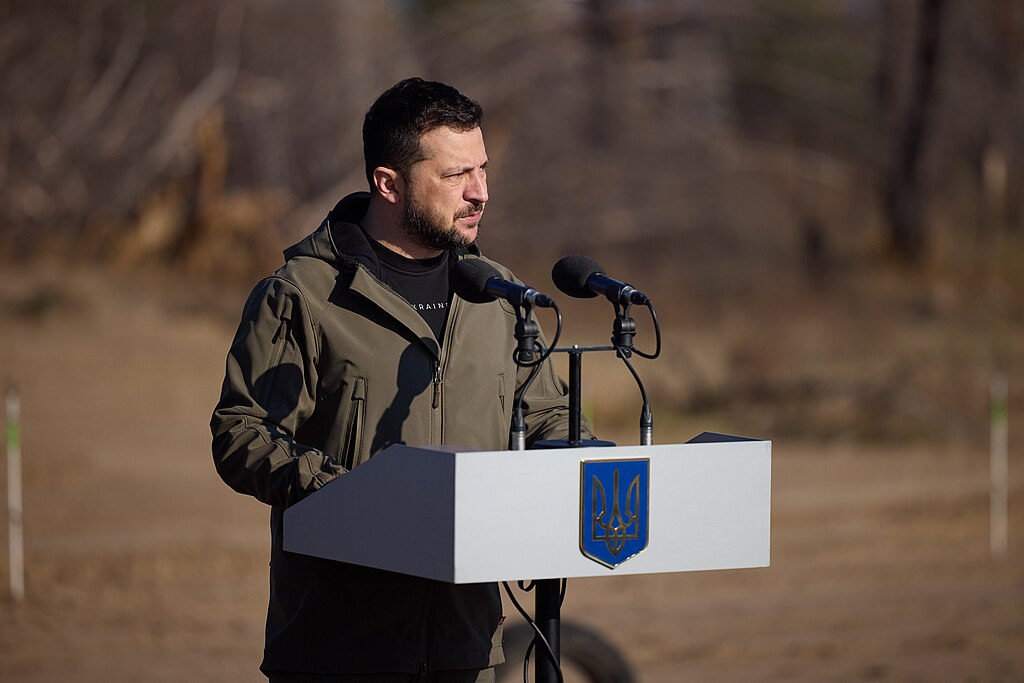
Ukrainian President Volodymyr Zelenskiy said negotiations involving Ukraine, the United States, and European nations aimed at ending the nearly four-year war with Russia are approaching a decisive outcome, signaling renewed hope for a diplomatic resolution. Speaking on Monday, Zelenskiy described the talks as “very close to a real result,” highlighting intensified diplomatic engagement on multiple fronts.
The negotiations have involved Ukrainian representatives led by senior official Rustem Umerov, alongside European partners, holding a series of meetings with U.S. envoys, including recent discussions in Florida. At the same time, Russian negotiator Kirill Dmitriev, an investment envoy for President Vladimir Putin, has been conducting separate talks with U.S. officials. Both Ukrainian and Russian officials confirmed that their delegations were returning home to report on the progress of these discussions.
According to Zelenskiy, the talks are centered on a 20-point peace plan proposed by U.S. envoys. The plan has been under discussion for several weeks after its initial version faced criticism from Ukraine and European nations for being perceived as overly favorable to Russia. While Zelenskiy acknowledged that the proposal is not perfect, he stressed that it now provides a concrete framework for further negotiations.
Key elements under discussion include security guarantees sought by Ukraine to prevent future Russian military aggression, as well as strategies for Ukraine’s post-war economic recovery. Zelenskiy noted that while the basic structure of the proposed agreements is ready, there remain unresolved issues that neither side is fully prepared to accept.
The U.S. negotiating team has been led by President Donald Trump’s envoy Steve Witkoff, along with Trump’s son-in-law Jared Kushner. In his nightly video address, Zelenskiy emphasized that a critical question remains whether the United States can secure a genuine response from Russia indicating readiness to move away from continued aggression.
Zelenskiy also underscored the importance of sustained international pressure on Moscow, including lowering the price of Russian oil and maintaining strong global sanctions, to reduce Russia’s capacity to continue the war. He said significant steps have already been taken this year to limit funding for Russia’s war efforts, reinforcing the belief that diplomatic and economic pressure can help bring the conflict closer to an end.