

 Menu
Menu

 Search

- News

- Economy

- Central Banks
- Investing
- Research
- Roundups
- Digital Currency
- Insights
- Technical Analysis
- Technology
- Business
- Law
- Health
- Nature
- Fintech
- Science
- Topic
- Opinions
- ©Econometrics LLC . All Rights Reserved.

Erenna Morrison
PhD Candidate, Curriculum and Pedagogy, Ontario Institute for Studies in Education, University of Toronto
Erenna Morrison is a fourth-year Curriculum and Pedagogy doctoral candidate at the Ontario Institute for Studies in Education- University of Toronto. Her developing research focuses on reconciliatory education, specifically concerning the elementary religion curriculum in denominational schools. Erenna earned her undergraduate degree in Early Childhood Education from Toronto Metropolitan University before completing her Master of Teaching degree at OISE. Over the past three and a half years, she has worked as a graduate assistant on a research project which further explores the Grade 11 English course, “Understanding Contemporary First Nations, Métis, and Inuit Voices”. She is grateful to be involved in this area of research.

Less 
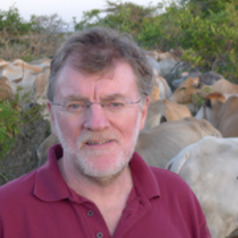
Eric Boa
I trained as a tree pathologist and spent ten years in Asia working first on a bamboo disease in Bangladesh and then on clove trees in Indonesia on UK aid projects. I've worked around the world, first with the Natural Resources Institute then with CABI for 17 years. My dominant interest for the last 20 years has been in farmer support, stimulated through the development and introduction of plant health clinics to Bolivia, Uganda, Bangladesh and beyond. More recently I have been attached to the University of Aberdeen, where I've returned to an interest in ash trees - the subject of my PhD way back then.
In a varied career that has included studying wild mushrooms in Malawi and bamboo for rural development, it is sometimes difficult to give a concise description of what I do. Hence this rather long-winded explanation. But the main theme has been bridging gaps between the science I love and the people for whom it is intended, whether they are cocoa farmers in DRC (which I visit regularly) or members of the public worrying about the health of the trees in the UK.
Less
Eric Bowman
Eric Bowman is a neurophysiologist interested in reward, motivation, learning and addiction.
Less
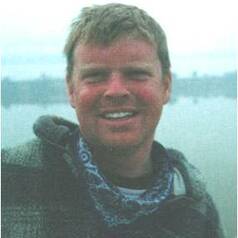
Eric Brymer
Chartered Psychologist, Southern Cross University
I am a researcher and psychologist specialising in Health, Performance and Learning in nature based and adventure based experiences.
Less
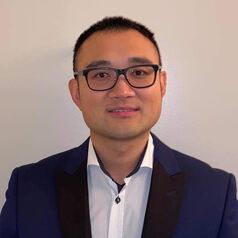
Eric Chi
Professor of Economics, University of Guelph
I am an Assistant Professor in the Department of Economics and Finance, University of Guelph. My research field includes international trade, political economy and applied microeconomics. My most recent works have been published in Economic Inquiry and Canadian Journal of Economics.
Less
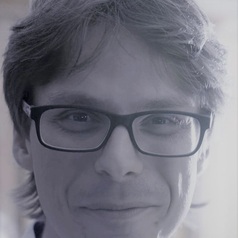
Éric Defebvre
Maître de Conférence en Sciences Économiques, Université Paris 1 Panthéon-Sorbonne
Actuellement Maître de Conférence en Sciences Économiques au Centre d'Économie de la Sorbonne (CES), à l'Université Paris 1 Panthéon-Sorbonne. Je m'intéresse aux questions liant la santé, le travail et l'emploi, dans une approche empirique.
Less

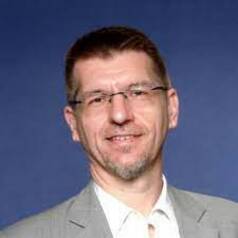
Eric Fusil
Associate Professor, School of Electrical and Mechanical Engineering, University of Adelaide
Eric Fusil is a French-Australian Submarine passionate, having dedicated all his 20+ years of professional life to submarine industry.
He is a naval architect by background and had his experience crafted by a variety of roles covering the full spectrum of a boat lifecycle (design, build, test and activation and sustainment) and worldwide (USA, France, Australia) including Submarine Shipyard facilities (performing reviews for overseas customers to assess fitness for purpose).
He is fully aware of the challenges stemming from the local environment and, for instance, can put the Australian Future Submarine and Hunter Class project into perspective with the knowledge of his native background. In other words: he can bridge between two worlds.
After having worked for Naval Group in France and ASC in Australia, he created his own company, ODYSSEE AUS in 2017, working in Defence Industry worldwide before accepting a role at the University of Adelaide
Dedicated to the Australian sovereign capability he is now Assoc. Professor at the University of Adelaide, Director of the Shipbuilding Hub for Integrated Engineering and Local Design, and as Submarine Design postgraduate courses coordinator.
***
Eric graduated as a Naval Architect (Masters in Engineering) in 1995 from ENSTA Bretagne (a French “grande école d’Ingénieurs” with highly competitive entry exam) after an internship within NAVSEA (Virginia, USA) and started his career in Production Quality controls for noise and vibration during build on SSBN and SSK, for what was DCNS and now known as Naval Group.
He then managed submarines sea trials and their commissioning for demanding customers (domestic and overseas).
From 1999 to 2003, he delivered in the pre-concept, concept and preliminary design phases of Barracuda submarine as engineer in charge of signatures and shock (underwater explosions).
In 2006, he joined the concept design office to be the lead naval architect and ultimately whole-of-boat technical lead for new batches of Scorpene conventional submarines up to 2012, including bids for overseas customers.
He joined ASC in 2013 after 18 years of submarine industry, 4 classes of submarines at sea or being built and roughly 2,000 hours of undersea navigation on submarines.
He was in charge of the Future Submarine design and build aspects at ASC PTY Ltd with his team of engineers and ultimately worked in submarine capability development before creating his own company, ODYSSEE AUS, in 2017 with customers in France, Australia and overseas.
Eric presented papers in forums such as Undersea Defence Technology in Europe, Anti Submarine Warfare conference in Singapore, Submarine Institute of Australia and Pacific Conferences.
He is a chartered engineer with Engineers Australia, a member of the Royal Institution of Naval Architects and of the Submarine Institute of Australia.
He is now course coordinator and lecturer for the postgraduate Submarine Design courses leading to the Masters of Marine Engineering of the University of Adelaide and the newly created French Australian Dual Degree with ENSTA Bretagne.
He has also initiated and developed the Adelaide French Australian Schools with a focus on bilingual education.
Less
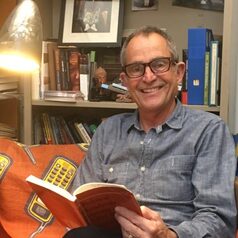
Eric Gable
Professor of Anthropology, University of Mary Washington
Eric Gable received his Ph.D. in anthropology from the University of Virginia. He has studied village-level politics and religion in Guinea-Bissau and Sulawesi, Indonesia, and the politics of heritage in the United States. He is the author of Anthropology and Egalitarianism (Indiana University Press) and (with Richard Handler) The New History in an Old Museum (Duke University Press). He is currently a managing editor for Museums and Society and book reviews editor for American Ethnologist.
Less
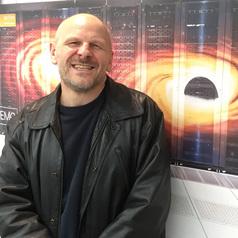
Eric Howell
OzGrav Associate Investigator; Research Fellow in Astrophysics, The University of Western Australia
Eric Howell studies the synergy between Gravitational Wave transients and Gamma-ray Bursts. This work involves combining data from the Gravitational Wave and the electromagnetic domains to determine what drives cataclysmic astrophysical events, how often they occur and their history. He is a member of the science team for both the NASA StarBurst and MoonBEAM (Moon Burst Energetics All-sky Monitor) gamma-ray burst satellites expected to launch in later this decade. He played a key role in initializing the LIGO-Virgo-KAGRA targeted search for gravitational waves associated with Fast Radio Bursts and has co-led the search since 2019. He held an Australian Research Council DECRA fellowship till 2023 in astrophysics and has been a member of LIGO since 2005.
Less

Eric Jankowski
Associate professor of engineering, Boise State University
Eric Jankowski is an Associate Professor and Director of the Micron School of Materials Science and Engineering.
The overall goal of Dr. Jankowski’s work is to leverage thermodynamics for societal good. This means understanding the factors that govern molecular self-assembly, and using that knowledge to engineer materials for generating energy, storing data, or curing disease. The approach taken by Dr. Jankowski is to create and use computational tools that efficiently generate important configurations of molecules. The goal of these computational models are: (1) To provide fundamental insight into material structure when physical characterization is inadequate, and (2) To identify the most promising material candidates when there are too many choices. Consequently, one of Dr. Jankowski’s research goals is to develop new computational techniques that solve open problems in materials simulation. His educational research includes developing new curricula for scientific computation and the use storytelling to improve engineering degree programs.
Dr. Jankowski earned his PhD in Chemical Engineering from the University of Michigan in 2012, where he developed computational tools to study the self-assembly of nanoparticles. These tools leveraged graphics processors to accelerate computations and provided insight into systems of both theoretical and practical importance. Dr. Jankowski began focusing on renewable energy generation during his postdoctoral positions at the University of Colorado and the National Renewable Energy Laboratory. At these postdocs, Dr. Jankowski applied techniques he developed during his thesis to understand factors that determine the ordering of molecules in organic solar cells.
Less
Eric Lee
Department of Allergy & Immunology at the Children's Hospital at Westmead, University of Sydney
Less
Eric Liberda
Professor, School of Occupational and Public Health, Toronto Metropolitan University
Dr. Eric Liberda is a professor at Toronto Metropolitan University's School of Occupational and Public Health, specializing in toxicology, risk assessment, and environmental health. He holds a PhD from New York University in Environmental Medicine, alongside qualifications from RMIT (Australia) and the University of Waterloo (Canada). His areas of expertise include toxicology, exposure assessment to organic and metal contaminants, nanoparticles, and the impact of environmental contaminants on First Nations communities.
In addition to his academic roles, Dr. Liberda is involved in community engagement and environmental stewardship. His commitment extends beyond research and teaching, as he also serves as the Associate Director of Student Life at Toronto Metropolitan University, demonstrating a dedication to student wellbeing and the broader educational experience.
Less
Eric Lob
Associate Professor of Politics and International Relations, Florida International University
I am an associate professor in the Department of Politics and International Relations at Florida International University. My research focuses on the intersection of politics and development in the Middle East. I am the author of the book Iran’s Reconstruction Jihad: Rural Development and Regime Consolidation after 1979 (Cambridge University Press, 2020). My articles have appeared in the International Journal of Middle East Studies, Iranian Studies, Middle East Critique, The Middle East Journal, The Muslim World, Third World Quarterly, and others. I am a Non-Resident Scholar with the Middle East Institute (MEI) Iran Program and a Board of Trustees member of the American Institute of Iranian Studies (AIIrS).
Less
Eric Muraille
Immunologist, FNRS Senior Research Associate, Faculty of Medicine, Université Libre de Bruxelles, Université Libre de Bruxelles
Master en Sciences Zoologiques (orientation biologie moléculaire) à l'Université libre de Bruxelles (ULB), Belgique.
Doctorat en Sciences Zoologiques (immunologie cellulaire) à l'ULB (1992-1997).
Spécialisation postdoctorale en biochimie (1997-1999, Institut de Recherche Interdisciplinaire en Biologie Humaine et Moléculaire, ULB), en parasitologie (1999-2002, Laboratoire de Parasitologie, ULB) et en immunologie infectieuse (2002-2004, Institut de Pharmacologie Moléculaire et Cellulaire, INSERM URM 6097, Nice, France).
Présentement Maître de recherche au F.R.S.-FNRS., attaché au laboratoire de Parasitologie de la Faculté de Médecine de l'ULB et collaborateur scientifique à l'Unité de recherche en biologie des micro-organismes (URBM) de l'Université de Namur (UNamur).
Je me consacre principalement à l'étude théorique et expérimentale de la relation hôte pathogène, ainsi qu'à l'enseignement de l'Immunologie. Je tente également de contribuer au développement de la théorie de l'évolution.
Less
Eric Nordberg
Senior Lecturer (Applied Ecology and Landscape Management), University of New England
2010. BSc - Wildlife and Fisheries Science - Pennsylvania State University - USA
2013. MSc - Biology - Middle Tennessee State University - USA
2018. PhD - Ecology - James Cook University - Australia
Less
Eric Robinson
Professor in Psychology, University of Liverpool
Eric Robinson is a behavioural scientist with a background in experimental psychology. His research examines obesity and psychological influences on how much people eat and drink.
He receives funding from the MRC and ESRC for his current research.
He has previously received research funding from food industry members, such as Unilever.
Less
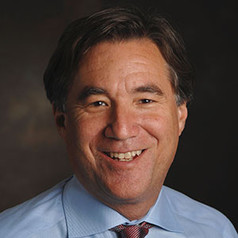
Eric Segall
Eric Segall graduated from Emory University, Phi Beta Kappa, Summa Cum Laude, and from Vanderbilt Law School where he was the Research Editor for the Law Review and member of Order of the Coif. He clerked for the Honorable Charles Moye, Jr., Chief Judge for the Northern District of Georgia, and Albert J. Henderson of the Eleventh Circuit Court of Appeals. After his clerkships, he worked for Gibson, Dunn & Crutcher, and the United States Department of Justice, before joining the GSU faculty in 1991.
Professor Segall teaches federal courts and constitutional law I and II. He is the author of the book Supreme Myths: Why the Supreme Court is not a Court and its Justices are not Judges. His articles on constitutional law have appeared in, among others, the Stanford Law Review, the UCLA Law Review, the George Washington Law Review, the Washington University Law Review, the University of Pennsylvania Journal of Constitutional Law, the Northwestern University Law Review Colloquy, and Constitutional Commentary. He has served on the Executive Committee of the AALS section on federal courts, and has given numerous speeches both inside and outside the academy on constitutional law questions and the Supreme Court. He appears regularly on the national XM Radio show StandUp with Pete Dominick talking about the Supreme Court and constitutional law.
Less
Eric Shaw
I was educated at the Universities of Sheffield, Leeds and Manchester. I joined Stirling University in 1990. Prior to that I worked at Manchester Polytechnic (now Manchester Metropolitan University). Before becoming an academic, I was a researcher in the International Department of the Labour Party.
I have written five books on the Labour party (the last, with Gerry Hassan, entilted 'The Strange Death of Labour Scotland' published 2012).
My main research interests are all aspects of the British Labour Party and the Scottish Labour party. I am at present working on a study of the ideology of the Labour party under the Miliband leadership.
Less
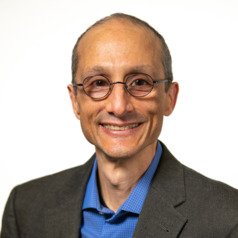
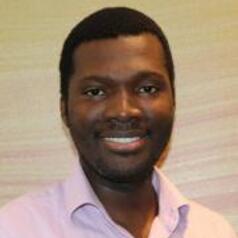
Eric Stemn
Lecturer, Safety and Engineering, University of Mines and Technology
Eric Stemn holds a PhD in occupational health and safety from the University of Queensland (UQ), Brisbane, Australia, an MSc in environmental science from the Kwame Nkrumah University of Science and Technology (KNUST), Kumasi, Ghana, and a BSc in geomatic engineering from the University of Mines and Technology (UMaT), Tarkwa, Ghana. Eric has extensive experience in health, safety and environment (HSE) consulting and training and is currently a faculty member of UMaT, at the Environmental and Safety Engineering Department, where he teaches various undergraduate and postgraduate courses. Before joining UMaT, Eric worked in a consulting role for 4 years, where he assisted several Ghanaian companies in preparing technical reports leading to permit clearance from the Ghana Environmental Protection Agency. Eric’s PhD research focused on improving organisational learning from incidents through improved incident investigation, effective risk management and how the incident investigation process feeds back into risk management activities. Eric facilitates industry-based workshops and delivers environmental, safety and health risk-based training to the minerals industry. Eric continues to consult for a wide range of industries in matters relating to occupational health, safety and environment.
Less
Eric Tevoedjre
Lecturer International Relations, African Politics, Regional Integration in Africa, and International Economics, Institut catholique de Lille (ICL)
I received my Ph.D. from Johns Hopkins University, Baltimore (MD) in International Relations/Comparative Government.
I was project manager for USAID (Cotonou, Benin)
I currently teach International Relations, African Politics, Regional Integration in Africa, and International Economics at Catholic University, Lille (France)
Less
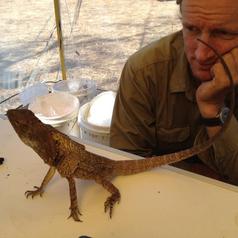
Eric Vanderduys
Research Scientist, Field Ecology, CSIRO
Eric is a field biologist studying a wide range of terrestrial fauna, including flying-foxes, koalas, snakes and the effects of differing land management activities (e.g. grazing, clearing, weeds, fire, feral species) on vertebrate fauna.
He maintains the Black-throated Finch database on behalf of the Black-throated Finch Recovery Team.
He is also the author of Field Guide to the Frogs of Queensland.
Less
Eric Williams
I'm a professor of sustainability at Rochester Institute of Technology. Recently I work models of energy technologies to inform policy. In the past I worked on environmental assessment and management of Information Technology.
Less
Eric Yoshida
Professor of Medicine, University of British Columbia
Dr. Eric Yoshida is a Professor of Medicine, University of British Columbia and a Gastroenterologist/Hepatologist at the Vancouver General Hospital. He is a hepatologist within the Liver Transplant Program, Vancouver General Hospital and BC Transplant (an agency of the Provincial Health Services Authority)
Less
Eric Carmona Martinez
Scientist, Helmholtz Centre for Environmental Research-UFZ
Eric Carmona Martinez is a postdoctoral researcher in the Department of Biological & Environmental Sciences, University of Gothenburg, Sweden. He joined Gothenburg in 2023 from the the Department of Effect-Directed Analysis where he had worked since 2019 as a postdoc on the Kleingewässermonitoring (KgM) project analysing data on water pollution using different software.
Eric has a bachelor's degree in environmental sciences and a master’s degree in environmental toxicology from the Faculty of Biology, University of Valencia. He did several internships at the Research Centre for Desertification and the Public Health Research Centre.
Eric got a PhD in chemistry, also from the University of Valencia. His thesis entitled “Pollutants of emerging concern in the environment. Turia River as study case” was carried out at the food and environmental research group of the University of Valencia and the Spanish National Research Council. During his PhD Eric was working at the TrAMS group of the University of Athens and the Aquatic Ecotox group at the University of Eastern Finland.
He published several papers (ResearchGate) with high impact and participated in different projects such as Mefturia, SCARCE-Consolider and Eco2Tools.
Less

Eric D. Carter
Professor of Geography and Global Health, Macalester College
Eric D. Carter is the Edens Professor of Geography and Global Health at Macalester College in Saint Paul, Minnesota, where he has taught since 2012. He received a Bachelor's degree in History from the University of California, Berkeley (1994), and a Master's (1999) and PhD (2005) in Geography from the University of Wisconsin, Madison. Before joining the Macalester faculty, Carter taught at Millersville University (Pennsylvania) and Grinnell College (Iowa). He was also a visiting faculty member at the National University of Tucumán (Argentina) in 2015.
Carter’s interdisciplinary research lies at the nexus between medical geography, political ecology, and the history of public health, with a regional focus on Latin America. Main areas of research interest include the political ecology of infectious and vector-borne diseases; environmental and social history of disease control; social medicine and public health in Latin America; and the biopolitics of public health interventions.
His first book, Enemy in the Blood: Malaria, Environment, and Development in Argentina (2012), received the Elinor Melville Prize for best book in Latin American Environmental History from the Conference on Latin American History. His second book, In Pursuit of Health Equity: A History of Latin American Social Medicine (2023) is the result of seven years of research, mainly in Argentina, Chile, and Costa Rica, supported by fellowships from the US Fulbright Scholar Program and the American Council of Learned Societies.
Less
Eric Hengyu Yu
Ph.D. Student in Educational Theory and Policy and Demography, Penn State
Research interests are early childhood education, child development, and socio-demographic inequality of educational outcomes.
Less
Eric S. Hintz
Historian, Lemelson Center for the Study of Invention and Innovation, Smithsonian Institution
Less
Eric Taylor Woods
Associate Professor in Sociology, University of Plymouth
Dr Eric Taylor Woods is an Associate Professor in Sociology at the University of Plymouth. His research examines the relationships between culture, media, and politics - with a particular focus on nationalism. His most recent book on this topic (co-authored with Robert Schertzer) is entitled, 'The New Nationalism in America and Beyond: The Deep Roots of Ethnic Nationalism in the West' (Oxford University Press, 2022). Eric has also carried out research on the cultural politics of Britain's imperial past, and has published extensively on Christian-Indigenous relations in Canada, including the 2016 book, 'A Cultural Sociology of Anglican Mission and the Indian Residential Schools in Canada' (Palgrave, 2016).
In addition, Eric serves as a Faculty Fellow at the Center for Cultural Sociology at Yale University, and he is a member of the editorial teams of several leading journals in his fields of study, including: 'American Journal of Cultural Sociology;' 'Cultural Sociology;' and 'Nations and Nationalism.' Eric is also a founding editor of 'The State of Nationalism: An International Review,' which is an open-access portal for research on nationalism. Prior to joining the University of Plymouth University, Eric was based at the University of East London. He holds a PhD from the London School of Economics and Political Science.
Experience
Less


- Market Data




