
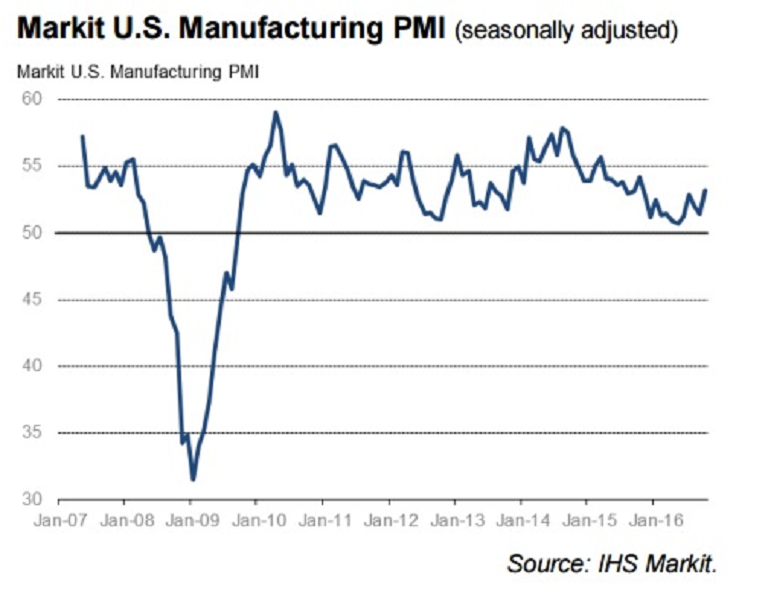
Manufacturing conditions in the United States witnessed a strong improvement during the month of October, buoyed by a sharp rise in output as well as new orders. Also, higher demand helped lift the country’s manufacturing index.
The U.S. Manufacturing Purchasing Managers’ Index (PMI) Index rose to 53.2 from 51.5 the month prior and was above the 51.5 forecast that analysts had anticipated in a Reuters poll. Further, the increase in purchase activity was at the fastest pace since June of last year, data released by compiler IHS Markit showed Monday.
"Manufacturing showed further signs of pulling out of the malaise seen earlier in the year, starting the fourth quarter on a solid footing. Both output and new orders are rising at the fastest rates for a year amid increasingly widespread optimism that demand will pick up again after the presidential election, which has been commonly cited as a key factor that has subdued spending and investment in recent months," said Chris Williamson, Chief Business Economist, Markit.
Meanwhile, the Chicago Fed National Activity index also showed improvement rising from a revised -0.72 in August to -0.14 in September. Of the 85 monthly individual indicators, 41 made positive contributions and 44 deteriorated. Results below zero indicate below trend growth.

