


 NASA and SpaceX Target Crew-11 Undocking From ISS Amid Medical Concern
  SpaceX Prioritizes Moon Mission Before Mars as Starship Development Accelerates
  Blue Origin New Glenn Explosion Could Delay Launch Operations Until 2028
  SpaceX Delays Starship V3 Launch Ahead of Potential Record IPO
  Tabletop particle accelerator could transform medicine and materials science
  China vs. NASA: The New Moon Race and What's at Stake by 2030
  Trump Administration Releases New UFO Files and Apollo Mission Records
  Trump Signs Executive Order to Boost AI Research in Childhood Cancer
  Neuralink Plans High-Volume Brain Implant Production and Fully Automated Surgery by 2026
  Is space worth the cost? Accounting experts say its value can’t be found in spreadsheets
  Cogent Biosciences Soars 120% on Breakthrough Phase 3 Results for Bezuclastinib in GIST Treatment
  Blue Origin’s New Glenn Achieves Breakthrough Success With First NASA Mission
  Trump and Merck KGaA Partner to Slash IVF Drug Costs and Expand Fertility Coverage


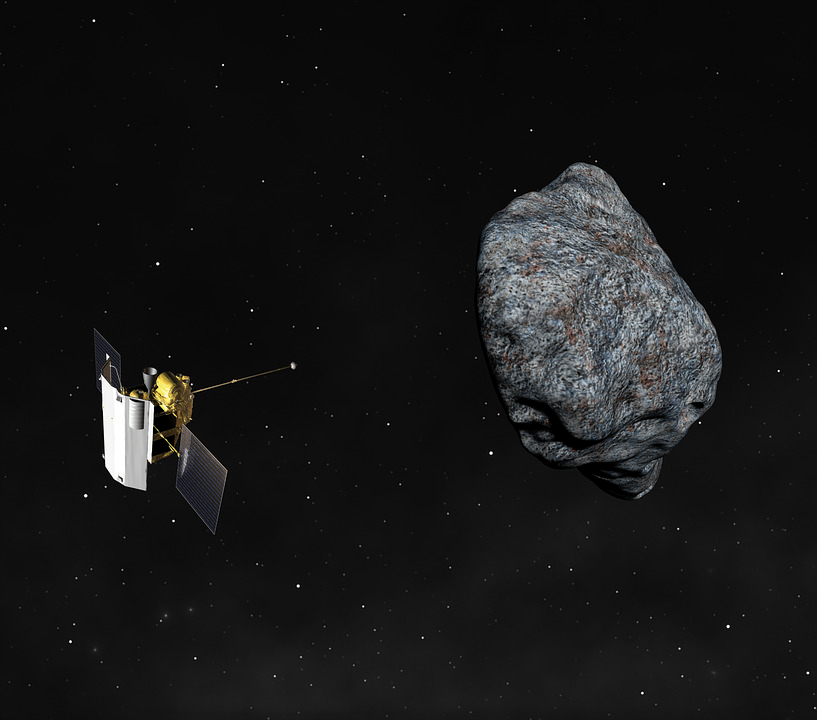
Space agencies all over the world are already ahead of us in tackling possible asteroid collisions that may happen in the future. Japan’s own space agency is already making progress in studying one particular asteroid, whose samples are already set to arrive in two weeks’ time.
Japan’s space agency JAXA has revealed that the samples they have taken of the asteroid Ryugu are already on their way to Earth. The samples were taken by their Hayabusa2 spacecraft that has launched sometime in 2019 and is on the verge of completing its journey through space. Once it returns to Earth, it would mark the first time scientists are able to obtain a part of an asteroid directly from space. Hayabusa2 project mission manager Makoto Yoshikawa has predicted the spacecraft’s return to be on Sunday, December 6.
Once it returns to Earth, the spacecraft will likely make a touch down in Australia. With this in mind, JAXA has already prepared for its landing by setting up satellite dishes in several locations to see where exactly will the spacecraft land. There are also sensors made up of marine radars, drones, and helicopters that can also help determine where the 40-centimeter spacecraft will make a landing.
Scientists are looking forward to what the samples from Ryugu may bring as similar space rocks are described as “time capsules” of the formation of our own Solar System. Thus, they are hoping that the samples from the asteroid may shed more light on our universe. This is because some rocks on the asteroid are made up of carbonaceous chondrite, which is believed to be the oldest material ever found in our cosmic neighborhood dating as far back as 4.5 billion years.
Meanwhile, residents from the southern United States and Mexico previously witnessed a fireball pass over the skies. They witnessed the phenomenon days prior on November 20, and videos that were recorded of the event showed a flash of light appearing out of nowhere in the skies that signaled a meteor or asteroid’s entrance into the atmosphere. Those who were able to see the asteroid pass reported their sightings to the International Meteor Organization.







