


 Federal Judge Restores Funding for Gateway Rail Tunnel Project
  Netanyahu to Meet Trump in Washington as Iran Nuclear Talks Intensify
  Bosnian Serb Presidential Rerun Confirms Victory for Dodik Ally Amid Allegations of Irregularities
  China Overturns Death Sentence of Canadian Robert Schellenberg, Signaling Thaw in Canada-China Relations
  US Pushes Ukraine-Russia Peace Talks Before Summer Amid Escalating Attacks
  Trump Lifts 25% Tariff on Indian Goods in Strategic U.S.–India Trade and Energy Deal
  Japan Election 2026: Sanae Takaichi Poised for Landslide Win Despite Record Snowfall
  Israel Approves West Bank Measures Expanding Settler Land Access
  New York Legalizes Medical Aid in Dying for Terminally Ill Patients
  Trump Congratulates Japan’s First Female Prime Minister Sanae Takaichi After Historic Election Victory
  Trump’s Inflation Claims Clash With Voters’ Cost-of-Living Reality
  Trump Says “Very Good Talks” Underway on Russia-Ukraine War as Peace Efforts Continue
  Ghislaine Maxwell to Invoke Fifth Amendment at House Oversight Committee Deposition
  Bangladesh Election 2026: A Turning Point After Years of Political Suppression
  Ohio Man Indicted for Alleged Threat Against Vice President JD Vance, Faces Additional Federal Charges
  Japan’s Prime Minister Sanae Takaichi Secures Historic Election Win, Shaking Markets and Regional Politics


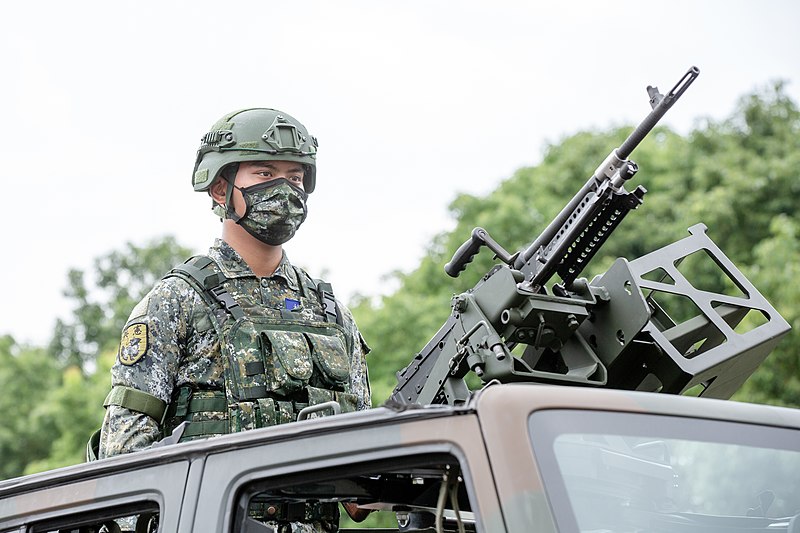
The island nation of Taiwan is currently bolstering its military capabilities in the midst of the ongoing war in Ukraine. Taiwan’s defense ministry said this week that there would be delays in the delivery of Stinger missiles from the US.
The defense ministry of Taiwan said Tuesday that there would be delays in the delivery of the Stinger anti-aircraft missiles from the US, according to Reuters. The deputy head of Taiwan’s army planning department Chu Wen-wu confirmed the reports at a news conference. Chu said that the Taiwanese army will continue to press the US to deliver their needed equipment on schedule, as was agreed in the contract.
“It is true that due to the changes in the international situation, there may be a risk of delayed delivery this year of the portable Stinger missiles,” said Chu. “The Army will coordinate with the full procurement plan and continue to require the US military to implement it normally in accordance with the contract.”
The contract was made in 2019 when the US approved the sale of 250 Stinger missiles manufactured by Raytheon Technologies to Taiwan. The delivery of the missiles was expected to be completed by 2026.
The missiles in question are in high demand in Ukraine, as Ukrainian forces have resisted Russia and its aircraft. However, the supply in the US is declining, and producing more of the missiles faces significant challenges.
Taiwan’s defense ministry spokesperson Sun Li-fang also said that the procurement of General Dynamics Corp M1A2 Abrams tanks was “normal” as the island nation is looking to purchase 108 such tanks, with delivery to be completed by 2027. Sun said that Taiwan’s air force is coordinating with Washington to make sure that the deliveries of the F-16 fighter jets are on schedule before 2026.
The island nation has voiced support for Ukraine and has joined in imposing sanctions on Russia while donating funds for Ukrainian refugees that were mostly raised by the public. Taiwanese foreign minister Joseph Wu spoke with Vitali Klitschko, the mayor of Ukraine’s capital Kyiv back in April, where Wu said that both the island nation and Ukraine’s democracies are on the front lines “of resisting authoritarian expansionism.”
At the time, Wu said that Taiwan was set to donate $3 million to Kyiv and $5 million to six medical institutions in Ukraine.













