


 UK Sanctions 24 Russian-Linked Targets Over Cyberattacks and Election Interference
  EU to Propose New Rules Limiting Children's Access to Social Media
  DOJ Subpoenas New York Times Journalists Over Air Force One Leak Report
  Trump to Deliver National Address on Declassified 2020 Election Intelligence
  Republican Senator Lindsey Graham Dies at 71, Leaving South Carolina Senate Seat Vacant
  Russia Launches Missile and Drone Attacks on Kyiv, Zaporizhzhia, and Kharkiv
  UN Says Hamas Disrupted Gaza Aid Distribution, Group Denies Allegations
  Trump Recommends Darline Graham for Interim South Carolina Senate Seat
  EU Ministers Split as Support Grows for Ban on Trade With Israeli West Bank Settlements
  Trump, Canada Reach Gordie Howe Bridge Deal Ahead of July 27 Opening
  Iran Says It Closes Strait of Hormuz After Warning Shot at Vessel
  Iranian Missile Strike on UAE Oil Tankers Kills Indian Crew Member in Strait of Hormuz
  Israel Sets October 27 Election as Netanyahu Faces Tough Political Test
  Ann Widdecombe Murder: Police Arrest Second Suspect, Rule Out Terrorism Motive
  Israeli Strikes Kill Six in Gaza as Ceasefire Talks Continue in Cairo
  HHS Watchdog Reports $5.56 Billion in Healthcare Fraud Recoveries as Enforcement Actions Decline
  Brazil Court Bars Flavio Bolsonaro From Visiting Jair Bolsonaro Ahead of Election


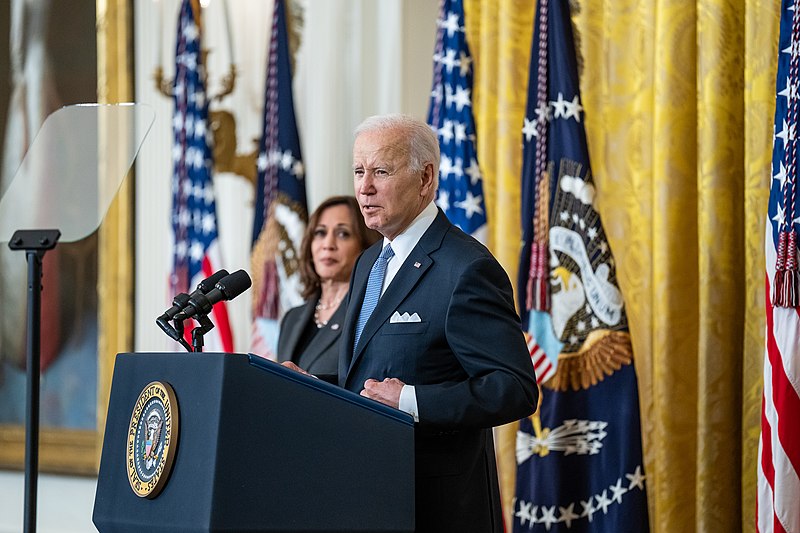
This week, the Biden administration announced that it would be providing $400 million for expanding internet access to rural areas in the country. This provision is part of President Joe Biden’s effort to expand internet access all over the country.
Speaking with reporters Thursday, infrastructure coordinator Mitch Landrieu said the $401 million provided would help people in rural areas get access to high-speed internet. The $401 million in loans and grants is coming from the ReConnect Program dispersed by the Agriculture Department.
“With this money, we are one step closer to President Biden’s ambitious goal of affordable and reliable internet for all,” said Landrieu.
The money will be used to support internet access expansion in 11 states: Alaska, Arizona, Arkansas, California, Colorado, Idaho, Montana, New Mexico, Nevada, North Dakota, and Texas, according to the USDA.
Vice President Kamala Harris will also be travelling to New York to unveil the formation of the Economic Opportunity Coalition, made up of 23 companies and foundations. The coalition aims to invest billions into low-income communities.
The White House said the coalition will “address economic disparities and accelerate economic opportunity in communities of color and other underserved communities.”
Among the founding members of the coalition are Ariel Investments, Bank of America, BNY Mellon, Capital One, Citi, Discover, Ford Foundation, Goldman Sachs, Google, Key Bank, Kresge Foundation, Mastercard, McDonald’s, McKinsey & Company, Micron, Momentous Capital, Moody’s, Netflix, Paypal, PNC, The Rockefeller Foundation, TIAA, and Upstart.
Meanwhile, Senate Democrats are set to reach a budget reconciliation deal on legislation that has provisions for the climate. The legislation, brokered by Senators Chuck Schumer and Joe Manchin, was praised by clean energy advocates even as the legislation was a watered-down version of the previous legislation.
In a summary released by Schumer’s office, the bill would cut carbon emissions by 40 percent by 2030, as well as a “methane emissions reduction program” to cut leaks of potential greenhouse gas methane from the drilling of natural gas.
Manchin said the legislation would invest in hydrogen, nuclear power, renewables, fossil fuels, and energy storage. More than $60 billion would be invested into environmental justice programs to fight pollution and address public health issues in disadvantaged communities.
$20 billion would be invested into “climate-smart” agriculture practices and $10 billion for tax credits in building clean energy manufacturing plants for EVs, wind turbines, and solar panels.







