


 Trump Administration Bars U.S. Travelers From Congo Flights Amid Ebola Outbreak
  DOJ Subpoenas New York Times Journalists Over Air Force One Leak Report
  Ukraine, Europe Launch Freyja Missile Shield to Strengthen Air Defense Against Russia
  UK Sanctions 24 Russian-Linked Targets Over Cyberattacks and Election Interference
  US-Iran Strikes Escalate as Strait of Hormuz Crisis Pushes Oil Prices Higher
  Brazil Court Bars Flavio Bolsonaro From Visiting Jair Bolsonaro Ahead of Election
  HHS Watchdog Reports $5.56 Billion in Healthcare Fraud Recoveries as Enforcement Actions Decline
  Ann Widdecombe Murder: Police Arrest Second Suspect, Rule Out Terrorism Motive
  Trump Tells Congress Iran Hostilities Restarted, Citing New 60-Day War Powers Window
  Israel Sets October 27 Election as Netanyahu Faces Tough Political Test
  Iran's Supreme Leader Vows Revenge as Trump Threatens Massive U.S. Military Response
  UN Says Hamas Disrupted Gaza Aid Distribution, Group Denies Allegations
  Trump, Canada Reach Gordie Howe Bridge Deal Ahead of July 27 Opening
  Venezuela Appoints Felix Plasencia to Lead Foreign Relations and Trade
  Iraq PM Visits Washington as U.S. Oil, Gas Deals Take Center Stage
  Russia Launches Missile and Drone Attacks on Kyiv, Zaporizhzhia, and Kharkiv
  Israeli Strikes Kill Six in Gaza as Ceasefire Talks Continue in Cairo


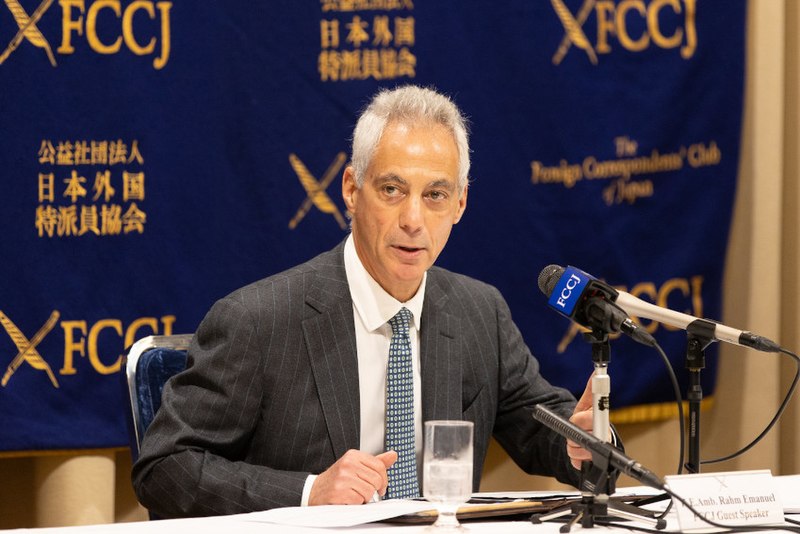
The United States, among other major world powers is looking to counter China’s growing influence in the world. The US ambassador to Japan says Washington and Tokyo are to pursue “commercial diplomacy” to counter Beijing.
In an interview with Reuters, US ambassador to Japan Rahm Emanuel said Washington and Tokyo are pursuing commercial diplomacy to counter China, noting the common areas of collaboration between the two countries are semiconductor chips, batteries, and energy.
Emanuel cited that one US company is already looking at a “major potential investment” related to chips in Japan.
“Commercial diplomacy is a big piece of an overarching economic collaboration and coordination between the United States and Japan,” said Emanuel.
This comes as the US and Japan agreed to establish a joint research center for next-generation semiconductors. The agreement was made Friday last week. The cooperation also comes as according to Emanuel, Beijing has used its economic strength to pressure other countries.
“There’s a pattern here: If they don’t like what you say politically, they put the muscle on you economically,” said the former Chicago mayor. Emanuel cited one instance over 10 years ago when China restricted rare earth export quotas after a territorial dispute with Japan.
Friday last week, the ministers from Washington and Tokyo issued a joint statement saying that they oppose “economic coercion” but did not mention China.
While the joint statement did not refer to Beijing, Secretary of State Antony Blinken said that the “coercive and retaliatory economic practices of the People’s Republic of China force countries into choices that compromise their security, their intellectual property, their economic independence.”
The White House has also pushed back on China’s increased warnings against a visit to Taiwan by House Speaker Nancy Pelosi.
The White House said Monday that it would expect China to escalate its response to Pelosi visiting the island nation. White House National Security spokesman John Kirby told reporters that the US will not be intimidated by China’s threats.
Kirby cited that China may try to fire missiles near the island nation, conduct large-scale military drills, or make further “spurious legal claims” that the Taiwan Strait is not an international waterway. The White House went on to say that Pelosi has the right to visit Taiwan, noting that Beijing would likely respond with military provocations.







