


 TSMC Q3 Revenue Beats Estimates as AI Chip Demand Surges
  TSMC Profit Set to Surge 65% as AI Chip Demand Drives Record Earnings
  Zcash Plans Quantum-Resistant Security Upgrade for January
  Jameson Lopp Downplays AI Threat to Bitcoin Cryptography
  Moonshot AI Executives Seek Settlement Ahead of Hong Kong IPO
  Yandex Data Center Hit by Drone Strike as Russia-Ukraine Cyber Infrastructure Attacks Escalate
  Arthur Hayes Announces FLOP Testnet Launch Within Weeks
  US Suspends Microsoft, Adobe From Green Card Program
  Elon Musk Accuses Indian Telecom Giants of Blocking Starlink Launch
  Apple Cuts iPhone 18 Pro Production Orders Amid Weak Demand
  Trump Buys Up to $25M in Meta Stock, Invests in SpaceX Debt
  Nvidia’s China AI Chip Market Share Falls to 34% as Huawei Gains Ground
  Apple Names Steve Smith M&A Chief in Leadership Shakeup
  Apple Supplier Luxshare Sees Limited Impact From US Patent Probe
  Solidigm Taps Goldman, Morgan Stanley for $10 Billion US IPO
  Amazon Cuts More Jobs as AI Investment Expands


 Add as a preferred source on Google
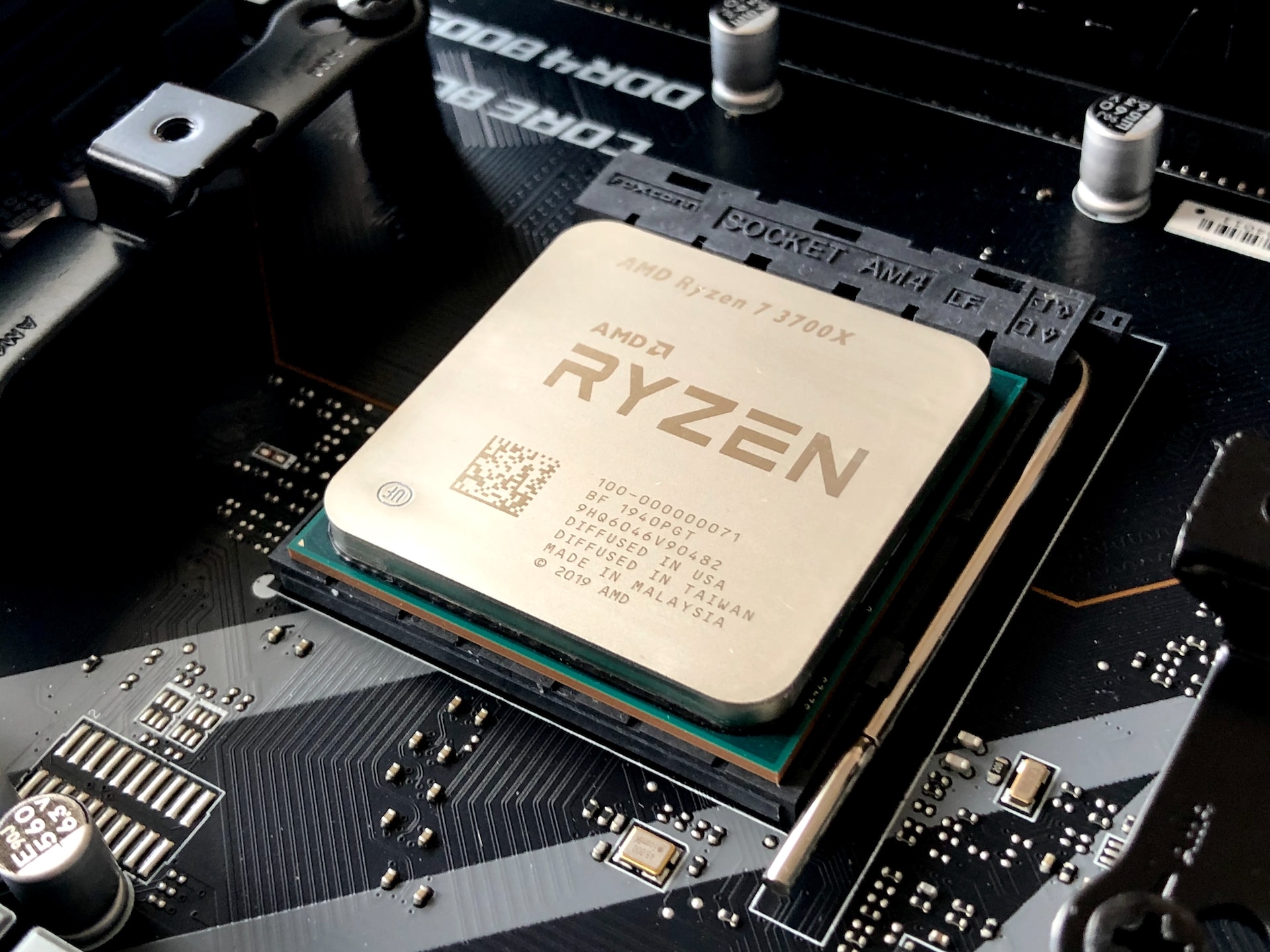
AMD Ryzen 8000G "Phoenix 2" Desktop APUs are Limited to PCIe 4.0 x4 for dGPU and PCIe 4.0 x2 for M.2 SSDs. However, as per the latest update, the single-channel memory appears to be an error, as the 8300G page lists dual-channel memory.
AMD Ryzen 8000G ‘Phoenix 2’ Desktop APUs Limited To PCIe 4.0 x4 For dGPU, PCIe 4.0 x2 For M.2 SSD
AMD has introduced the Ryzen 8000G AM5 Desktop APUs in two variants: the 8700G/8600G based on Phoenix 1 dies and the 8500G/8300G based on Phoenix 2. The Phoenix 2 dies appear to have very limited capabilities in terms of memory channels and PCIe lanes, which may limit their performance on inexpensive platforms.
Based on the specs sheet of Gigabyte's latest B650E AORUS ELITE X AX ICE motherboard, the AMD Ryzen 8000G Phoenix 1 dies will offer PCIe 4.0 x8 functionality for discrete graphics cards and PCIe 4.0 x4 capabilities for the M.2 NVMe SSDs. These APUs will support dual-channel DDR5 RAM which is recommended for use to boost the capabilities of the integrated RDNA 3 (Radeon 700M) GPUs.
However, the Phoenix 2 dies have significantly reduced memory and PCIe support. According to the specifications, AMD's Ryzen 8000G AM5 Desktop APUs built on Phoenix 2 dies will only support single-channel DDR5 memory.
The discrete GPU lanes have been lowered from PCIe 4.0 x8 to PCIe x4, while the M.2 lanes have been reduced to PCIe 4.0 x2 from PCIe 4.0 x4. Both AMD Ryzen 8000G dies will not support the full PCIe 5.0 x16 dGPU lanes found in the normal Ryzen 7000 Desktop.
- AMD Raphael 1 (Ryzen 7000) CPUs: PCIe 5.0 x16 dGPU / PCIe 5.0/4.0 x4 M.2
- AMD Phoenix 1 (Ryzen 8000G) APUs: PCIe 4.0 x8 dGPU/PCIe 4.0 x4 M.2
- AMD Phoenix 2 (Ryzen 8000G) APUs: PCIe 4.0 x4 dGPU/PCIe 4.0 x2 M.2
The PCIe 4.0 x8 lanes should be sufficient for most high-end graphics cards, as AMD demonstrated its 8700G running a Radeon RX 7900 XTX and offering decent performance; however, the single DDR5 memory channel and reduced PCIe 4.0 x2 SSD compatibility will be a disadvantage for the Phoenix 2 dies. AMD advertises a total of 20 (16 usable) PCIe 4.0 lanes for Phoenix 1 dies, whereas Phoenix 2 only has 14 (10 usable) lanes.
- AMD Phoenix 1 (Ryzen 8000G ) APUs - 20 Lanes Total / 16 Usable
- AMD Phoenix 2 (Ryzen 8000G) APUs - 14 Lanes Total / 10 Usable
AMD Ryzen 8000G 'Phoenix 2' APUs Launch with Hybrid Cores, Budget-Friendly DDR5 Support
AMD Ryzen 8000G "Phoenix 2" APUs feature a hybrid Zen 4 and Zen 4C core arrangement and employ Radeon 740M iGPUs with only four compute units. While a single-channel DDR5 memory would provide adequate bandwidth to power these iGPUs, the fact that 1-channel support existed in 2024 is disappointing, as per WCCFTech.
The 8500G will be available in DIY for $179 USD. A single 16 GB stick costs between $50 and $60 US, which is reasonable for a budget setup. However, everyone who expects to have the same set of features as the Phoenix 1 must be warned that this will not be the case.
Photo: Olivier Collet/Unsplash







