


 NASA's Artemis II Mission: First Crewed Lunar Journey Since Apollo
  Trump Administration Releases New UFO Files and Apollo Mission Records
  Tabletop particle accelerator could transform medicine and materials science
  NASA Artemis II: First Crewed Moon Mission Since Apollo Takes Four Astronauts on 10-Day Lunar Journey
  Blue Origin New Glenn Rocket Explodes During Launch Pad Test, Delaying Space Ambitions
  Neuralink Plans High-Volume Brain Implant Production and Fully Automated Surgery by 2026
  Cogent Biosciences Soars 120% on Breakthrough Phase 3 Results for Bezuclastinib in GIST Treatment
  Trump Signs Executive Order to Boost AI Research in Childhood Cancer
  Trump and Merck KGaA Partner to Slash IVF Drug Costs and Expand Fertility Coverage
  SpaceX’s Starship Completes 11th Test Flight, Paving Way for Moon and Mars Missions
  FDA Pilot Program Eases Rules for Nicotine Pouch Makers
  Eli Lilly’s Inluriyo Gains FDA Approval for Advanced Breast Cancer Treatment


 Add as a preferred source on Google
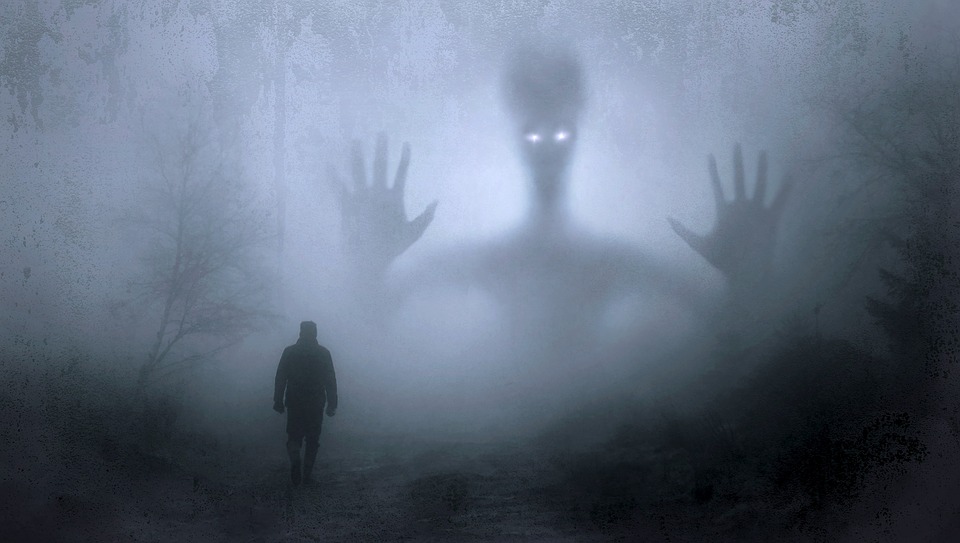
Despite conflicting opinions on whether or not to look for alien life forms, space exploration still continues. Researchers believe that if in the event we are able to find aliens, they would likely be a result of a second genesis.
Express reports that researchers believe that any life forms outside Earth and elsewhere in the solar system may have come from a second genesis. This is due to the most common theory of how life began in the universe through a concept called panspermia. The panspermia theory suggests that some organisms are able to survive in space, between the planets, and an asteroid may have brought the organisms far off into deep space upon colliding with the planet it came from. This would imply that all life came from a single “genesis.”
However, scientists now believe that life outside the planet may be because of a second genesis and not because of the panspermia concept. Jay Melosh, a geophysicist at Purdue University, ran a simulation showing the chances that Enceladus, one of Saturn’s moons, being hit by an asteroid or other space fragments that carried the microorganisms 4.5 billion years ago. Melosh did the same simulation for one of Jupiter’s moons, Europa. The results revealed that the chances in Europa’s case were higher compared to Enceladus.
However, with this in mind, it would mean that life in the cosmos would not be a result of a miracle, but rather the universe would actually have the conditions to support life.
Even if the chances for finding alien life forms outside Earth are still unlikely, scientists and astronauts are still exploring space for signs of life, or places where there are most likely to have life. NASA planetary scientist Chris McKay back in 2017, has turned his attention to Enceladus, Saturn’s ice-covered moon, which was discovered to be producing water from its southern polar region. With the use of the Cassini space probe, scientists found that the water has all the necessary components to create life: carbon, nitrogen, and hydrogen.
But Enceladus is not the only moon that may be carrying liquid water. Other possible places would be found in three of Jupiter’s moons, Callisto, Ganymede, and Europa.







