


 Oil Prices Rise as Gulf Hurricane and Middle East Supply Risks Mount
  France to Release 10 Million Barrels of Diesel to Ease Fuel Prices
  US Treasury Yields Ease After Strong 10-Year Auction as Global Bonds Struggle
  RBI Raises Repo Rate to 5.50% in Hawkish Shift on Inflation Risks
  Fed Minutes Signal Another Rate Hike by Year-End
  Oil Prices Rise as Hormuz Risks Offset IEA Stock Release
  Trump Secures Russian Diesel Deal as US Fuel Prices Surge
  Gold Prices Hit One-Week High as Oil Falls, Fed Rate Outlook Weighed


 Add as a preferred source on Google
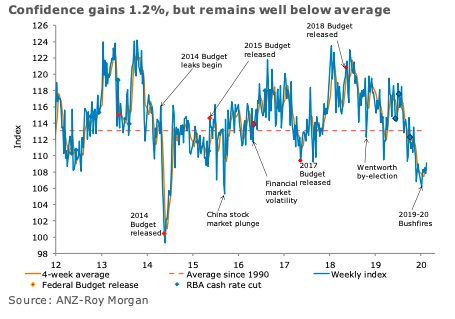
Australia’s ANZ-Roy Morgan consumer confidence gained 1.2 percent last week, more than reversing last week’s loss and continuing the recent sawtooth pattern. The gains have been a little more than the losses, so the index reached its 2020 high last week.
‘Current finances’ gained 2 percent last week, while ‘future finances’ were marginally down by 0.1 percent. ‘Current economic conditions’ registered a healthy gain of 6.5 percent compared to a fall of 4.1 percent seen last week, while ‘future economic conditions’ were flat.
‘Time to buy a major household item’ fell 0.9 percent, adding to the loss of 5 percent seen in the previous reading. The four-week moving average for ‘inflation expectations’ fell by 0.1ppt to 4.0 percent, while the weekly reading remained stable.
"The ANZ Roy-Morgan Australian Consumer Confidence index has risen to its highest level in 2020, with sentiment possibly buoyed by the continued gains in asset prices. The fact the coronavirus hasn’t become established in Australia might be a contributing factor, although the measures taken by the Government to help ensure this remains the case will have economic consequences. This week the key domestic influences on sentiment will be wage and employment data. We aren’t expecting the news to be flash, which may see confidence dip over the coming week and so continue the up and down behaviour seen in recent weeks," said David Plank, ANZ’s Head of Australian Economics.







