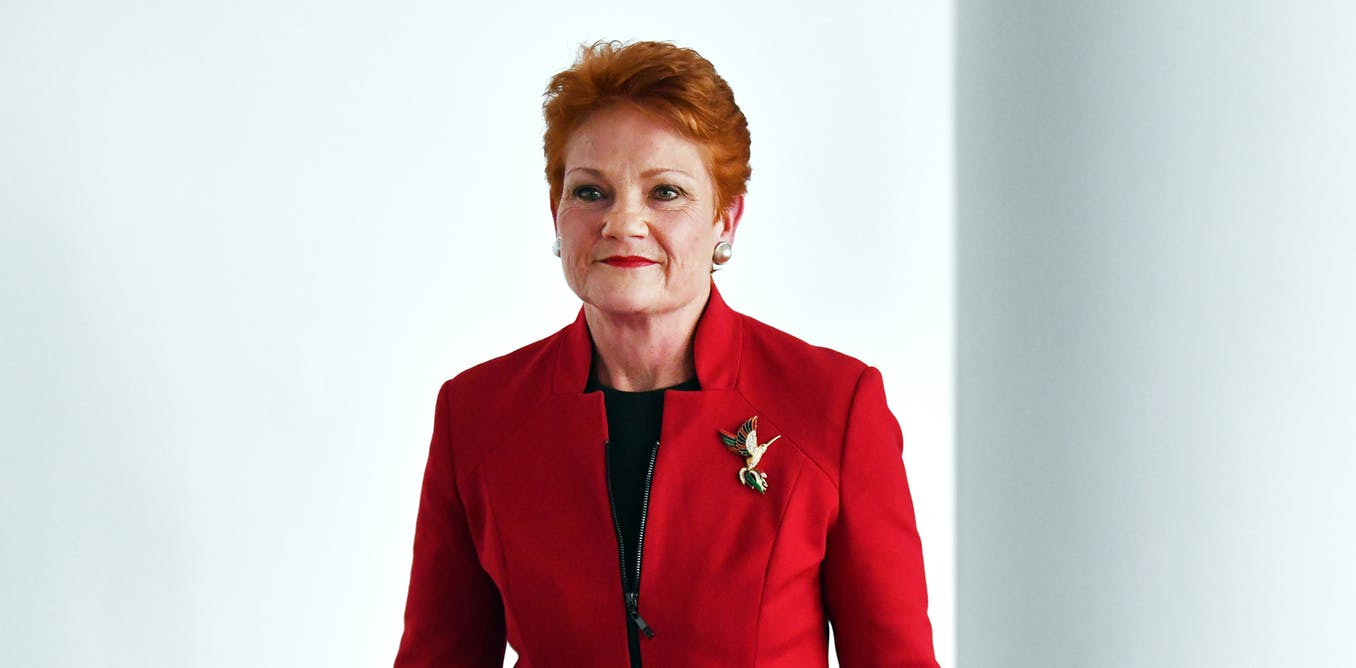
Australia’s Senate has suspended far-right Senator Pauline Hanson for seven sitting days after she entered Parliament wearing a burqa, intensifying national debate over religious freedom, discrimination, and political theatrics. Hanson wore the full-body Islamic garment as part of her renewed push to ban burqas and other face coverings in public spaces, prompting immediate condemnation from lawmakers across party lines and from Australia’s Muslim community.
Hanson’s appearance came a day after she was denied permission to introduce a bill advocating for a public ban on face coverings. Her actions, described by many as inflammatory and Islamophobic, sparked an uproar in the chamber. Foreign Minister Penny Wong sharply criticized the stunt, arguing that it undermined social cohesion and targeted nearly a million Australians who practice Islam. Wong said Hanson’s gesture “mocked and vilified an entire faith” and weakened the integrity of Parliament.
The Senate voted overwhelmingly—55 to 5—to censure the One Nation leader. Despite the backlash, Hanson defended her actions and reiterated her long-standing stance against Islamic clothing, saying the burqa should be treated no differently from helmets or face coverings restricted in banks and other institutions. She insisted she would continue advocating for what she believes in, leaving judgment “to the people.”
Hanson, who represents Queensland, has built her political career on anti-immigration rhetoric and nationalist policies since the 1990s. One Nation has recently expanded its Senate representation to four seats after gaining two in the latest general election, and recent polls indicate growing support for the party amid rising nationalist sentiment.
This marks the second time Hanson has worn a burqa inside Parliament, repeating a similar 2017 stunt that stirred national debate over religious expression, public safety, and the role of provocative political messaging in Australian politics.