


 Bank of America Predicts Yen Rebound as USD/JPY Faces Risks
  France to Release 10 Million Barrels of Diesel to Ease Fuel Prices
  Dollar Near 18-Month High as Euro, Yen and Pound Weaken
  Oil Prices Rise as Houthi Attacks Threaten Middle East Supply
  US Treasury Yields Ease After Strong 10-Year Auction as Global Bonds Struggle
  Gold Prices Fall Amid Rate Jitters; Copper Steady as China Stimulus Eyed
  Global Stocks Mixed as Oil Falls Ahead of US Earnings
  Oil Prices Rise as Hormuz Risks Offset IEA Stock Release
  Trump Secures Russian Diesel Deal as US Fuel Prices Surge


 Add as a preferred source on Google
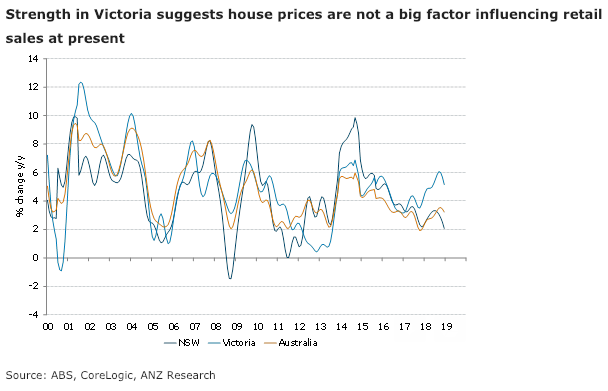
Australia’s nominal retail sales were much weaker than expected in December, while volumes for the quarter were also disappointing. The bring-forward of trading into November as a result of the Black Friday sales was apparent.
The country’s retail sales fell 0.4 percent m/m in December, considerably weaker than both ANZ and market expectations. In annual terms, sales growth was steady at 2.8 percent. In volume terms, sales for the December quarter eked out a 0.1 percent q/q gain, following a rise of just 0.2 percent in Q3.
The impact of sales coming forward into November as a result of the Black Friday sales was apparent. Clothing sales dropped 2.8 percent m/m, household goods fell 2.4 percent and department store sales declined 1.1 percent. These falls all followed solid rises in November. In contrast, sales at cafes and restaurants rose a strong 1.1 percent.
"Low growth in volumes points to another soft outcome for consumer spending in Q4. The RBA is likely to be disappointed with the weakness in retail sales, given its relatively upbeat view on the consumer spending outlook," ANZ Research commented in its latest report.







