
Australia’s retail sales beat expectations slightly in November, rising 0.4 percent m/m. Clothing and household goods sales improved, likely reflecting the growing popularity of Black Friday sales in November, which in the presence of stiff price competition implies higher sales volumes.
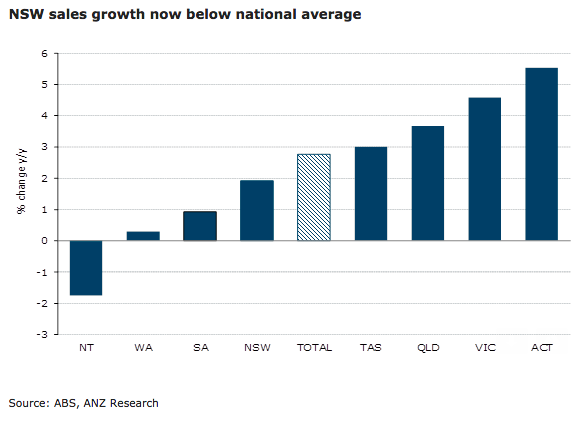
There is a risk that spending on these items was brought forward from December. New South Wales, which has seen the largest housing price declines, has seen annual retail sales growth decelerate to 1.9 percent, potentially suggesting that consumers are becoming more cautious in their spending decisions.
Clothing sales remained strong, growing 1.5 percent m/m following the 2.9 percent rise in October. Household goods also improved, rising 1.2 percent. The only categories that saw declines in monthly sales were other goods and cafes, restaurants and takeaway. In three-month-end annualised terms, sales of household goods and clothing have risen strongly.
Sales in New South Wales improved, growing 0.8 percent m/m, following a 0.6 percent decline in October. The ACT’s 1.6 percent increase was the best among states and territories. Sales in Victoria rose 0.1 percent to be 4.6 percent higher over the year. Sales in Queensland rose 0.4 percent m/m and in Western Australia were up 0.6 percent.
Encouragingly, large store sales growth – which tend to be less volatile – was steady at 0.5 percent.

