


 Oil Prices Rise as Gulf Hurricane and Middle East Supply Risks Mount
  Dollar Near 18-Month High as Euro, Yen and Pound Weaken
  Gold Prices Fall as Fed Signals Another Rate Hike
  US, EU Push for Action Against Asia’s Excess Factory Capacity
  Crypto Market Selloff Wipes Out $100B as Bitcoin Falls Below $83K
  Bank of America Predicts Yen Rebound as USD/JPY Faces Risks
  Trump Secures Russian Diesel Deal as US Fuel Prices Surge
  Bangladesh GDP Growth Accelerates to 4.6% on Industrial Rebound


 Add as a preferred source on Google
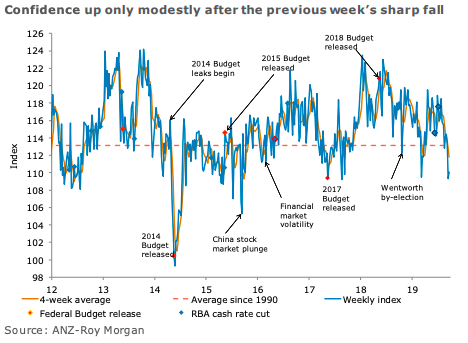
Australian ANZ-Roy Morgan consumer confidence gained 0.7 percent last week after losing 3.5 percent in the previous reading. Strength was relatively broadly based across the sub-indices, although the “time to buy a household item” index dropped a sharp 3.8 percent and is now at its lowest level in ten years.
Current financial conditions gained 1.9 percent and remain above the long run average, while future financial conditions gained 1.6 percent. The economic conditions sub-indices also rose, with current economic conditions up 3.6 percent and future economic conditions up 1.0 percent.
Both economic sub-indices remain well below their long run averages. The four week moving average for inflation expectations remained stable at 4.1 percent.
"The modest rise in confidence leaves it well below its long run average. The weakness in the time-to-buy-a-household-item index is particularly disappointing, given that tax cuts should be supporting this measure. Rising concerns over the impact of the stimulus, combined with the lift in the unemployment rate in August and ongoing global easing in monetary policy settings, suggest to us that the RBA will likely cut rates again in October. So far, though, consumers seem impervious to both fiscal and monetary stimulus, and the combination of weak wage growth and high levels of debt may prove to be the more dominant driver of confidence and spending," said Felicity Emmett, ANZ’s Senior Economist.







