
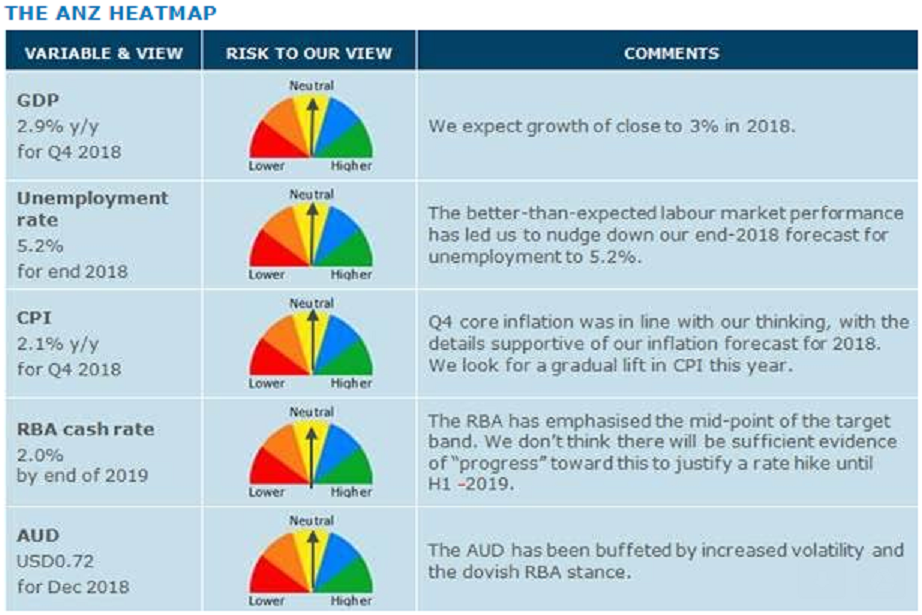
Australia’s employment growth is expected to continue, while wage growth is seen to await its turn, according to the latest report from ANZ Research. The leading indicators point to continued strength in employment and a decline in the unemployment rate to around 5 percent by the end of the year.
A sharp spike in the reported difficulty of finding labor points to the second half of this year as the time when wage growth might start to materially pick up. At the same time, however, low inflation expectations on the part of businesses may delay this.
Assistant Governor (Economic) of the RBA, Luci Ellis, highlighted this point in a speech on February 13 when she said that, "even when facing strong demand and rising cost pressures, firms seem reluctant to raise their prices…They appear to believe that competition is so intense that they would lose too much business if they did so. So they are especially reluctant to grant wage rises because this would increase one of their most important costs".
Higher productivity is one ‘solution’ to this reluctance. It allows faster wage growth without pressure on costs. Capital deepening through more non-mining business investment should boost productivity and hence wages, but this will take time, the report added.
Lastly, FxWirePro has launched Absolute Return Managed Program. For more details, visit http://www.fxwirepro.com/invest

