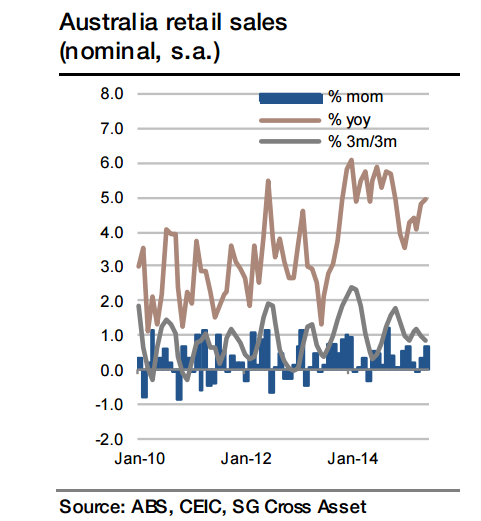
Australia's retail sales surprised on the upside in June with a 0.7% mom gain, despite a marginal (0.1%) decline in food sales, meaning that non-food sales jumped by 1.2% mom, their largest gain since January (food sales account for just over 40% of the total). Given the moderate gains in disposable income (2.6% yoy in Q1), retail sales growth of just short of 5% is unlikely to be sustained for long.
Hence, a moderate pull-back is expected in July non-food sales (-0.1% mom), which combined with a 0.5% rebound in food sales, implies a marginal 0.1% mom gain in overall sales. The weakness is likely to be concentrated in sales of household goods, which have seen an impressive run over the past year, partly on the back of the housing boom. One key downside risk comes from department store sales, which have in recent years seen dramatic volatility in July/August (with steep declines in July and August rebounds), though this did not occur in 2014.


Wall Street Slides as Warsh Fed Nomination, Hot Inflation, and Precious Metals Rout Shake Markets
Canada’s Trade Deficit Jumps in November as Exports Slide and Firms Diversify Away From U.S.
Oil Prices Hit Four-Month High as Geopolitical Risks and Supply Disruptions Intensify
China Home Prices Rise in January as Government Signals Stronger Support for Property Market
Wall Street Slips as Tech Stocks Slide on AI Spending Fears and Earnings Concerns
China Factory Activity Slips in January as Weak Demand Weighs on Growth Outlook
Indonesia Stocks Face Fragile Sentiment After MSCI Warning and Market Rout
Why Trump’s new pick for Fed chair hit gold and silver markets – for good reasons
Oil Prices Surge Toward Biggest Monthly Gains in Years Amid Middle East Tensions
Copper Prices Hit Record Highs as Metals Rally Gains Momentum on Geopolitical Tensions
U.S.–Venezuela Relations Show Signs of Thaw as Top Envoy Visits Caracas
Indonesian Stocks Plunge as MSCI Downgrade Risk Sparks Investor Exodus 


