


 US Dollar Slips From 18-Month High Ahead of Key Inflation Data
  Fed’s Williams Sees One More Rate Hike in 2026, None in 2027
  Oil Prices Surge Above $106 After Deadly Saudi Airport Attack
  Gold Prices Rebound as Dollar Weakens Ahead of US Inflation Data
  Fed's Hammack Urges Faster Rate Hikes to Fight Inflation
  Gold Prices Mixed Ahead of US Inflation Data and Fed Rate Outlook
  Philippines Current Account Deficit Seen at $19.1 Billion in 2026
  China Bank Lending Rebounds in September, Beats Forecasts
  US Dollar Index Falls as Fed Signals Caution, Indian Rupee Surges
  Wall Street Closes Lower as Bank Earnings and AI Concerns Weigh
  Wall Street Falls as Hot US Inflation Fuels Fed Rate Hike Bets
  US Dollar Hits 18-Month High as Inflation Fuels Fed Rate Hike Bets
  Samsung, SK Hynix Shares Plunge as China Chip Competition Grows
  IMF Warns US Debt Crisis Needs Fiscal Action, Urges China to Boost Consumption
  RBA Signals More Rate Hikes as Inflation Risks Rise
  Gaza Olive Harvest Collapses as War Destroys Farmland
  Italy’s Meloni Warns US-Russia Diesel Deal Could Weaken Ukraine Sanctions


 Add as a preferred source on Google
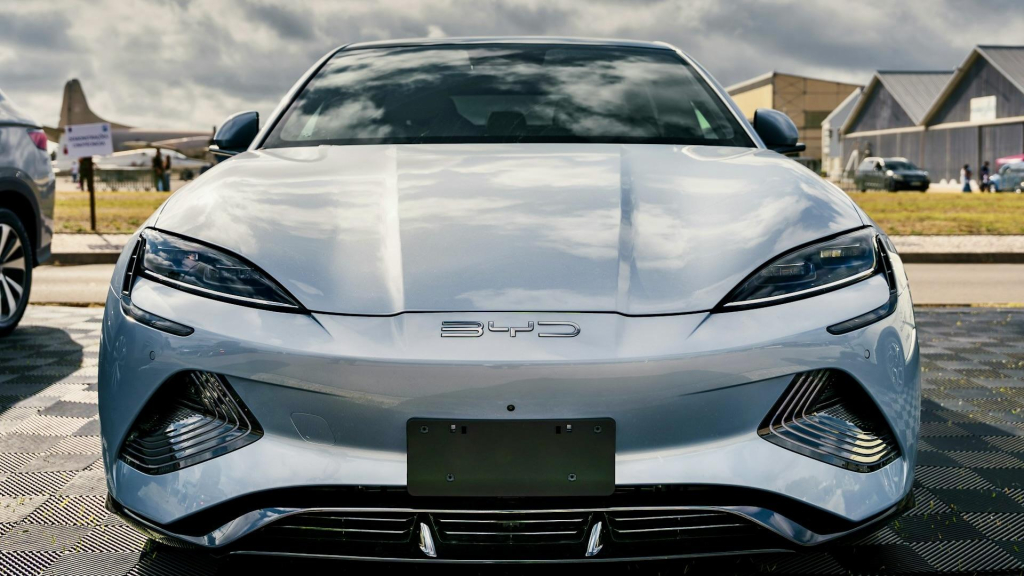
BYD’s November sales crossed 506,000, pushing its 2024 total near 3.8 million. With a 70% surge in hybrid sales, the Chinese EV leader is closing the gap with Honda and Ford in a transformative year for the auto industry.
BYD's Record-Breaking November Sales Propel It Toward 4 Million Target
After selling over 500,000 vehicles last month, BYD, the electric vehicle behemoth from China, is well on its way to smashing its 4 million vehicle sales goal for 2024.
Data submitted to the Hong Kong stock exchange on Monday showed that the Chinese automaker sold 506,804 vehicles in November.
Its overall sales thus far this year amount to 3,757,336 pieces. Current sales are up 40% over the same period last year. The spike is mostly being propelled by plug-in hybrids; in the first eleven months of the year, BYD sold slightly under 2.2 million hybrids, an increase of about 70% compared to the previous year.
Honda and Ford Face Stiff Competition From BYD
Per Yahoo Finance, assuming BYD maintains its current rate of growth until the year's last month, the Chinese automaker has a good chance of competing with, and maybe even surpassing, more established brands like Honda of Japan and Ford of the United States.
Recent statistics from the Japanese carmaker Honda show sales of 3.11 million units from January through October. That's about in line with what Honda sold in 2023, when they sold slightly under 4 million cars.
The first three quarters of 2024 saw Ford sell 3.3 million automobiles. Selling 4.3 million automobiles in 2024 is the projected rate for the American automaker. In 2023, 4.4 million vehicles were sold by Ford.
BYD's EV Sales Outpace Tesla's Battery-Powered Vehicles
U.S. electric vehicle manufacturer Tesla delivered 1.3 million battery-powered vehicles in the first nine months of the year, which is somewhat more than BYD's 1.2 million sales in the same time frame. In 2023, 1.81 million automobiles were sold by Tesla.
While BYD is far and away the market leader in electric vehicles, it still has a ways to go before it can compete with Toyota and Volkswagen, the two largest automakers in the world.
In the first ten months of 2024, 8.3 million automobiles were sold by Toyota, excluding its subsidiaries Daihatsu and Hino.
Foreign Automakers Struggle Amidst China's EV Revolution
The Chinese market for electric vehicles is quite competitive, and foreign automakers are finding it difficult to compete. New energy vehicles, which comprise ICE cars as well as plug-in hybrids and battery electric vehicles, are quickly becoming the preferred choice of Chinese consumers.
U.S. automaker GM acknowledged last week that it would lose more than $5 billion due to restructuring expenses and plant closures as a result of its poor performance in China.
General Motors was among China's best-selling automakers just over a decade ago, but CEO Mary Barra claims the country's sudden transition to electric vehicles has created a "race to the bottom" in the industry.
Volkswagen, Honda, and Nissan Adjust Strategies in China
A number of other international automakers are reducing their presence in the Chinese market. With "economic reasons" as the stated explanation, the world's number two carmaker, Volkswagen, pulled out of Xinjiang at the tail end of last month. The involvement of Volkswagen in the Chinese province was contentious, with Western nations accusing Beijing of human rights abuses against the Uyghur majority.
Along with Stellantis, Honda, and Nissan, ICE vehicle manufacturers in China are reorganizing their production processes, which includes laying off workers and closing plants.







