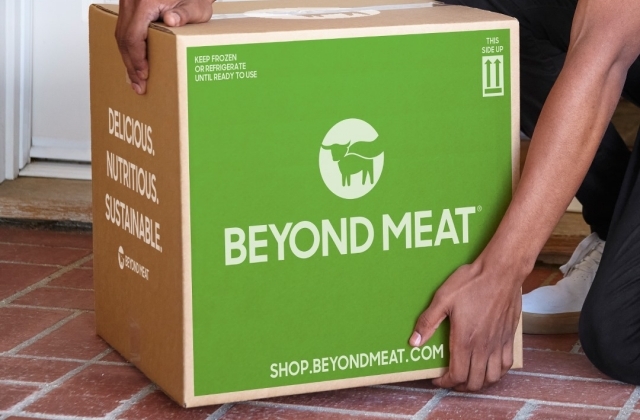
Beyond Meat Inc. reported a larger-than-expected quarterly loss and projected weaker fourth-quarter sales as demand for its plant-based meat products continues to decline. The company’s shares fell nearly 8% in after-hours trading on Monday, following a brief surge of over 1,350% in late October that had echoed the Wall Street “meme stock” craze.
The once high-flying faux-meat producer has struggled to maintain momentum after an early boom in the alternative protein market. Inflation-weary consumers have increasingly turned away from Beyond Meat’s higher-priced products, favoring less processed foods and healthier eating trends spurred by the “Make America Healthy Again” movement.
CEO Ethan Brown acknowledged that “category headwinds and an accompanying softer top-line continue” to pressure results. The company now expects fourth-quarter revenue between $60 million and $65 million—below analyst expectations of $70.03 million, according to LSEG data.
For the third quarter, Beyond Meat posted a net loss of $110.7 million, widening from $26.6 million a year earlier. The deeper loss was largely due to impairment charges tied to asset write-downs and the suspension of its China operations. Adjusted loss per share came in at 47 cents.
Revenue for the quarter slipped 13.3% to $70.2 million, slightly above estimates of $69 million. The company said it is implementing further cost-cutting measures to improve financial stability and profitability.
Beyond Meat’s stock has lost roughly two-thirds of its value in 2025, weighed down by slowing sales and investor concerns over its financial health. In September, the company executed a debt-for-equity swap to avert a near-term default on its credit obligations, signaling ongoing financial strain despite attempts to restructure and stabilize its operations.