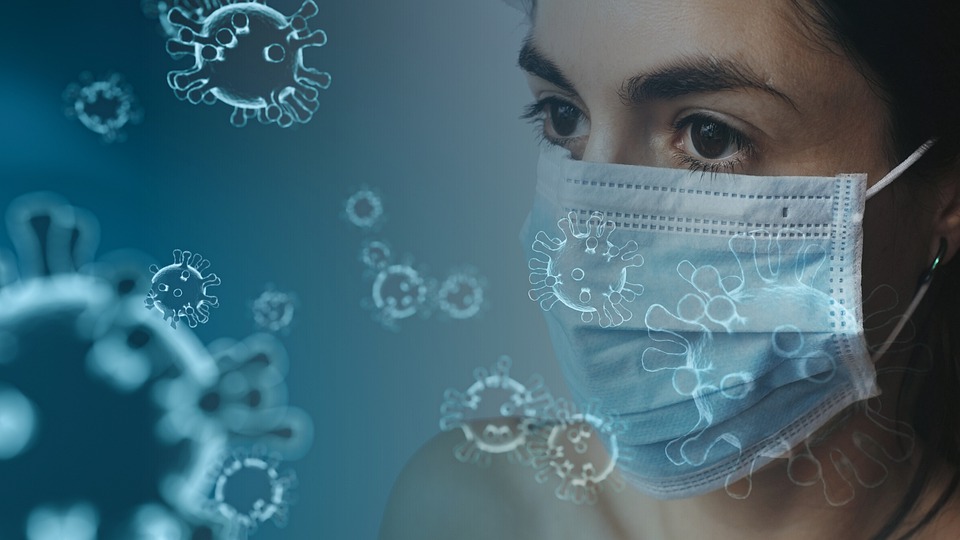
Since its outbreak in December of 2019, the COVID-19 pandemic has affected millions of people all over the world. As cases of the coronavirus rise in many countries, scientists have shown images happening in real-time on how the virus attacks the cells in the human body.
Express reports real-time images were shown of how the coronavirus SARS-CoV2 attacks humans. From the images, it shows a spike protein on the coronavirus functioning as the main weapon to mobilize the DNA into a host cell. The virus then attacks and sticks into the ACE 2 enzyme, becoming an important process in how the virus is spread. The ACE 2 enzyme receptors are what enable the attack by the virus.
Scientists from the Naval Research Laboratory, the team of Kiril Gorshkov and Eunkeu Oh were able to image this process. They also used this same imaging process for cancers, lysosomal storage diseases, and other viral diseases. “You can actually see that happen in real-time. That’s the beauty of this essay and that’s why we think it will be important for drug screening,” said Dr. Gorshkov.
As the months go by, scientists are scrambling to speed up research and develop a vaccine that could help treat COVID-19 patients and prevent others from contracting the virus. As a result, to at least slow down the spread, social distancing practices and quarantine periods are put in place by the respective governments in countries that are affected. Face masks are also required to be worn in places where social distancing could not be maintained.
Schools have also resorted to online or remote learning but there are some educational institutions that have reopened to allow for in-person learning. However, as there are several months left until the Christmas season, an expert has warned not to anticipate that a vaccine would be available by that time.
UK Health Secretary Matt Hancock commented on what is known as the Oxford vaccine, that is produced by the UK pharmaceutical firm AstraZenica and is currently on its phase three trials with over 50,000 volunteers spanning in different countries. “The best-case scenario is that happens this year. I think more likely is the early part of next year -- in the first few months of next year is the most likely,” said Hancock.