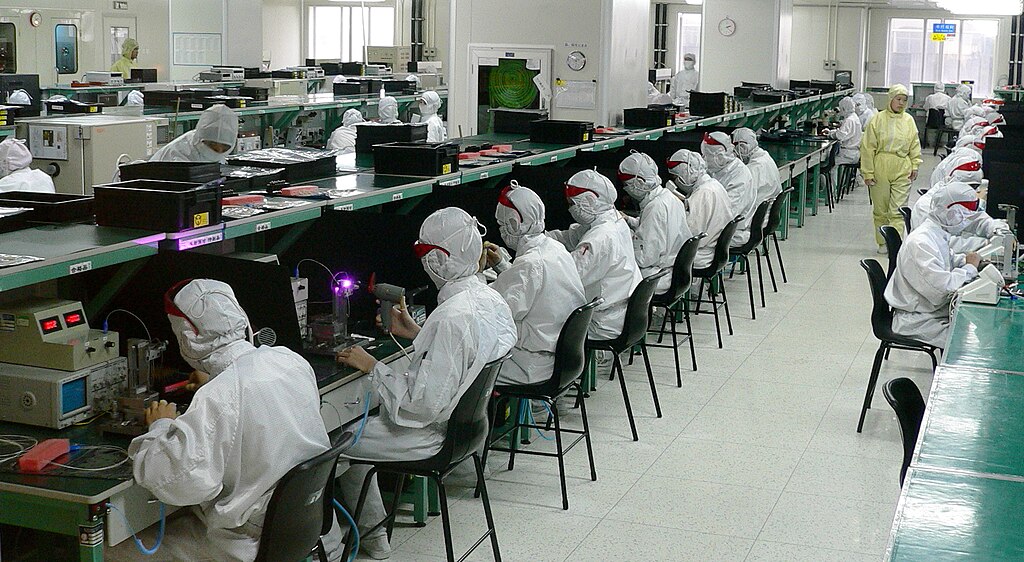
China’s factory activity contracted at the start of the year, highlighting persistent pressure from weak domestic demand despite continued policy support from Beijing. An official survey released on Saturday showed that manufacturing momentum slowed in January, raising concerns about the sustainability of economic growth in the world’s second-largest economy.
The official purchasing managers’ index (PMI) fell to 49.3 in January from 50.1 in December, dropping below the key 50 threshold that separates expansion from contraction. The reading also missed market expectations, as analysts polled by Reuters had forecast a PMI of 50.0. The decline signals that factory output and overall manufacturing activity weakened at the beginning of the new year.
Key sub-indexes reinforced the downbeat picture. New orders slipped to 49.2 from 50.8 in December, while new export orders fell further into contraction territory at 47.8, down from 49.0. These figures point to soft demand both at home and abroad, even as China’s exports performed relatively well last year.
The slowdown extended beyond manufacturing. The official non-manufacturing PMI, which tracks services and construction activity, dropped to 49.4 from 50.2 in December, marking its lowest level since December 2022. This suggests that the broader economy is also feeling the strain from cautious consumer spending and subdued investment.
According to Huo Lihui of the National Bureau of Statistics, some manufacturers typically experience a seasonal slowdown in January, but weak market demand remains a key challenge. While China met its official growth target of around 5% last year, that performance was largely supported by exports. Underlying imbalances persist, with retail sales weakening toward the end of the year and fourth-quarter GDP growth slowing to a three-year low.
In response, policymakers have stepped up targeted support. The government has front-loaded 62.5 billion yuan in ultra-long special treasury bond funds to subsidize consumer upgrades ranging from home appliances to smartphones. The central bank has also cut sector-specific interest rates and signaled room for further reserve requirement and rate cuts this year.
Despite these efforts, analysts remain cautious. Economists warn that stronger and more comprehensive measures may be needed to lift domestic demand and stabilize growth above 4.5% in 2026. Beijing has pledged to prioritize boosting consumption and advancing high-end manufacturing, with President Xi Jinping emphasizing domestic demand as the main engine of economic growth.