
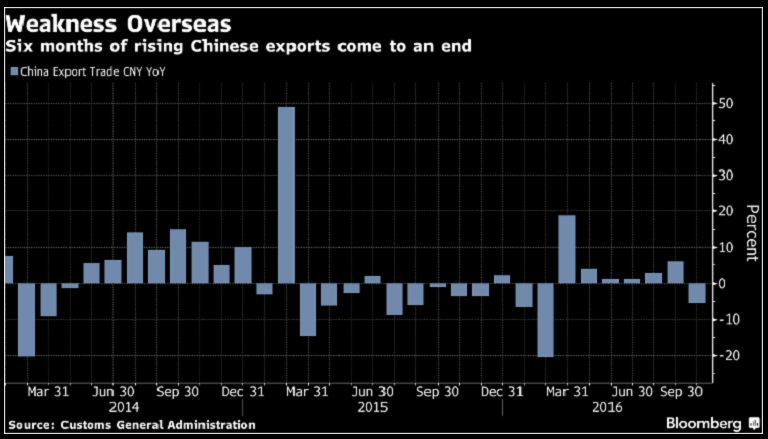
Exports in China fell to a seven-month low during the period of September, adding to rising yuan pressure, which is at near six-year low.
China’s exports fell 10 percent from a year earlier in September, data released by the customs administration department showed Thursday. Further, imports declined 1.9 percent from a year earlier, reversing a 1.5 percent increase in August. The decrease contrasts with a median forecast for a 1.0 percent gain.
In yuan terms, shipments declined 5.6 percent, imports rose 2.2 percent; trade surplus fell to USD42 billion, from USD52.05 billion the previous month, falling short of forecast for a USD52.30 billion surplus, data showed.
In addition, exports to the European Union fell 9.8 percent, U.K. shipments slid 10.8 percent,while U.S. down 8.1 percent . Crude oil imports rose to a record as a new strategic reserve site became operational and steel exports shrank for a third month to the lowest since February, Bloomberg reported.
Moreover, yuan depreciation’s impact on trade is limited, customs spokesman says at a briefing; the yuan has dropped 3.4 percent against the dollar this year, the biggest decline in Asia and weakened 6.2 percent against a 13-currency trade-weighted index.
Meanwhile, the People’s Bank of China on Thursday weakened the daily reference rate for the seventh day in a row, 6.7296, 0.06% weaker than 6.7258 yesterday, the longest weakening run since January.

